
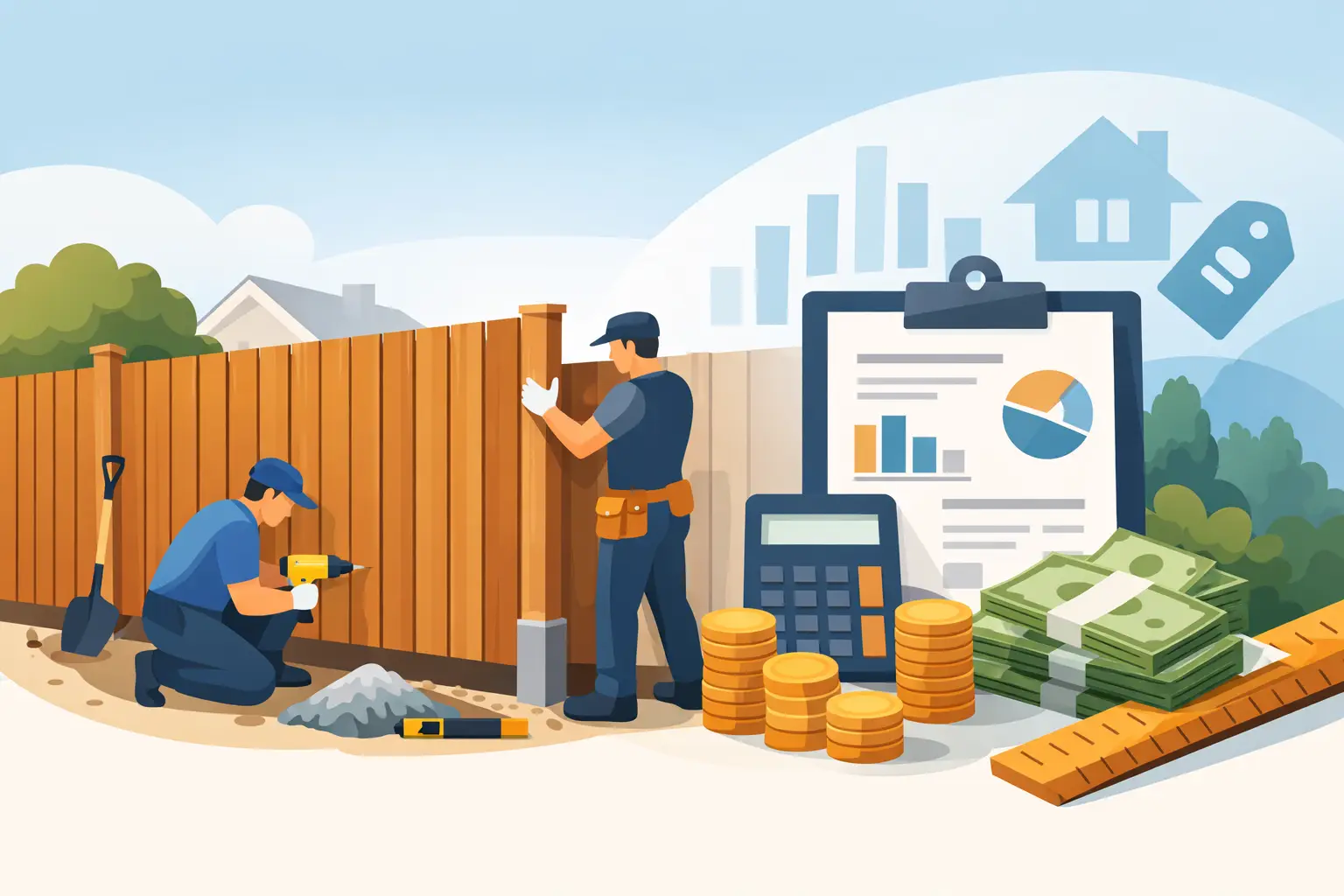
Sticker shock usually happens when a homeowner gets one fence quote at one price and another quote that is thousands higher. When you are trying to understand privacy fence installation cost, the difference often comes down to more than just materials. Height, layout, gates, terrain, local labor, and the quality of the build all play a real role in what you end up paying.
For homeowners in Maryland and the DC area, a privacy fence is rarely just a decorative add-on. It is about creating a quieter backyard, giving kids and pets a safer place to play, and making outdoor living more comfortable. The right fence adds daily value to the property, but only if it is built to last.
What affects privacy fence installation cost?
The biggest factor is usually material. Wood, vinyl, and composite can all provide privacy, but they land at different price points and come with different maintenance needs over time. A lower upfront number may look appealing until staining, repairs, or early replacement start adding up.
Fence height matters too. A 6-foot privacy fence is common, but some homeowners want 7-foot or 8-foot sections for extra seclusion. More height means more material, stronger posts, and in some cases additional permitting or zoning review depending on local rules.
The size and shape of the yard also affect pricing. A straight run along a flat property line is simpler than fencing a yard with multiple corners, slopes, landscaping obstacles, or tight access. If a crew has to work around trees, retaining walls, patios, or existing structures, labor costs can increase quickly.
Then there is the scope beyond the fence panels themselves. Gates, post caps, custom trim, tear-out of an old fence, hauling debris, and site preparation all add to the final investment. These are not surprise extras when a quote is written properly, but they are common reasons estimates vary.
Typical price ranges by material
Most homeowners start with the material because it is the easiest comparison point. That makes sense, but material should be weighed alongside durability and upkeep, not just initial price.
Wood privacy fencing
Wood is often one of the more budget-friendly ways to get a classic privacy fence look. Pressure-treated pine is typically less expensive than cedar, and both can be installed in several styles depending on the level of privacy and appearance you want. In general, wood privacy fence projects often fall in the lower to mid range compared to vinyl and composite.
What changes the number is board style, post size, and finish work. A basic stockade design will usually cost less than a more refined shadowbox or board-on-board fence. Wood also requires maintenance. Staining or sealing, replacing damaged boards, and managing rot or warping over time should be part of the real cost conversation.
Vinyl privacy fencing
Vinyl usually costs more upfront than basic wood, but many homeowners like it because it offers a clean look with less maintenance. It does not need painting or staining, and high-quality vinyl products hold up well when installed correctly with proper posts and footings.
Not all vinyl is the same. Thickness, internal reinforcement, color, texture, and manufacturer quality can affect the price. A lower-grade vinyl fence may save money at installation, but if it becomes brittle or discolored sooner than expected, that lower quote may not feel like a bargain later.
Composite privacy fencing
Composite tends to sit at the premium end of the market. Homeowners choose it for appearance, durability, and low maintenance. It can be an excellent fit for properties where aesthetics matter and where the fence is part of a larger outdoor upgrade that may include decking, patios, or gates.
The higher initial investment can make sense for long-term ownership, especially if you want minimal upkeep and a more upscale finish. For homeowners focused on total lifecycle value rather than just the cheapest entry point, composite deserves a serious look.
A realistic ballpark for homeowners
While every property is different, many professionally installed privacy fences land somewhere in the broad range of about $35 to $85 per linear foot, with some projects falling below or above that depending on material, customization, and site conditions. A straightforward wood fence may come in toward the lower end, while premium vinyl or composite with multiple gates and more complex installation can move well above the middle of the range.
That means a backyard requiring 150 linear feet of privacy fencing could cost roughly $5,250 to $12,750 or more. This is a planning range, not a final quote, but it gives homeowners a useful starting point. If you are comparing proposals, be careful not to focus only on the total. Ask what is included, what material grade is being used, and whether old fence removal, gate hardware, and cleanup are part of the price.
Why labor can swing the cost so much
Privacy fence installation cost is heavily influenced by labor because good fence work is about more than setting posts and attaching panels. Proper measurements, straight lines, post depth, drainage awareness, gate alignment, and clean finishing make the difference between a fence that looks great for years and one that starts leaning or dragging sooner than it should.
This is especially true in areas with uneven yards, clay-heavy soil, or freeze-thaw cycles that can stress footings. Experienced installers know how to plan for those conditions. They also know how to avoid damaging nearby hardscapes, irrigation lines, or landscaping during the build.
That is one reason the lowest quote is not always the best value. Homeowners often find out too late that a cheap install left corners cut below ground level, where problems are harder to see until the fence begins to fail.
Site conditions that raise or lower the price
A flat, open yard with clear access is usually the most efficient type of fence job. Costs can rise when the property has a steep slope, limited access between houses, roots, rocky soil, or an old fence that needs to be removed and hauled away.
Corner lots and irregular property lines can also require more layout work. If a survey is needed to confirm boundaries, that should be factored into the project budget. In dense neighborhoods around Montgomery County, Howard County, and Northwest DC, permit requirements and lot line considerations can add a layer of coordination that affects timing and cost.
None of that means the project becomes a bad investment. It simply means that accurate pricing depends on seeing the property in person rather than guessing from a satellite image or a rough homeowner measurement.
Gates, details, and upgrades
Most homeowners need at least one gate, and gates are often where quality matters most. A poorly built gate sags, drags, and becomes a daily frustration. A properly framed and installed gate costs more, but it performs better and lasts longer.
Decorative post caps, stronger hardware, custom widths, and upgraded latch systems also influence price. These details may seem minor during budgeting, but they can improve both function and appearance. If your privacy fence connects to a deck, patio, or retaining wall, it is also worth thinking about how the finished project will look as part of the whole outdoor space.
For that reason, many homeowners prefer working with a contractor who understands more than fencing alone. A design-and-build team can help make sure the fence fits the property rather than feeling like an afterthought.
How to compare estimates the right way
A solid estimate should clearly explain the material being used, fence height, post spacing, gate count, removal of existing fencing, cleanup, and any warranty information. If one quote is dramatically cheaper, there is usually a reason. It may involve lighter materials, less site prep, limited warranty support, or missing scope items that show up later as added charges.
This is where a free in-home consult and estimate becomes valuable. It gives you the chance to ask practical questions, compare options side by side, and get recommendations based on your actual yard and goals. For many families, financing can also make it easier to move forward with the right fence now instead of settling for a lower-quality option that may need attention sooner.
A-1 Fencing works with homeowners who want that balance of upfront value and long-term quality. The goal is not just to install a fence, but to build something that looks right, performs well, and adds confidence every time you step into the backyard.
The best way to budget for your project
If you are planning a privacy fence, start by deciding what matters most to you. Is it the lowest upfront cost, the least maintenance, the best appearance, or the longest lifespan? Those priorities will point you toward the right material and help narrow a realistic budget range.
From there, the smartest next step is an on-site estimate from a trusted local contractor. Every yard has its own conditions, and every homeowner has different goals. A fence quote should reflect both. When the design, material, and installation are handled with care, the cost feels a lot easier to justify because you can see where the value is going.
A privacy fence should give you more than a property line. It should give your home a little more comfort, a little more security, and a backyard you can enjoy with fewer compromises.