
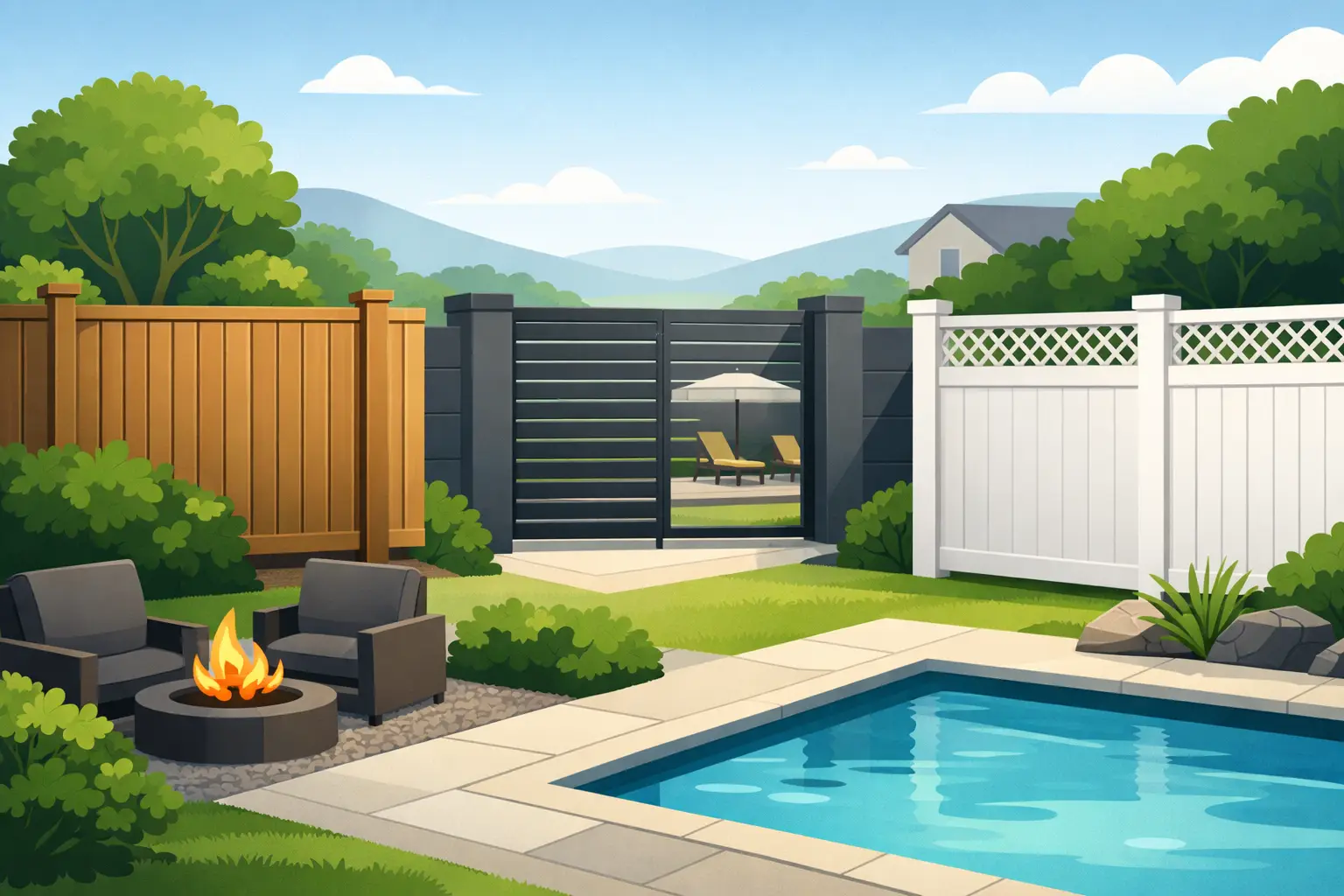
A backyard can feel open in all the wrong ways when the gate is the weak point. You may have a solid fence, a well-planned patio, and landscaping that adds real value, but if the entry is flimsy, too low, or poorly placed, privacy disappears fast. That is why privacy gates for backyard areas deserve the same attention as the rest of the project.
For many homeowners in Maryland and the DC area, the goal is not just to block a view. It is to create a backyard that feels secure, polished, and comfortable to use every day. A properly built privacy gate should match the fence, hold up to weather, operate smoothly, and make the entire yard feel more complete.
Why privacy gates for backyard projects matter
A backyard gate does more than open and close. It controls sightlines, defines access, and affects how safe and finished your property feels. If you have children or pets, that matters immediately. If you entertain often, it matters in a different way. Guests notice when a gate drags, sags, or looks like an afterthought.
The best privacy gates for backyard layouts are designed as part of the full exterior space, not added at the end because one side needs an entrance. That design-first approach usually leads to better placement, stronger posts, cleaner lines, and a gate that works with nearby hardscaping instead of fighting it.
There is also a curb appeal factor that homeowners sometimes underestimate. Even when the gate is in the side or rear yard, its appearance influences how cohesive the property looks. A gate that matches the fence style, trim details, and hardware can make the entire installation look custom.
What makes a backyard privacy gate effective
Height is the first piece of the puzzle, but it is not the only one. A tall gate with large gaps between boards still leaves you exposed. A beautiful gate built with undersized framing may look great for six months, then start to sag.
A good privacy gate balances coverage, structure, and day-to-day usability. It should block direct views, use durable framing, and swing or slide without strain. Depending on the property, it may also need upgraded hardware, reinforced posts, or a latch setup that is easier to secure from both sides.
This is where professional installation makes a real difference. Gates take more abuse than most fence sections. They move constantly, carry weight at one side, and deal with changing ground conditions. If the opening is not measured correctly or the support posts are not set properly, problems usually show up early.
Choosing the right material for privacy gates for backyard use
Material choice affects maintenance, longevity, style, and budget. There is no one-size-fits-all answer, because the right option depends on how you use the space and how much upkeep you want over time.
Wood remains a popular choice because it offers a classic, substantial look and strong privacy. It can be customized easily, stained in a range of tones, and matched to many home styles. The trade-off is maintenance. In our region, moisture, heat, and seasonal swings can wear on wood over time, especially if the gate is exposed to heavy sun or poor drainage.
Vinyl is a strong option for homeowners who want a clean appearance and lower maintenance. It resists rot, does not need painting, and can provide excellent privacy when built with full panels. Quality matters here. A better-grade product with reinforced components will perform far better than thinner materials that may flex or fade.
Aluminum is often chosen for decorative fencing, but for true privacy it usually works best when paired with panels or used in a mixed-design application. It is durable and low-maintenance, though not every backyard calls for its look.
Composite materials can be an excellent fit for homeowners focused on long-term value. They tend to offer a refined appearance with less upkeep than wood, and they often pair well with higher-end outdoor living projects. If your gate is part of a broader investment that includes a deck, patio, or retaining wall, composite may help create a more unified result.
Design details that make a gate feel custom
The difference between a basic gate and one that elevates the yard often comes down to details. Board orientation, top profile, trim pieces, post caps, and hardware all matter. So does how the gate lines up with the rest of the fence.
A full-privacy gate with a flat top creates a clean, modern look. A slightly arched top can soften the line and feel more traditional. Horizontal boards can look striking on contemporary homes, while vertical boards remain a dependable choice for a wide range of properties.
Hardware deserves more attention than it usually gets. Hinges, latches, handles, and self-closing options all affect performance. Heavy-duty hardware costs more upfront, but it is usually worth it. A privacy gate gets used often, and weak hardware can shorten the life of the installation.
If the gate sits near a patio, walkway, or outdoor entertaining area, design coordination matters even more. The gate should not feel disconnected from the rest of the exterior. This is one reason homeowners often benefit from working with a contractor that understands both fencing and hardscape design.
Placement can improve privacy more than height alone
Some homeowners assume the answer is simply building the tallest gate allowed. Sometimes that helps. Sometimes smarter placement does more.
If the gate is positioned where neighbors or passersby can see straight into the yard, even a strong privacy design may still leave the space feeling exposed. Shifting the gate location, adjusting the fence return, or adding landscaping near the entrance can improve the sense of privacy without making the yard feel closed off.
This matters on corner lots, homes with walkout basements, and properties where the backyard transitions into multiple outdoor zones. A gate should work with the way people actually move through the space. If it is too narrow, inconvenient, or placed in the wrong area, it will become frustrating quickly.
Security, pets, and family use
For many families, privacy and security go hand in hand. A gate should help keep children and pets safely within the yard while giving homeowners more confidence in the space. That usually means dependable latching, proper clearance at the bottom, and no weak points around the frame.
If you have a dog that likes to push against gates, strength matters more than appearance alone. If you use lawn equipment or need regular access for service providers, width and swing direction matter too. These practical questions are easy to miss at the planning stage, but they have a major impact on satisfaction after installation.
There are also cases where a double gate makes more sense than a single pedestrian gate, especially for homeowners who want easier backyard access for maintenance, future landscape work, or patio upgrades. It costs more, but it can save hassle later.
How climate affects gate performance in Maryland and DC
Our region puts outdoor structures through a lot. Humid summers, freeze-thaw cycles, rain, and shifting ground can all affect a gate over time. That is why installation standards matter just as much as material choice.
Posts need proper footings. Frames need to be built to handle movement and weight. Hardware should be selected with weather exposure in mind. A gate that looks fine on install day but is not built for local conditions may start sticking, sagging, or loosening faster than expected.
This is also where bargain pricing can become expensive. A lower quote may leave out the reinforcements and build quality that keep a privacy gate functioning well for years. Homeowners who plan to stay in their home usually benefit more from doing it right the first time.
When to replace an existing gate instead of repairing it
Repairs can make sense when the issue is isolated, such as worn hardware or minor alignment problems. But if the gate frame is twisted, the posts are failing, or the material is showing widespread deterioration, replacement is often the better investment.
A new gate can also be worth considering when the old one no longer fits the look or function of the yard. Many homeowners upgrade a gate as part of a larger backyard improvement plan, especially when adding a new patio, deck, walkway, or fence section. In those cases, it makes sense to think about the whole exterior instead of patching one element at a time.
At A-1 Fencing, that full-project mindset is often what helps homeowners avoid mismatched work and repeated contractor visits. When one experienced team can handle the fencing details alongside related outdoor improvements, the finished result tends to feel more intentional.
What homeowners should expect from the process
A well-built privacy gate starts with an on-site conversation about the property, not a generic price over the phone. Grade changes, fence layout, material preferences, and how the yard is used all influence the right solution.
A dependable contractor should walk you through options clearly, explain trade-offs honestly, and recommend a gate that fits both your goals and your budget. Not every homeowner needs the same material or design. Some need maximum privacy. Others want a better-looking gate that complements a larger outdoor living investment.
The right answer is the one that works well in daily life and still looks strong years from now. When the gate is designed and installed with care, it does not just close off the yard. It helps make the entire backyard feel more private, more secure, and more worth enjoying.
If your current gate is the part of the yard you avoid looking at, that is usually a sign it is time to improve more than the entry point. The right gate can change how the whole backyard feels the moment it clicks shut.