
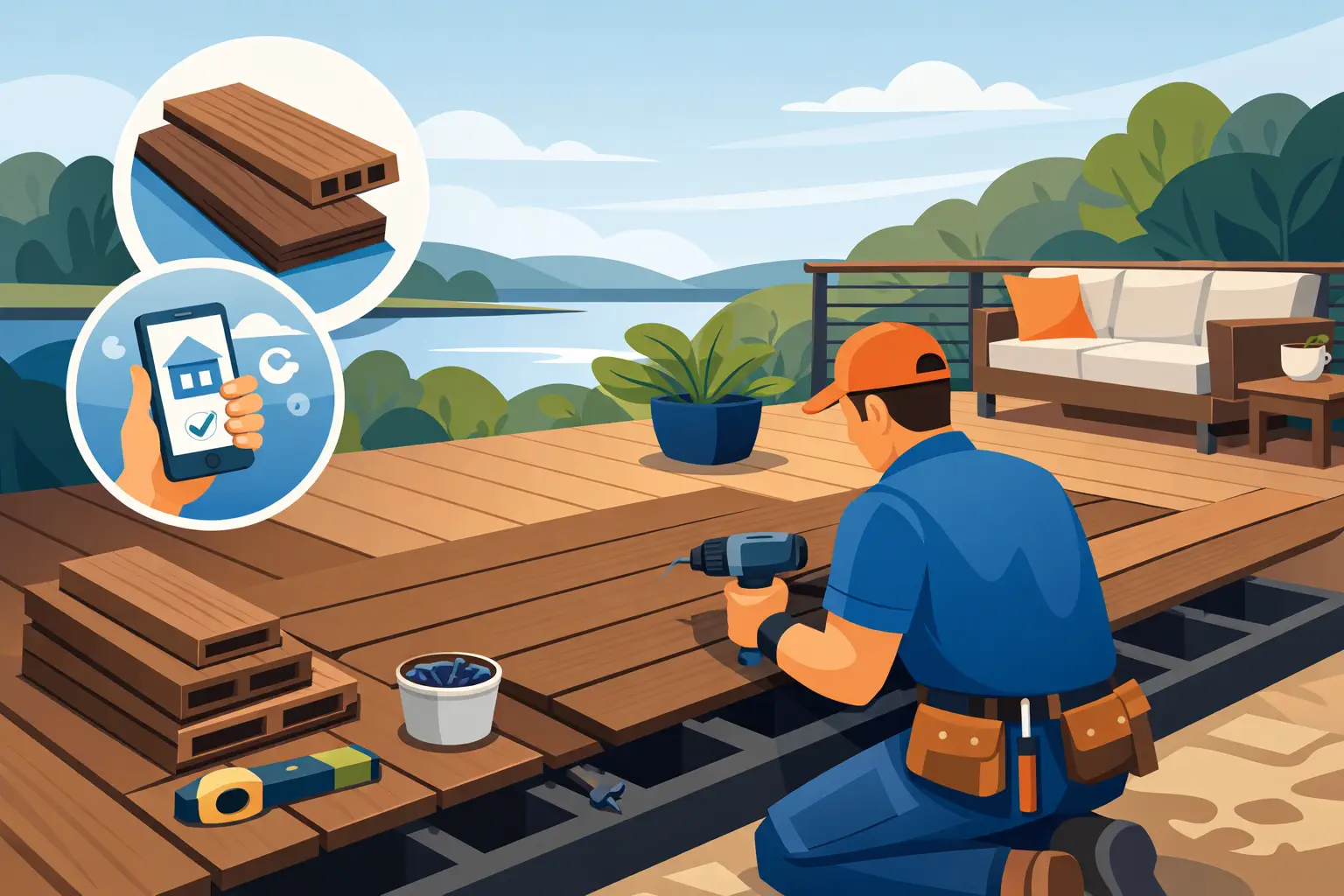
A deck usually starts as a simple idea – more room for cookouts, a safer place for the kids, somewhere to sit after work without staring at patchy grass. But when homeowners want to build deck composite decking into a real long-term upgrade, the material choice matters just as much as the layout. The wrong decision can leave you dealing with fading, splinters, warped boards, and maintenance that never really ends.
Composite decking has become a go-to choice for homeowners across Maryland and the DC area because it solves problems that traditional wood often creates. It gives you the look of a finished, high-end outdoor space without tying you to the cycle of staining, sealing, and replacing damaged boards every few years. For busy families and homeowners investing in property value, that trade-off is often worth serious consideration.
Why homeowners build deck composite decking now
Most people are not choosing composite because they want the newest trend. They are choosing it because they are tired of upkeep. A wood deck can look great on day one, but weather, foot traffic, moisture, and sun exposure all start working against it almost immediately.
Composite decking is designed to hold up better over time. It resists rot, insect damage, and splintering, which makes it especially appealing for households with children, pets, or frequent guests. It also keeps its finished appearance longer, so your deck is more likely to look polished season after season instead of looking worn before the next summer even starts.
That does not mean composite is maintenance-free. It still needs cleaning, and lower-quality products can show wear sooner than expected. But compared with pressure-treated lumber, the maintenance demands are dramatically lower. For many homeowners, that is the difference between enjoying the deck and feeling like they are constantly working on it.
What to know before you build deck composite decking
The best deck projects start with realistic expectations. Composite decking gives you durability and a cleaner finished look, but planning still matters. Board quality, framing, drainage, layout, and installation details all affect how the deck performs years from now.
One of the biggest misconceptions is that all composite products are basically the same. They are not. The quality can vary a lot between manufacturers and product lines. Premium options from brands like Trex and TimberTech generally offer stronger warranties, better color retention, and more realistic woodgrain finishes. Budget products can lower the upfront cost, but they may not hold their appearance as well over time.
Climate also plays a role. In Maryland and Washington, DC, decks need to handle humid summers, rain, freeze-thaw cycles, and plenty of seasonal debris. That makes proper substructure, spacing, and water management just as important as the surface boards themselves. A good-looking deck that is poorly built underneath will not stay good-looking for long.
Design matters as much as material
A composite deck should fit the way you actually use your yard. Some homeowners want a simple platform outside the back door. Others need a multi-level layout with wide stairs, built-in seating, privacy features, or lighting that makes the space more usable in the evening.
This is where professional design-build service becomes valuable. It is not just about measuring a rectangle and placing boards. It is about making the deck feel connected to the home and yard, accounting for grade changes, traffic flow, and how the space will be used in real life. A deck that looks oversized on paper may feel perfect for entertaining. A deck that seems large enough at first may feel cramped once furniture and a grill are in place.
Color and finish are long-term decisions
Composite decking offers more color choices than many homeowners expect. That can be a major advantage, but it also means you should choose carefully. Cooler grays, warmer browns, and rich multi-tonal finishes each create a different look against your siding, patio, railing, and landscaping.
Lighter colors can stay more comfortable underfoot in direct sun, while darker tones often deliver a more dramatic, upscale appearance. The right answer depends on your home style, sun exposure, and how much visible dust or pollen you are willing to tolerate. A board sample that looks perfect in a showroom may look very different in your backyard at 3 p.m. in July.
The real value of composite decking
Homeowners often focus first on price, which is understandable. Composite decking usually costs more upfront than pressure-treated wood. If you are only comparing the initial material bill, wood often looks like the cheaper option.
That changes when you look at ownership over time. Wood decks typically demand regular staining or sealing, and repairs are more common as boards crack, twist, or deteriorate. Composite reduces those recurring costs and lowers the amount of effort needed to keep the deck looking finished. If your goal is a deck that still adds value and enjoyment several years from now, the higher initial investment can make better financial sense.
There is also the curb appeal factor. A well-built composite deck tends to maintain a cleaner, more consistent appearance, which matters when you are investing in the overall look of your property. For many homeowners, the deck is not just a backyard surface. It is part of the home’s presentation and part of how the outdoor space supports daily life.
Installation quality can make or break the project
Even top-tier composite boards cannot compensate for poor workmanship. Uneven framing, bad spacing, weak footings, and sloppy trim work will show up quickly. In some cases, they can even shorten the life of the deck or void manufacturer warranty coverage.
That is why contractor selection matters so much. Homeowners in this market are not looking for a weekend handyman or a low-bid crew that disappears when problems show up. They want a trusted contractor who understands local conditions, code requirements, proper drainage, and the finishing details that separate an average build from an award-worthy one.
A professional installation also makes the project easier on the homeowner. Instead of trying to coordinate design decisions, permits, materials, and scheduling on your own, you get one accountable team handling the process from consultation through construction. That is especially valuable when the deck ties into other exterior upgrades like fencing, patios, or walkways.
When composite is the right choice – and when it may not be
Composite is an excellent fit for many homes, but the right recommendation depends on priorities. If your top goal is the lowest possible upfront cost, a basic wood deck may still be the better fit. If you love the aging character of natural lumber and do not mind regular maintenance, wood can still be appealing.
But if you want long-term durability, less upkeep, and a finished look that stays attractive with fewer headaches, composite usually comes out ahead. It is especially well suited for homeowners who plan to stay in their home, want to improve resale appeal, or simply prefer spending weekends on the deck instead of maintaining it.
The strongest projects begin with a clear conversation about budget, design goals, and how you want the space to perform. That is where an experienced contractor can help you weigh options honestly rather than pushing a one-size-fits-all answer.
Choosing a contractor for your composite deck
When you are investing in a major exterior upgrade, trust is not a bonus. It is part of the product. Homeowners should expect upfront pricing, clear communication, quality materials, and workmanship that reflects pride in the finished job.
A family-run contractor with a strong local reputation brings a different level of accountability to the process. That means showing up when promised, treating the property with care, and building a deck that feels solid, safe, and tailored to the home. For many homeowners in Maryland and Washington, DC, that peace of mind is just as important as the boards themselves.
At A-1 Fencing, that approach is what turns a deck project into a full outdoor living improvement rather than a simple construction job. The goal is not just to install composite decking. It is to create a space your family will actually use and enjoy for years.
If you are thinking about a new deck, the smartest next step is not guessing from online photos or comparing boards in isolation. It is getting a professional opinion on layout, materials, and budget from a contractor who knows how these projects perform in real backyards. The right deck should look great on installation day, but it should matter even more five summers from now.