
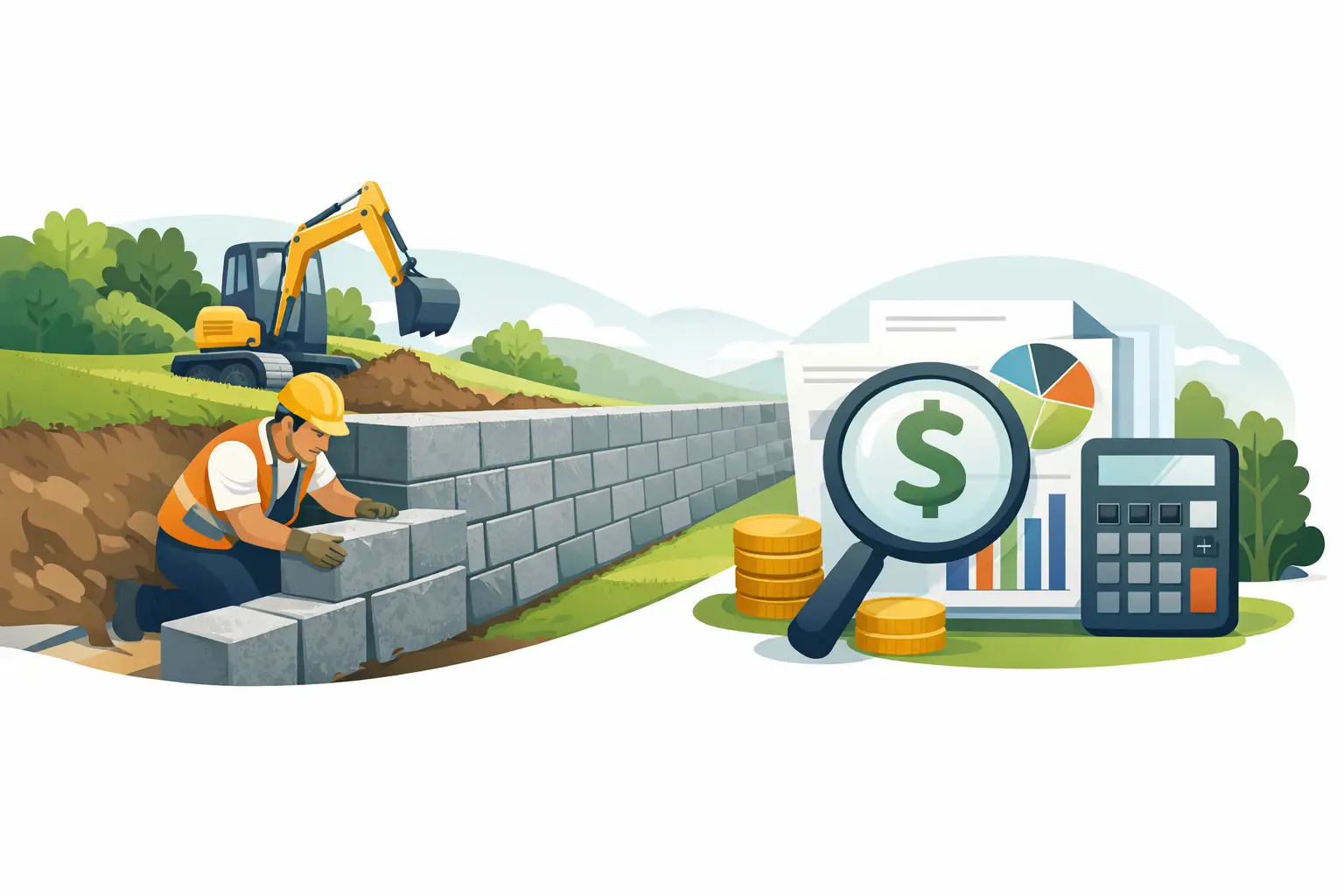
If your yard is sloped, washing out, or difficult to use, a retaining wall can solve more than a cosmetic problem. Retaining wall installation cost often comes down to one simple question: are you paying for a basic wall, or for a long-term structural solution that protects your property and makes the space more usable?
That distinction matters in Maryland and the DC area, where rolling grades, drainage issues, and tight property layouts are common. A low decorative wall along a patio edge is a very different project from a tall engineered wall holding back a hillside. Homeowners who understand that early tend to budget more accurately and avoid surprises once construction begins.
What affects retaining wall installation cost?
The biggest driver is wall height. A short wall that supports a small grade change may be fairly straightforward, while a taller wall carries more soil pressure and usually requires deeper base preparation, stronger materials, and better drainage. As height increases, installation becomes less about appearance and more about structure.
Length also plays a major role. A 40-foot wall and a 100-foot wall may use similar materials, but labor, excavation, backfill, and site preparation increase with scale. Curves, corners, steps, and tiered wall layouts can also raise costs because they require more layout work and more cutting during installation.
Material choice is another major pricing factor. Concrete retaining wall blocks are popular because they balance durability, appearance, and value. Natural stone can create a premium look, but it typically costs more in both materials and labor. Timber may start at a lower price point, but it usually does not offer the same lifespan or structural reliability as segmental block systems in demanding conditions.
Then there is what homeowners do not always see in the finished wall. Proper excavation, compacted base material, backfill stone, drainage pipe, and grading are essential. These hidden parts protect the wall from movement, water buildup, and premature failure. When one quote is much lower than another, this is often where the difference is hiding.
Average retaining wall installation cost by project type
For a small decorative or light-duty retaining wall, many homeowners may spend a few thousand dollars, especially if the wall is short, accessible, and built with standard concrete block. Once you move into medium-sized backyard walls that address slope and drainage, the price can increase significantly.
A typical professionally installed retaining wall often falls somewhere in the broad range of $40 to $100 or more per square face foot, depending on material, engineering requirements, and site conditions. On straightforward projects, the cost may stay closer to the lower end. On structural walls, premium finishes, or difficult sites, it can rise well above that range.
For example, a modest wall that is 30 feet long and 3 feet high has 90 square face feet. A more complex wall that is 60 feet long and 4 feet high has 240 square face feet. Even before factoring in access issues, permits, or drainage improvements, that size difference changes the investment considerably.
That is why ballpark pricing can only take you so far. The real number depends on what your property needs to stay stable and look right when the work is done.
Material choices and how they change the price
Concrete block retaining walls are often the most practical choice for homeowners who want a clean appearance and dependable performance. They come in a wide range of colors and textures, and quality systems are designed for strength as well as curb appeal. For many homes, this is the sweet spot between cost and longevity.
Natural stone walls usually cost more, but many homeowners choose them for their distinctive look. They can blend beautifully with patios, walkways, and outdoor living areas, especially on higher-end properties. The trade-off is that stone often involves more labor and a higher material cost.
Poured concrete can work well in some applications, especially when a sleek, modern finish is desired. However, formwork, reinforcement, and finish details can affect pricing quickly. It is not always the most cost-effective option for residential yards.
Timber walls may look appealing from a budget standpoint, but they are generally less durable over time, especially in areas with moisture exposure. If the goal is a lasting improvement that adds value and reduces future maintenance, many homeowners prefer a more permanent material from the start.
Why drainage is a major cost factor
Water is one of the biggest reasons retaining walls fail. A wall is not just holding soil. It is often dealing with groundwater, runoff, and pressure that builds behind it during heavy rain. In our region, where storms can be intense and yards often have existing drainage issues, this cannot be treated as an extra.
Proper drainage may include clean stone backfill, perforated drain pipe, filter fabric, and grading adjustments to move water away from the wall. If downspouts are emptying near the project area, they may need to be redirected as well. These details add cost, but they also protect the investment.
A lower upfront quote that skips drainage work can become the more expensive choice if the wall leans, bulges, or fails early. Homeowners are usually better served by asking what is included behind the wall, not just what the face will look like from the yard.
Site conditions can raise or lower the total price
Access matters more than most people expect. If crews and equipment can reach the work area easily, installation is usually faster and more efficient. If the wall is in a fenced backyard with limited entry, steep terrain, or little room for excavation equipment, labor costs can increase.
Soil conditions also affect the scope. Loose, wet, or unstable soil may require more excavation and stronger base preparation. If there are tree roots, old structures, utility concerns, or failing walls to remove first, that adds time and cost as well.
In some cases, permits or engineering are required. Taller walls, walls near driveways or structures, and walls with significant load demands often need more planning. That step adds to the budget, but it also helps ensure the wall is built to perform safely over time.
Cheap retaining walls usually cost more later
Homeowners sometimes compare proposals by looking only at the final number. That is understandable, but with retaining walls, the lowest price is not always the best value. A wall can look fine on day one and still be poorly built underneath.
Shortcuts often show up as shallow bases, poor compaction, inadequate drainage, or the wrong material for the wall height. Those mistakes may not be obvious until the first freeze-thaw cycle or a season of heavy rain. At that point, repairs are disruptive and far more expensive than getting the installation right the first time.
A trusted contractor should be able to explain what the wall is designed to do, what materials are being used, and how drainage and base preparation are handled. If the explanation feels vague, that is usually a sign to ask more questions.
How to budget for your retaining wall installation cost
Start with the purpose of the wall. If you only need to define a garden bed, your cost will be very different from a project that creates flat yard space, protects a patio, or stabilizes a slope near your home. The more structural the need, the more important professional design and installation become.
It also helps to think beyond the wall itself. Many homeowners combine retaining walls with patios, walkways, fencing, or drainage improvements so the whole outdoor space works together. That can increase the project size, but it often creates a better final result and may be more efficient than hiring multiple contractors at different times.
If financing is part of your plan, ask about that early. It can make a larger project more manageable and help you choose the right long-term solution rather than settling for a short-term fix.
Getting an accurate quote
The best way to understand your true retaining wall installation cost is to have the site evaluated in person. Measurements matter, but so do grade changes, drainage patterns, access, and the overall layout of your yard. A free in-home consult and estimate gives you a clearer picture of what the job actually requires.
An experienced design-and-build contractor can also help you weigh options. Sometimes a tiered wall makes more sense than one tall wall. Sometimes a different material gives you a better balance of appearance and budget. Sometimes solving the drainage issue changes the entire scope for the better.
For homeowners who want quality workmanship, dependable service, and a finished project that adds real value, the goal is not just to find the lowest number. It is to build something that protects your property and improves how you use your outdoor space. That is where working with a trusted local company such as A-1 Fencing makes the conversation easier and the outcome more reliable.
A retaining wall should give you confidence every time it rains, every time you step into the yard, and every time you look at your property and know the job was done right.