
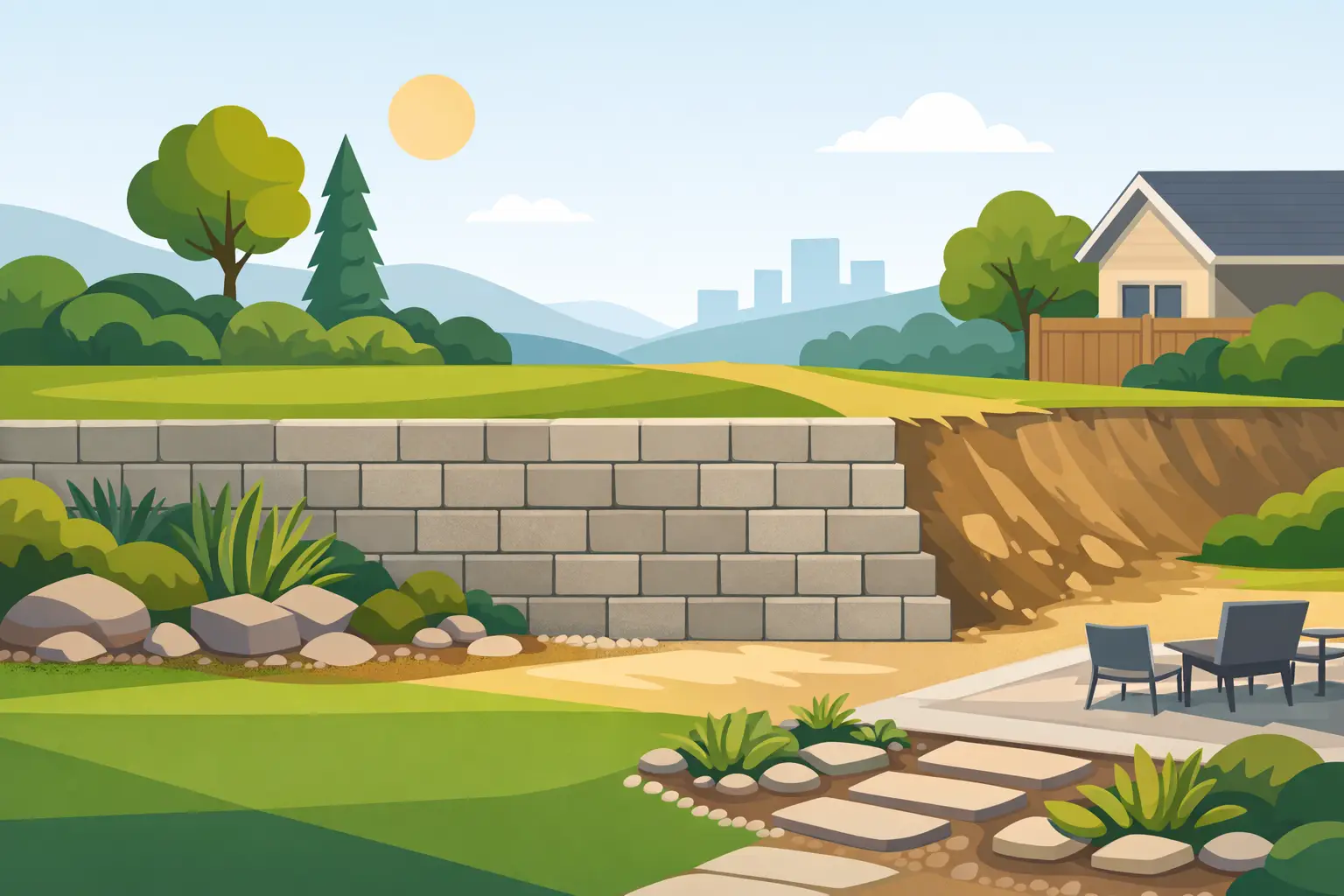
A backyard can look fine on a dry afternoon and still be one heavy rain away from trouble. If you have a sloped yard, soil washing into your lawn, or a patio that never seems fully stable, you may be asking when do you need a retaining wall. That question usually comes up after homeowners notice water, movement, or lost usable space – and by then, the issue is often more than cosmetic.
A retaining wall is built to hold back soil and manage elevation changes safely. It can also create clean lines, support outdoor living areas, and help make a difficult yard more functional. But not every slope needs one, and not every wall should be treated as a simple landscaping feature. The right answer depends on your property, drainage, grading, and what you want the space to do over time.
When do you need a retaining wall on your property?
In the simplest terms, you need a retaining wall when soil needs support and the grade change is too steep to manage naturally. That may mean preventing erosion, creating level ground for a patio, protecting a driveway, or keeping a hillside from shifting toward your home.
Many homeowners in Maryland and the Washington, DC area deal with uneven lots, runoff from neighboring properties, and yards that become harder to maintain year after year. In those situations, a retaining wall is not just about looks. It is often a practical fix that helps protect both the property and the investment you are making in it.
Signs your yard may need one
One of the clearest signs is visible erosion. If mulch, soil, or gravel keeps washing downhill after storms, the slope may be too active to leave untreated. Another common sign is exposed roots or bare patches where grass will not stay established because water keeps carrying topsoil away.
You may also need a retaining wall if your yard has a steep drop that limits how you can use the space. A slope that makes mowing difficult, cuts off room for a play area, or prevents a level patio installation is often a good candidate. In those cases, the wall creates structure and opens up usable square footage.
Cracking, settling, or movement around existing hardscapes can also point to a grade support issue. If a walkway shifts, a patio edge starts sinking, or soil pulls away from nearby structures, the underlying problem may be pressure from unstable ground or poor water control.
Common situations where retaining walls make sense
Some retaining walls are built because a property has an obvious slope. Others become necessary as part of a larger design-and-build project. The need is often tied to what the space has to support.
You want a level area for outdoor living
If you are planning a new patio, fire pit area, deck landing, or walkway on sloped ground, leveling the area may require a retaining wall. Without one, the surface can end up uneven, under-supported, or vulnerable to washout. That is especially true for larger hardscape installations where long-term stability matters as much as appearance.
A properly built wall can turn an awkward hillside into a defined outdoor living space. It gives the project a solid edge, helps hold the grade in place, and makes the yard feel intentional instead of compromised.
Water runoff is damaging your landscape
Water is one of the biggest reasons retaining walls become necessary. If rainwater is channeling down a hill and cutting through planting beds, lawn areas, or hardscape surfaces, a wall may be part of the fix. The key phrase there is part of the fix, because the wall alone is not enough.
Drainage has to be addressed at the same time. A retaining wall should be designed with proper backfill, drainage stone, and water management features so pressure does not build up behind it. When water control is ignored, even a good-looking wall can fail early.
Soil is pushing toward a structure
If a slope is pressing toward a fence line, driveway, shed, or home foundation area, the soil may need to be retained before it causes more damage. This is where professional assessment matters. What looks like a simple hill can carry a surprising amount of weight, especially when saturated.
The goal is not just to stop the dirt from moving today. It is to build a solution that continues performing through seasonal weather changes, freeze-thaw cycles, and heavy storms.
When a slope does not automatically mean you need a retaining wall
Not every incline requires a wall. Some yards can be managed with regrading, plantings, swales, or smaller landscape solutions. If the slope is gentle, stable, and not affecting how you use the property, a retaining wall may be unnecessary.
That said, homeowners often wait too long because the issue starts small. A little runoff becomes a recurring washout. A slightly uneven grade becomes a patio problem. A steep edge near a fence becomes an ongoing maintenance headache. The best time to evaluate the need is before you spend money on surrounding improvements that depend on stable ground.
Why professional design matters
Retaining walls are one of those projects that can look straightforward from the front and be highly technical underneath. The visible blocks or stone are only one part of the system. Base preparation, soil conditions, wall height, drainage, and load pressure all affect performance.
That is why experienced installation matters. A wall that is too shallow, poorly drained, or not suited to the site can bow, crack, or lean. Repairs are rarely cheap, and failure can damage nearby landscaping, patios, fencing, or structures.
For homeowners who want a lasting result, the value is in having one trusted contractor evaluate the full picture – slope, drainage, design, access, and how the wall fits with the rest of the property. That is especially helpful if the wall is part of a larger backyard upgrade rather than a standalone repair.
Materials and appearance matter too
Function comes first, but appearance still matters. A retaining wall is a prominent feature, and it should fit the style of your home and yard. Some homeowners want a clean, structural look that complements a patio or walkway. Others prefer a more natural appearance that blends into the landscape.
The right material depends on the wall’s purpose, height, and setting. Segmental concrete block systems are popular because they offer strength, consistency, and a wide range of finishes. Natural stone can create a more custom look, though design and installation requirements may vary. What matters most is choosing a material and system appropriate for the load and site conditions, not just the color you like best in a sample.
Cost questions homeowners usually ask
One of the first questions is whether a retaining wall is worth the investment. If the wall prevents erosion, protects a hardscape project, or creates usable yard space that you otherwise would not have, the answer is often yes. It can also improve curb appeal and reduce ongoing maintenance issues.
The real cost depends on wall height, length, access to the site, drainage needs, material choice, and whether the project is part of a broader outdoor renovation. A low decorative garden wall is very different from a structural wall holding back a heavy slope. That is why an on-site evaluation is the only reliable way to price the job accurately.
Homeowners also want to know whether this is the kind of project they can postpone. Sometimes it can wait. Sometimes delaying means more erosion, more water damage, and a more expensive fix later. If you are seeing active movement or runoff, it is wise to have it looked at sooner rather than later.
When do you need a retaining wall before other upgrades?
If you are planning a fence, patio, walkway, or new backyard layout, the retaining wall may need to come first. Stable grading is the foundation for everything built around it. Installing surrounding features before solving slope and soil issues can lead to avoidable repairs and compromised results.
This is where working with a full-service outdoor contractor makes a real difference. Instead of hiring separate companies to address grade, hardscape, and finishing details independently, you can approach the space as one coordinated project. For many homeowners, that means less stress, clearer accountability, and a better end result.
At A-1 Fencing, that is often how retaining wall projects begin – not as isolated fixes, but as part of creating a safer, more usable, better-looking outdoor space that holds up over time.
If your yard is losing soil, holding too much water, or limiting how you can enjoy the property, it is worth taking a closer look now. The right retaining wall does more than hold back a hill. It gives your landscape structure, protects the work around it, and helps your outdoor space feel finished in a way that lasts.