
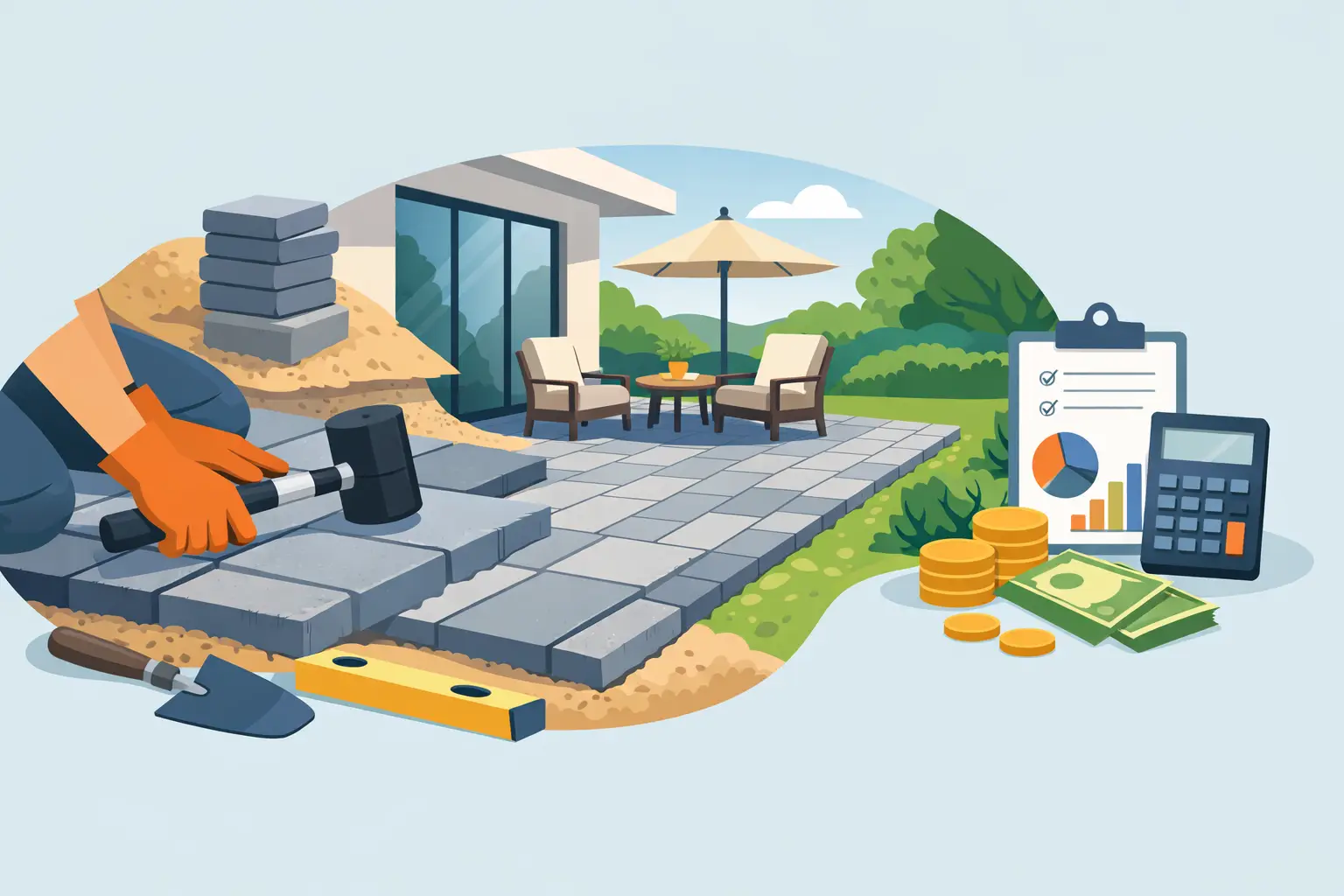
A patio can look simple on paper – a clean surface, a few steps, maybe a fire pit – but the patio installation cost can shift quickly once real site conditions, materials, and design choices come into play. For homeowners in Maryland and the DC area, the biggest mistake is budgeting for the patio itself without accounting for drainage, grading, access, and the finish details that make the space last.
If you are planning an outdoor project, it helps to think beyond a price per square foot. A well-built patio is part of how your yard functions. It affects drainage, traffic flow, curb appeal, and how often you actually use your outdoor space. That is why two patios with the same dimensions can end up at very different price points.
What affects patio installation cost most?
The biggest driver is material. Concrete pavers, natural stone, poured concrete, and brick all come with different price ranges, labor demands, and long-term maintenance needs. Pavers are a popular choice because they offer a strong balance of appearance, durability, and repairability. Natural stone gives a premium look, but it usually costs more in both material and installation.
Size matters too, but not always in the way homeowners expect. A larger patio costs more overall, yet smaller patios can sometimes have a higher cost per square foot because the fixed labor, mobilization, and prep work are spread over less area. Curves, borders, inlays, steps, sitting walls, and built-in features also raise the cost because they require more time, more cuts, and more planning.
The condition of the yard is another major factor. If the area needs excavation, grading, removal of old concrete, root management, or drainage correction, that work adds to the project before the first paver is even set. In the Mid-Atlantic, where freeze-thaw cycles can expose poor base preparation fast, proper groundwork is not the place to cut corners.
Typical patio installation cost ranges
For many homeowners, a basic patio installation cost starts in the low thousands for a smaller, straightforward space and rises into the mid to upper five figures for larger custom patios with premium materials and built-in features. A simple paver patio in an accessible, level backyard will usually cost far less than a multi-level design with retaining elements, steps, lighting, and a fire feature.
A modest entertaining patio might be suitable for a grill, dining set, and a little room to move around. A more complete outdoor living patio often includes space for lounging, cooking, pathways, or transitions to a deck, fence, or retaining wall. That added function increases both square footage and complexity.
This is why ballpark numbers only go so far. Homeowners often see online estimates that sound appealing but leave out demolition, base prep, edge restraint, polymeric sand, drainage upgrades, and permit-related costs where applicable. The real value comes from a detailed estimate that reflects your property, not an average from another market.
Material choices and how they change the price
Concrete pavers are one of the most requested options because they deliver a clean finished look and hold up well when installed correctly. They come in a wide range of colors, shapes, and textures, which makes them a good fit for both traditional and modern homes. Their price can vary significantly based on brand, thickness, pattern, and whether the design includes accent borders or contrasting bands.
Poured concrete is often seen as a lower-cost option at the start, especially for simple slab layouts. Still, it has trade-offs. It can crack over time, and repairs are usually more noticeable than they are with pavers. For homeowners who care about long-term appearance and easier spot repairs, that difference matters.
Natural stone tends to sit at the higher end of the patio installation cost range. The material itself is more expensive, and installation often takes more skilled labor because each piece may vary in thickness and shape. The result can be beautiful and distinctive, but it is not usually the budget choice.
Brick has a classic look and strong curb appeal, especially on older homes or properties with traditional architecture. Like stone, it can increase labor demands depending on the layout and pattern. Some homeowners choose brick as an accent instead of the full field material to control cost while still adding character.
Site conditions can add more than homeowners expect
A flat, open backyard with easy equipment access is the most budget-friendly scenario. Once access becomes tight, labor tends to increase. If crews need to move materials by hand through a side gate or work around existing landscaping, fencing, or utilities, the installation becomes more time-intensive.
Slope also changes the equation. A patio built on a grade may need extra excavation, compacted base material, or even retaining walls to create a stable footprint. Drainage is especially important here. Water should move away from the house and not collect under the patio, where it can cause settling or surface issues later.
Existing structures affect the budget too. Tying a new patio into a deck, walkway, outdoor fireplace, or gate area can improve the overall design, but it takes planning and careful finish work. The patio may be one part of a larger outdoor improvement plan rather than a standalone project.
Design features that increase patio installation cost
This is where homeowners often choose between a basic surface and a true outdoor living space. A rectangular patio with one material and no transitions is usually more economical than a custom layout with seating walls, pillars, built-in lighting, steps, or a fire pit.
Borders and patterns are a good example. They are not just decorative. They help define the patio visually and can tie the space into the home or surrounding hardscape. But they also add layout time, material changes, and cutting labor.
Steps and level changes can add substantial cost because they require more structural planning than a flat field patio. The same goes for seat walls and retaining elements. These features can completely elevate the finished space, but they should be budgeted intentionally rather than treated as minor add-ons.
Why the lowest bid is often the most expensive later
When homeowners compare quotes, it is natural to focus on the bottom line. The problem is that patio pricing is not always apples to apples. One contractor may include full excavation, compacted aggregate base, proper edge restraints, drainage planning, cleanup, and warranty coverage. Another may price the job lean and leave out the very steps that protect the patio over time.
That difference matters more than the initial savings. Poor compaction, thin base preparation, and rushed installation can lead to settling, shifting, weed intrusion, and water problems. Fixing a failed patio is usually more expensive than building it correctly the first time.
For homeowners who want quality and accountability, the better question is not just what the patio costs today. It is what you are getting for that price, who is standing behind the work, and how confident you feel in the crew working on your property.
How to budget for your patio realistically
Start with the size you actually need, not just the largest space that fits the yard. A patio should support how you live outside. If you want room for dining, grilling, and a seating area, plan for all three so the space does not feel crowded after installation.
Next, decide where to invest. Some homeowners prefer to keep the patio field simple and spend more on a fire pit, wall seating, or a connected walkway. Others want premium pavers and a clean, elegant layout without many built-ins. There is no single right answer. The best layout is the one that fits your property, priorities, and budget.
It also helps to leave room in the budget for the things that protect the installation, not just the things you can see. Base prep, drainage, and edge support may not be the exciting part of the project, but they are what keep the patio performing year after year.
For many Maryland and DC homeowners, financing can make a larger outdoor project more manageable, especially when the patio is part of a broader plan that includes fencing, a deck, or retaining walls. A well-designed project often adds both daily enjoyment and long-term value to the property.
Getting an accurate patio installation cost estimate
The most reliable estimate comes from an in-home consultation where the contractor can evaluate slope, access, drainage, existing structures, and your design goals. That is the point where a rough online number becomes a real project budget.
A trusted local contractor should be able to explain the trade-offs clearly. If one material saves money upfront but requires more maintenance, you should hear that. If your yard needs grading before installation, that should be addressed early, not after work begins. Clear communication is part of good craftsmanship.
At A-1 Fencing, we have seen how much smoother outdoor projects go when homeowners get honest pricing, quality materials, and a design-build team that respects their property from start to finish. The right patio is not just another surface in the backyard. It is where family dinners stretch longer, guests gather more easily, and your outdoor space finally starts working the way it should.