
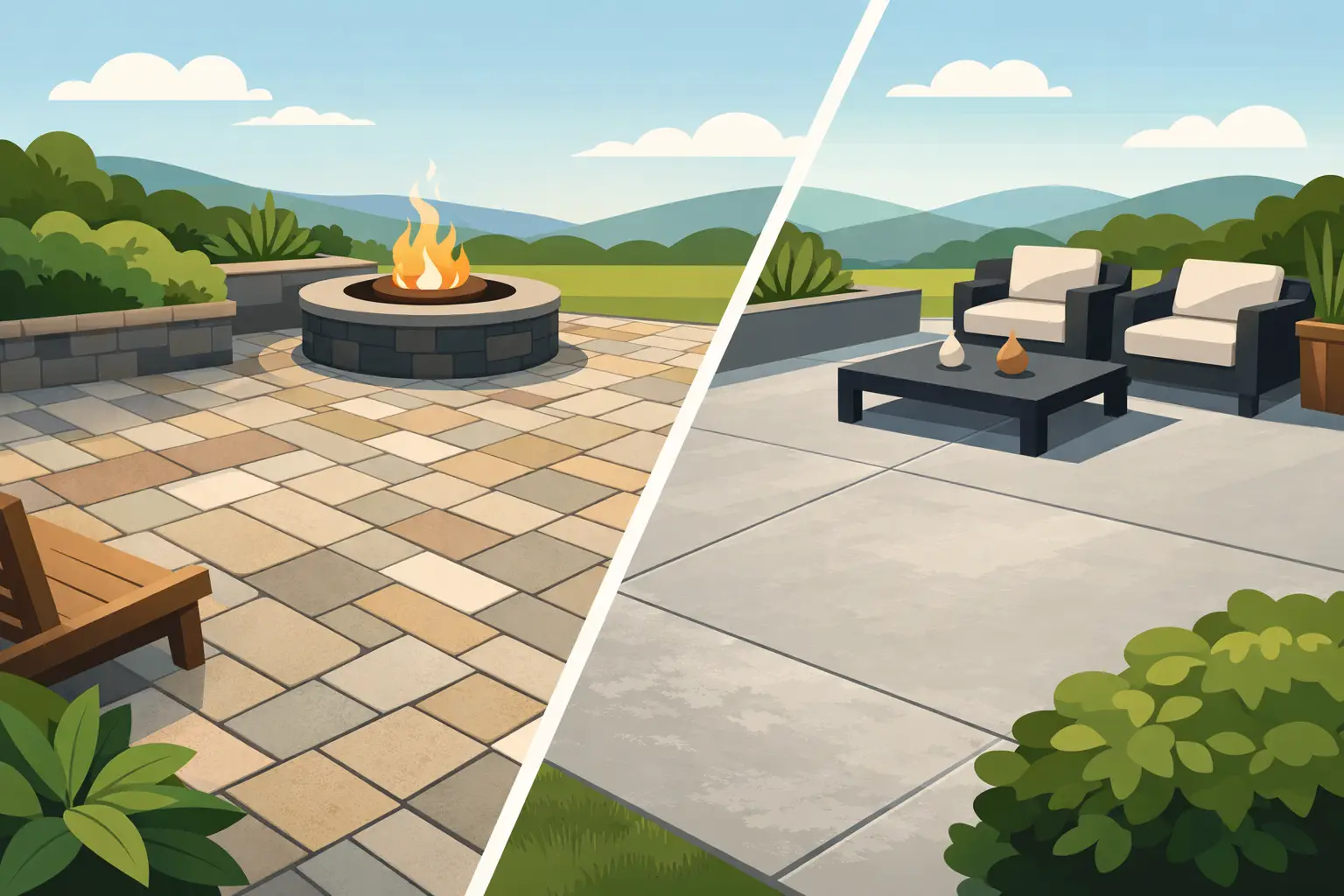
A patio can look great on day one and still become a frustration three years later if the material was the wrong fit for your yard, budget, or maintenance expectations. When homeowners ask about pavers versus concrete patio options, they are usually not just comparing appearance. They are trying to avoid cracking, drainage problems, uneven settling, and the regret of paying twice to fix a poor decision.
For homes across Maryland and the DC area, this choice deserves a closer look. Freeze-thaw cycles, heavy rain, clay soil in some neighborhoods, and the daily wear of outdoor living all affect how a patio performs over time. The right answer is not always the cheapest upfront option. It is the surface that fits your property, how you use the space, and how long you want it to last.
Pavers versus concrete patio: the basic difference
Concrete patios are typically poured as one large slab. They can be finished in a clean, simple style or dressed up with stamping, scoring, and color. For many homeowners, concrete feels straightforward because it offers a familiar look and a lower initial price in many cases.
Paver patios are built from individual units laid over a prepared base. Those units can be concrete pavers, brick-style pavers, or stone-look products in a wide range of shapes, colors, and textures. Because the patio is made of many pieces rather than one slab, it behaves differently under stress, weather, and movement in the ground.
That difference in construction is what drives most of the pros and cons.
Upfront cost is only part of the story
If you are comparing estimates, concrete often looks appealing at first. A basic poured concrete patio is usually less expensive than a professionally installed paver patio. For homeowners working within a strict project budget, that lower entry point can make concrete feel like the obvious choice.
But initial price and long-term value are not the same thing. A patio is not just a square footage purchase. It is a hardscape system that has to handle drainage, seasonal expansion and contraction, furniture weight, foot traffic, and years of weather exposure. If a lower-cost patio ends up staining, cracking, or requiring more noticeable repairs, the savings may disappear faster than expected.
Pavers usually cost more upfront because installation is more labor-intensive and the material itself is often more premium. At the same time, that higher initial investment can pay off in durability, design flexibility, and easier repair down the road.
Durability in Maryland weather
This is where the conversation gets practical fast.
Concrete is strong, but it is also vulnerable to cracking. Even a well-installed slab can develop cracks over time as the ground shifts or temperatures swing. In Maryland and the Washington, DC region, freeze-thaw conditions can be especially hard on large concrete surfaces. Water works its way in, temperatures drop, and expansion puts stress on the slab.
Some cracks stay minor. Others become more visible and more difficult to ignore. Once a slab starts to crack or settle unevenly, repairs can be limited from a cosmetic standpoint. You may be able to patch it, but patched concrete often looks patched.
Pavers tend to handle movement better because they are designed as interlocking pieces. If the ground shifts slightly, the patio can adapt better than a single slab. That does not mean pavers are immune to problems. Poor base preparation can still cause settling or uneven areas. But when installed correctly, pavers often offer a more forgiving surface in climates with seasonal movement.
Repairability matters more than homeowners expect
Most people focus on installation day. Experienced contractors think about year five and year ten.
If a concrete patio gets damaged, repair options are often more visible. Crack filling, resurfacing, and patching can help, but perfect color and texture matching is difficult. If a section fails badly enough, replacement may involve removing a large area, not just one small portion.
With pavers, repairs are usually more targeted. If one area settles, stains, or gets damaged, the affected pavers can often be lifted and replaced without tearing out the entire patio. That is a major advantage for homeowners who want a surface that is easier to maintain over the long haul.
This is one reason pavers are often the stronger value for families who plan to stay in their home for years. A patio is part of your everyday living space. The easier it is to keep looking sharp, the better that investment tends to feel.
Appearance and curb appeal
Concrete can absolutely look attractive, especially in modern or simple backyard designs. A clean poured slab works well for some homes, and decorative finishes can improve the look. Stamped concrete, for example, tries to mimic stone, brick, or tile patterns while keeping the surface continuous.
Still, pavers usually win on appearance. They offer more color variation, more texture, more pattern choices, and a more custom finished look. They can complement traditional homes, newer homes, formal outdoor spaces, and casual family patios. Borders, accent bands, and transitions to walkways or retaining walls also feel more natural with paver systems.
For homeowners investing in overall curb appeal and backyard function, that flexibility matters. A patio should not look like an afterthought. It should feel like part of the property.
Maintenance expectations
Neither option is truly maintenance-free.
Concrete should be sealed periodically if you want to help protect the surface and preserve appearance. It can also develop stains from leaves, grease, mildew, or rust, depending on how the space is used. Over time, surface discoloration may become part of the patio’s look whether you planned for it or not.
Pavers also benefit from sealing, though not every installation requires it right away. Joint sand may need occasional attention, and weeds can appear if maintenance is ignored. The difference is that wear on pavers often blends more naturally into the patio’s overall appearance. On concrete, one stain or one crack can stand out quickly.
If your goal is a patio that stays attractive with more forgiving upkeep, pavers usually have the edge.
Drainage and performance
A patio should do more than provide a place for chairs and a grill. It needs to move water away from the home and avoid creating puddles or erosion problems.
Concrete patios rely heavily on proper grading at the time of the pour. If water flow was not planned carefully, drainage issues can become hard to fix after the slab is in place. Low spots can collect water, and correcting them may mean substantial work.
Paver patios are also dependent on proper installation, but the system often allows better water management when designed correctly. Base preparation, edge restraints, slope, and jointing all play a role. This is why professional design and installation matter so much. The patio material is only as good as the workmanship underneath it.
Which option is better for resale?
Buyers notice outdoor living upgrades, especially when they look permanent, polished, and well maintained. A patio that adds usable entertaining space can support property appeal, but the quality of the finished result matters.
A well-installed paver patio often presents as a premium feature. It has a more custom look and tends to photograph better, which matters in modern home marketing. Concrete can still add value, especially if it is clean and in good condition, but it may not deliver the same high-end impression.
If resale is part of your thinking, pavers often help create the stronger visual return.
So which should you choose?
If your top priority is the lowest upfront cost and you want a simple, functional patio, concrete may make sense. It can be a practical option for smaller projects or homeowners who need to keep the initial investment down.
If you care most about long-term durability, repair flexibility, and a more refined finished look, pavers are usually the better investment. For many Maryland-area homeowners, that combination makes pavers the stronger choice, especially when the patio is part of a larger outdoor living plan that may include walkways, retaining walls, fencing, or a fire pit.
The biggest factor, though, is not just the material. It is the quality of the design, grading, base work, and installation. A strong patio starts well below the surface. That is why homeowners who want lasting results tend to work with an experienced contractor who understands local conditions and builds the project the right way from the start.
At A-1 Fencing, we have seen firsthand how much difference that approach makes. The best patio is not the one that looks good for one season. It is the one that still feels solid, attractive, and easy to enjoy years after the crew has packed up and gone home.
If you are weighing your options, the smartest next step is to look beyond the surface and choose the patio that fits your home the way you actually live in it.