
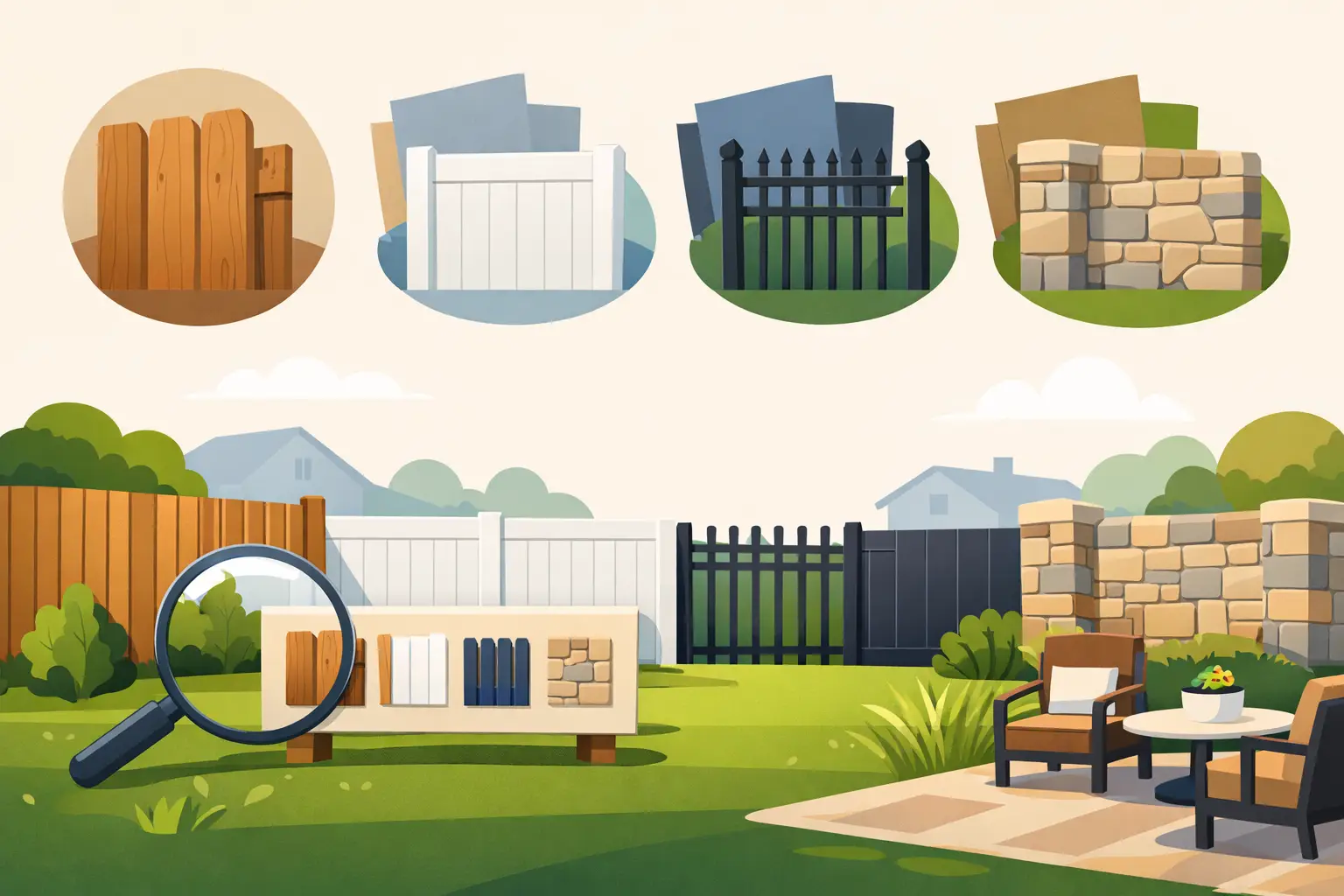
A fence usually looks simple from the street. Then you start planning one for your own yard, and the questions pile up fast. If you are trying to choose backyard fence material, the right answer depends on more than appearance. Privacy, maintenance, weather, slope, pets, budget, and even how the fence connects to gates, patios, or retaining walls all matter.
For homeowners in Maryland and the DC area, that decision carries extra weight. Our region gets humid summers, freezing winters, heavy rain, and plenty of seasonal expansion and contraction. A fence has to look good, hold up, and fit the way your family actually uses the yard.
What matters most when you choose backyard fence material
Most homeowners begin with style, which makes sense. You want the fence to complement your home and improve curb appeal. But appearance should be balanced with performance. A material that looks great on day one may not be the best fit if it requires constant staining, struggles in wet conditions, or does not give you the privacy you expected.
Start by asking what the fence needs to do first. If the goal is privacy between neighboring yards, your best options will be different from a decorative front boundary or a secure enclosure for children and dogs. If you want to reduce noise, create a safer pool area, or frame a larger outdoor living space, material choice affects all of that.
Budget matters too, but it helps to look at total ownership cost instead of just installation price. Some materials cost less upfront and more over time because they need regular maintenance or earlier replacement. Others have a higher initial investment but stay attractive with less work.
Privacy changes the conversation
If privacy is your top priority, wood and vinyl are often the strongest candidates. Both can be installed in solid-panel styles that block sightlines and create a more enclosed, comfortable yard.
Wood has a natural warmth that many homeowners still prefer. It works well with traditional homes, mature landscaping, and outdoor spaces designed for a more classic look. It is also flexible from a design standpoint. You can choose board styles, top details, paint or stain colors, and heights that suit the property. The trade-off is maintenance. Wood is vulnerable to moisture, sun exposure, rot, insect activity, and gradual warping if it is not properly installed and maintained.
Vinyl appeals to homeowners who want privacy without the upkeep. It resists rot, does not need painting, and is easier to keep clean. It also provides a crisp, finished look that works well on many suburban properties. The main trade-off is that vinyl can have a higher upfront cost, and some homeowners simply prefer the texture and character of real wood. Quality matters here. Better vinyl products hold color and structure much more reliably over time.
If you want the easiest maintenance, look hard at vinyl and aluminum
Maintenance is one of the biggest reasons people replace an older fence. Peeling paint, loose boards, rust, and recurring repairs all add up. If your goal is to install it once and spend less time thinking about it, vinyl and aluminum deserve serious consideration.
Vinyl is a strong low-maintenance option for privacy and semi-privacy applications. It does not need staining, and normal cleaning is usually enough to keep it looking sharp. For busy homeowners, that simplicity has real value.
Aluminum is another excellent low-maintenance material, especially when full privacy is not required. It offers a clean, upscale appearance and performs well in changing weather. It will not rot like wood, and high-quality powder-coated finishes hold up well. Aluminum is especially popular around pools, decorative boundaries, and homes where preserving views matters.
What aluminum does not do is create a true visual screen. If you want seclusion from nearby neighbors, it probably will not be your first choice. But if you want elegance, durability, and minimal upkeep, it is one of the most dependable options available.
How to choose backyard fence material for pets, kids, and safety
A fence is not just a border. For many families, it is part of how the backyard functions every day. If you have children or dogs, the right material should be evaluated with safety and containment in mind.
Wood and vinyl both work well when you need a fully enclosed yard with limited gaps. They can create a secure play space and help reduce distractions from nearby sidewalks, streets, or neighboring pets. Chain link can also be effective for containment, particularly in larger backyards where cost is a major factor, though it offers a more utilitarian look.
Aluminum is often chosen where visibility is important, such as around pools or landscaped areas, but spacing between pickets must be planned carefully if small pets are involved. Gate design matters just as much as panel material. A strong fence with a poorly planned gate becomes a weak point fast.
For homes with multiple outdoor features, fencing should also be coordinated with the rest of the space. A yard that includes a deck, patio, retaining wall, or walkway benefits from a more unified design approach. The fence should not feel like an afterthought.
Weather and lifespan matter in Maryland and DC
Local climate should absolutely influence your decision. In our area, freeze-thaw cycles, summer humidity, and storms can be tough on exterior materials.
Wood can perform very well when installed correctly and maintained on schedule, but it is the material most likely to show the effects of weather over time. Posts, rails, and boards all need careful attention. Moisture management is critical, especially in shaded yards or properties with drainage issues.
Vinyl handles moisture well and generally performs strongly in our climate, which is one reason many homeowners choose it for long-term value. Aluminum also stands up very well and is a smart choice where rust resistance and structural reliability are priorities.
Chain link is practical and durable, but appearance is often the deciding factor. For some homeowners, especially those fencing large side or rear areas, it makes sense. For others, it does not offer the level of privacy or polish they want for a primary backyard space.
Cost is important, but value is the better question
If you compare fence materials by price alone, chain link usually comes in as the most economical, followed by many wood options, with vinyl and aluminum often higher depending on style and layout. But that only tells part of the story.
A lower-cost material may be the right decision for one property and the wrong one for another. A homeowner planning to stay in the home for many years may benefit from paying more upfront for lower maintenance and longer visual appeal. A homeowner preparing the property for sale may focus more on immediate curb appeal and practical return.
This is where a professional estimate helps. Layout, grade changes, gate needs, removal of old fencing, and local code considerations can all affect cost. Material pricing is only one piece of the project.
Matching the fence to the home
The best fence looks like it belongs there. A colonial or craftsman-style home may pair beautifully with wood, while a more updated exterior may suit the cleaner lines of vinyl or aluminum. Color, fence height, post caps, gate details, and surrounding hardscaping all affect the final result.
This is also why choosing a contractor matters as much as choosing a material. Proper installation determines how the fence performs, how straight it looks, how well the gates function, and how long the entire project lasts. An experienced team should help you weigh style, function, code requirements, and long-term value instead of simply quoting the cheapest option.
For many homeowners, the smartest path is a consultative one. A trusted local contractor can look at your property, understand how you use the yard, and recommend a material that fits both your priorities and your budget. That is especially valuable when the fence is part of a larger outdoor upgrade, not a standalone purchase.
The right material is the one that fits your life
There is no one-size-fits-all answer when you choose backyard fence material. Wood offers natural character and strong privacy. Vinyl gives you privacy with less upkeep. Aluminum delivers durability and a more open, upscale look. Chain link remains practical for certain yards and budgets.
The best choice comes from being honest about what matters most to you. If you want a backyard that feels private, polished, and easy to maintain for years to come, it pays to think beyond the initial quote and plan the whole space carefully. A well-built fence should do more than mark the property line. It should make your home feel more secure, more usable, and more complete.
If you are weighing your options, a free in-home consult and estimate can save time and prevent expensive guesswork. A family-run, award-winning contractor like A-1 Fencing can help you compare materials in the context of your actual property, so the final decision feels clear instead of complicated. The right fence should feel like a smart investment every time you look out the back door.