
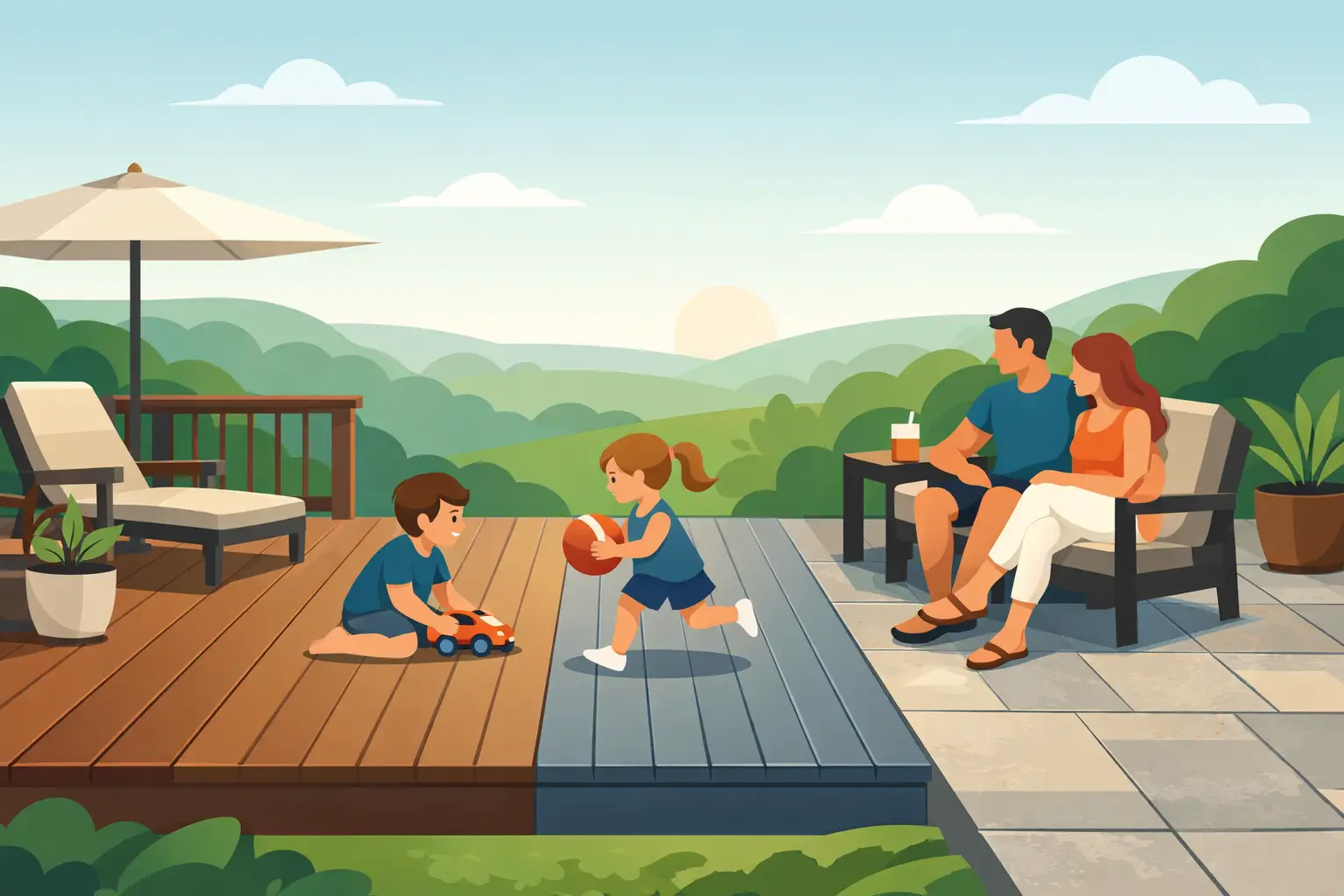
A family deck gets tested differently than a quiet adult retreat. It handles wet pool towels, dropped grill tools, scraped chair legs, kids racing outside barefoot, and plenty of Maryland rain, heat, and humidity. That is why choosing the best deck materials for families means looking beyond color and first-day price. The right material should support the way your household actually uses the backyard while protecting your investment for years to come.
For many homeowners, composite decking offers the strongest balance of comfort, durability, and low maintenance. Natural wood can still be a beautiful and budget-friendly choice when it is properly maintained. The best answer depends on your family’s habits, your preferred look, your budget, and how much ongoing upkeep you want to take on.
What Families Need From a Deck Material
A family-friendly deck should feel safe underfoot, hold up to frequent use, and be easy to keep looking good. Materials that splinter, require constant staining, or become excessively hot can turn an outdoor gathering space into another weekend chore.
Start with the realities of your home. A deck used for occasional dinners has different needs than one beside a pool, connected to a play area, or used for large cookouts throughout the season. If your children or pets spend a lot of time outdoors, a smooth, slip-conscious surface and sturdy railing system should be central to the design.
In the Washington, DC and Maryland area, weather matters as much as traffic. Humid summers, heavy rain, freeze-thaw cycles, and falling leaves can wear on outdoor materials. A quality installation, proper drainage, and a material suited to local conditions all help prevent costly issues later.
Best Deck Materials for Families Compared
Composite decking: The leading low-maintenance choice
Capped composite decking is often the best fit for busy families who want more time enjoying the backyard and less time maintaining it. Made with a durable protective cap over a composite core, premium boards are designed to resist fading, staining, moisture damage, and insect activity better than traditional wood.
The family benefit is simple: there are no routine sanding and staining projects to schedule. Spilled juice, muddy footprints, and food from the grill are generally much easier to clean than they are on porous wood. High-quality composite boards also have a smooth finish that avoids the splinter concerns common with aging wood decks.
Composite has trade-offs. Its initial price is higher than pressure-treated lumber, and darker colors can feel warm in direct summer sun. However, lighter board colors, thoughtful shade planning, and a design that accounts for sun exposure can make a major difference. For homeowners planning to stay in their home and use their deck often, the reduced maintenance can make composite a smart long-term value.
Recognized options such as Trex and TimberTech offer a wide range of colors, grain patterns, and performance levels. They make it possible to create a polished outdoor living area without sacrificing the practical durability a family needs.
Pressure-treated wood: A practical entry point
Pressure-treated lumber remains a popular option because it offers a lower upfront cost and a classic wood-deck appearance. It can be an excellent choice for families with a defined project budget, especially when the deck is well designed and professionally built.
The key is understanding that pressure-treated wood needs attention over time. Sun, rain, and changing temperatures can lead to fading, checking, warping, and splinters. To protect the boards, homeowners should plan on periodic cleaning, sealing, or staining. A neglected wood deck can quickly lose its appearance and become less comfortable for bare feet.
For a family that enjoys the character of real wood and does not mind regular upkeep, pressure-treated lumber can be a sound choice. It is especially useful when the budget needs to leave room for other priorities, such as a patio, fence, walkway, or upgraded landscaping. Choosing quality boards and allowing for proper spacing and drainage are essential to its performance.
Cedar and other natural wood: Beautiful, but more demanding
Cedar has a warm, natural look that many homeowners love. It is lighter than pressure-treated lumber and naturally more resistant to insects and decay than some other wood species. Its texture and color can make a deck feel especially inviting alongside mature landscaping or a traditional Maryland home.
Still, natural wood is not automatically the easy-care choice. Cedar needs consistent protection from weather to maintain its color and limit cracking. Without periodic cleaning and sealing, it will weather to a gray tone and can develop surface wear. It also tends to cost more than pressure-treated lumber, so families should weigh its visual appeal against the maintenance commitment.
Cedar can be a good choice for a covered porch or a lower-traffic deck where appearance is the top priority. For an exposed, heavily used family deck, composite usually offers more predictable long-term performance.
PVC decking: Strong moisture resistance for wet areas
PVC decking contains no wood content, making it highly resistant to moisture, rot, and insects. It can be an excellent material near pools, hot tubs, or areas that stay damp after rain. Like composite, it does not need regular staining or sealing, and it is easy to clean after a busy weekend outdoors.
The main consideration is cost. PVC is commonly among the more expensive deck materials, and its feel and appearance can vary by product line. Some families prefer the more natural texture of premium composite, while others value PVC’s strong moisture performance. A side-by-side review of samples in the actual sunlight around your home can make the decision clearer.
Safety Features Matter as Much as the Boards
Even the best decking material cannot make up for a poor layout or weak construction. Families should plan their deck as a complete system, including footings, framing, railings, stairs, lighting, and drainage.
A properly selected railing is particularly important where young children, older relatives, or pets use the space. Railings should meet applicable building-code requirements, feel secure when leaned on, and fit the deck’s style. Lighting at stair treads and transitions improves visibility after sunset, while a well-placed gate can help define safe play areas or limit access to a pool.
For slippery conditions, consider a board profile and surface finish designed for traction. Keep in mind that no decking is completely slip-proof when covered in water, ice, leaves, or spilled food. Regular cleaning, good drainage, and a layout that prevents water from pooling are practical safety measures for every material.
How to Choose the Right Material for Your Household
The most useful question is not which material is best in every situation. It is which material will still work for your family five or ten years from now. A low-maintenance composite deck may be worth the higher initial investment for parents with packed schedules. A pressure-treated deck may be the right move for homeowners who want quality outdoor space now and are comfortable maintaining it.
Think about sun exposure, too. A deck facing south or west may need lighter boards, a pergola, or shade structures to stay comfortable during peak summer hours. If your family grills often, leave enough room around the cooking area for safe movement. If children play outside, prioritize an open layout with clear sight lines from the house and a durable surface that can handle activity.
Material samples are valuable, but they do not replace professional planning. The condition of your home, the height of the deck, the grade of the yard, and local code requirements can all affect the best design and budget. A thoughtful in-home consultation helps identify these details before construction begins.
Build a Deck That Makes Family Time Easier
A deck should give your family another dependable place to gather, not another maintenance concern on the calendar. At A-1 Fencing, our award-winning team helps Maryland and Washington, DC homeowners select high-quality deck materials and build outdoor spaces with craftsmanship, safety, and daily life in mind.
Whether composite, wood, or PVC is the right choice, a clear design and professional installation will protect the value of your project. Start with how your family wants to live outside, then choose the material that lets you spend more weekends making memories there.