
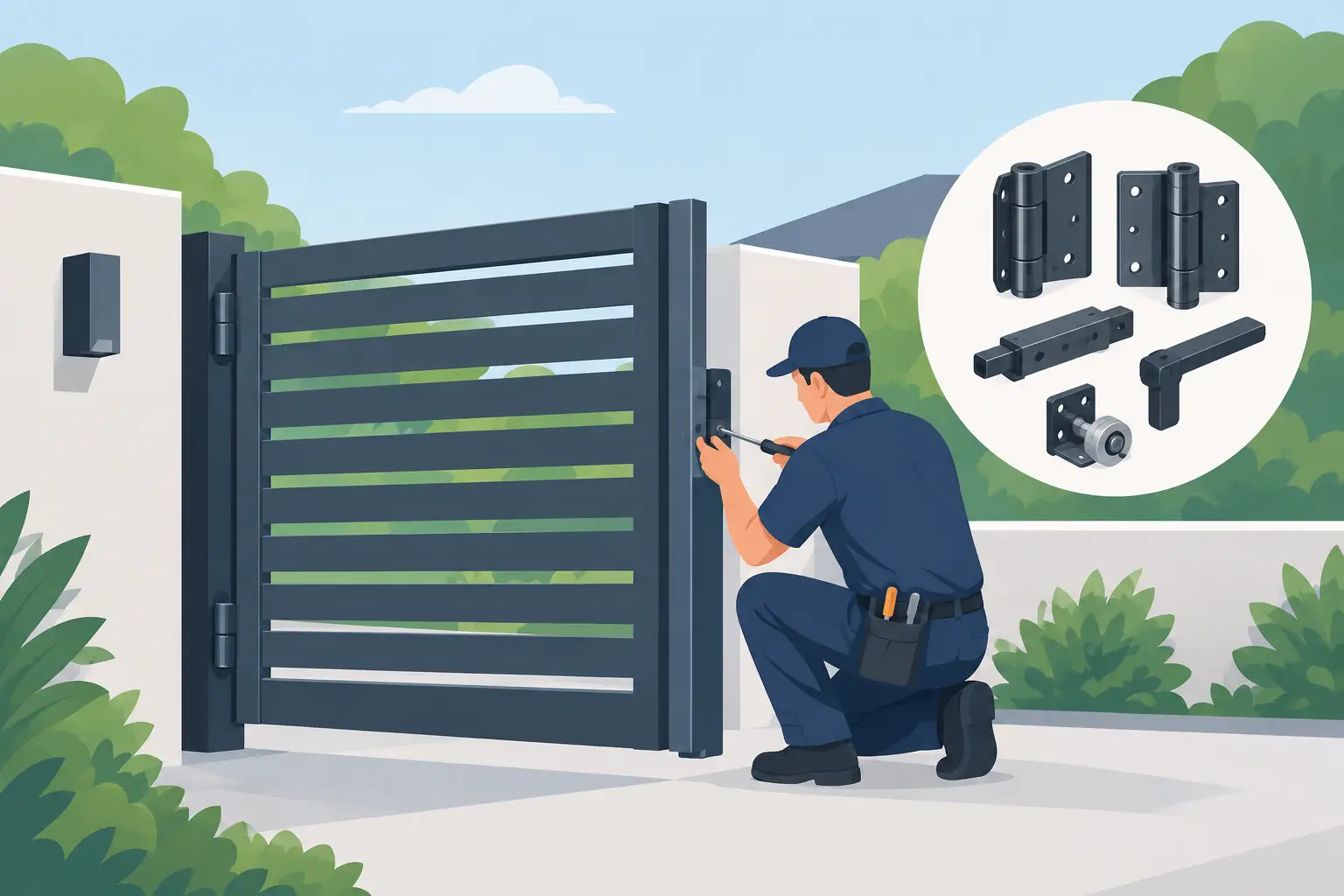
A gate can look perfectly fine from the street and still create a daily frustration at the driveway, side yard, or backyard. When it drags across the ground, will not latch, sags when opened, or needs a hard shove to close, gate hardware replacement may be the practical solution. The hinges, latch, post mounts, rollers, and fasteners do the working every day. When one of those parts fails, the gate can no longer provide the security, privacy, or easy access your property needs.
For Maryland and Washington, DC homeowners, seasonal moisture, freeze-thaw cycles, heavy use, and shifting soil can all take a toll on a gate system. Replacing the right hardware at the right time can extend the life of a quality gate. Waiting too long can turn a focused repair into damage to the gate frame, fence posts, and surrounding fence sections.
Signs You Need Gate Hardware Replacement
A gate that becomes difficult to operate rarely improves on its own. Some issues are simple adjustments, particularly on a newer installation. Others point to worn or undersized hardware that should be replaced before the gate becomes unsafe or stops securing the opening altogether.
Look for these common warning signs:
- Hinges that squeak, bind, rust heavily, loosen, or pull away from the post
- A latch that will not catch consistently, even after the gate is lifted or pushed into position
- A gate that sags, drags on the ground, or rubs against the post or fence panel
- Cracked, bent, corroded, or missing bolts, screws, brackets, rollers, or gate stops
A gate that must be lifted to latch is especially worth addressing promptly. The latch may seem like the problem, but the real cause could be loose hinges, a leaning post, or a gate frame that has shifted under its own weight. Replacing a latch alone without correcting the underlying alignment issue may only provide a short-term fix.
What Hardware May Need Replacing?
Every gate works as a system. A dependable repair starts with identifying which component has failed and whether the remaining components can safely support the gate after the repair.
Hinges and Post Mounts
Hinges carry the full weight of a swing gate. Standard hinges may be appropriate for a lightweight wood or vinyl gate, while a wider, heavier gate may need heavy-duty strap hinges, adjustable hinges, or commercial-grade hardware. If a hinge has rusted through, bent, or pulled out of the post, replacing it with the same undersized part can repeat the problem.
The condition of the post matters just as much. A sound hinge mounted to a rotted wood post, cracked masonry surface, or loose metal post will not stay aligned. In some cases, replacing the hardware is enough. In others, the post needs reinforcement or replacement before new hardware is installed.
Latches, Locks, and Drop Rods
A gate latch should close securely without slamming or forcing the gate into position. When the latch is misaligned, homeowners may be tempted to use a bungee cord, chain, or temporary hook. That may keep the gate shut for a day, but it does not provide reliable security or a finished appearance.
A new latch can improve daily access, child safety, and privacy, especially for backyard gates and pool-area enclosures. Lockable latches provide added control where access matters. Double-drive gates may also need a new drop rod or cane bolt to keep one leaf anchored in place when the other is in use.
Rollers, Wheels, and Tracks
Sliding gates and larger swing gates often rely on rollers or support wheels to reduce strain. A cracked wheel, seized bearing, bent track, or roller that no longer sits correctly can make the gate noisy and difficult to operate. Replacing these parts can restore smoother movement, but the track and gate frame must also be checked for damage and level.
Support wheels can be useful for wide gates, but they are not a substitute for properly installed posts and hinges. If a wheel is carrying too much weight because the post or hinges are failing, the gate may continue to sag even after the wheel is replaced.
Fasteners and Gate Frames
Loose screws and rusted bolts may look minor, but they can allow a gate frame to rack out of square over time. Stainless steel, galvanized, or coated fasteners are often a better choice for exterior conditions than basic interior-grade hardware. The right selection depends on the fence material, gate weight, location, and exposure to moisture.
If the gate frame itself is warped, split, or badly corroded, new hardware may not be the best investment. A professional inspection can determine whether the gate can be reinforced or whether replacing the gate will deliver better long-term value.
Repair, Hardware Replacement, or a New Gate?
The right answer depends on the source of the problem, not just the visible symptom. A quality wood, vinyl, aluminum, or chain-link gate with solid posts and an intact frame is often an excellent candidate for new hinges, latches, or other hardware. This approach can be cost-effective and preserve the look of the existing fence.
Replacement makes less sense when multiple elements are failing at once. If the gate is sagging, the posts are leaning, the frame is deteriorating, and the latch is broken, piecemeal repairs can become frustrating and expensive. A new gate designed with the correct frame, hardware, and support for its size may be the more dependable option.
Homeowners should also consider how the gate is used. A narrow walk gate opened a few times each week has different needs than a driveway gate used daily by vehicles, children, pets, delivery crews, and lawn-service providers. Heavier use calls for hardware that can handle the load without constant adjustment.
Why Professional Installation Protects the Whole Fence
Installing gate hardware is not simply a matter of attaching a new hinge or latch. The gate must be measured, leveled, aligned, and tested through its full swing. The installer also needs to account for ground clearance, fence-line changes, gate weight, post stability, and the direction of drainage.
Poor alignment can cause a new latch to fail prematurely, scrape the ground, or leave a gap that affects privacy and security. Incorrect fasteners can split wood, damage vinyl, or loosen in metal. A professional repair addresses the mechanical cause of the failure, rather than making the gate appear to work for a short period.
At A-1 Fencing, our experienced team evaluates the full gate and fence system before recommending a repair. Homeowners receive clear guidance on whether replacing the hardware, repairing the structure, or installing a new gate makes the most sense for their property and budget.
Get the Right Hardware for Your Gate Material
Gate hardware should match both the gate material and the demands of the location. Wood gates need hardware that can manage natural expansion and contraction. Vinyl gates often require reinforced internal framing to keep hardware secure. Aluminum and steel gates may need specialized brackets and fasteners to prevent movement and corrosion.
Style matters, too. A front entry gate may call for hardware that complements the home’s exterior, while a utility-side gate may prioritize easy access and dependable locking. The best choice balances appearance with strength. Attractive hardware that is too light for the gate will not deliver the durability homeowners expect.
If your gate sticks, sags, will not latch, or no longer feels secure, schedule a free in-home consult and estimate. A careful evaluation now can help protect your fence, restore easy access, and give you confidence every time the gate closes behind you.