
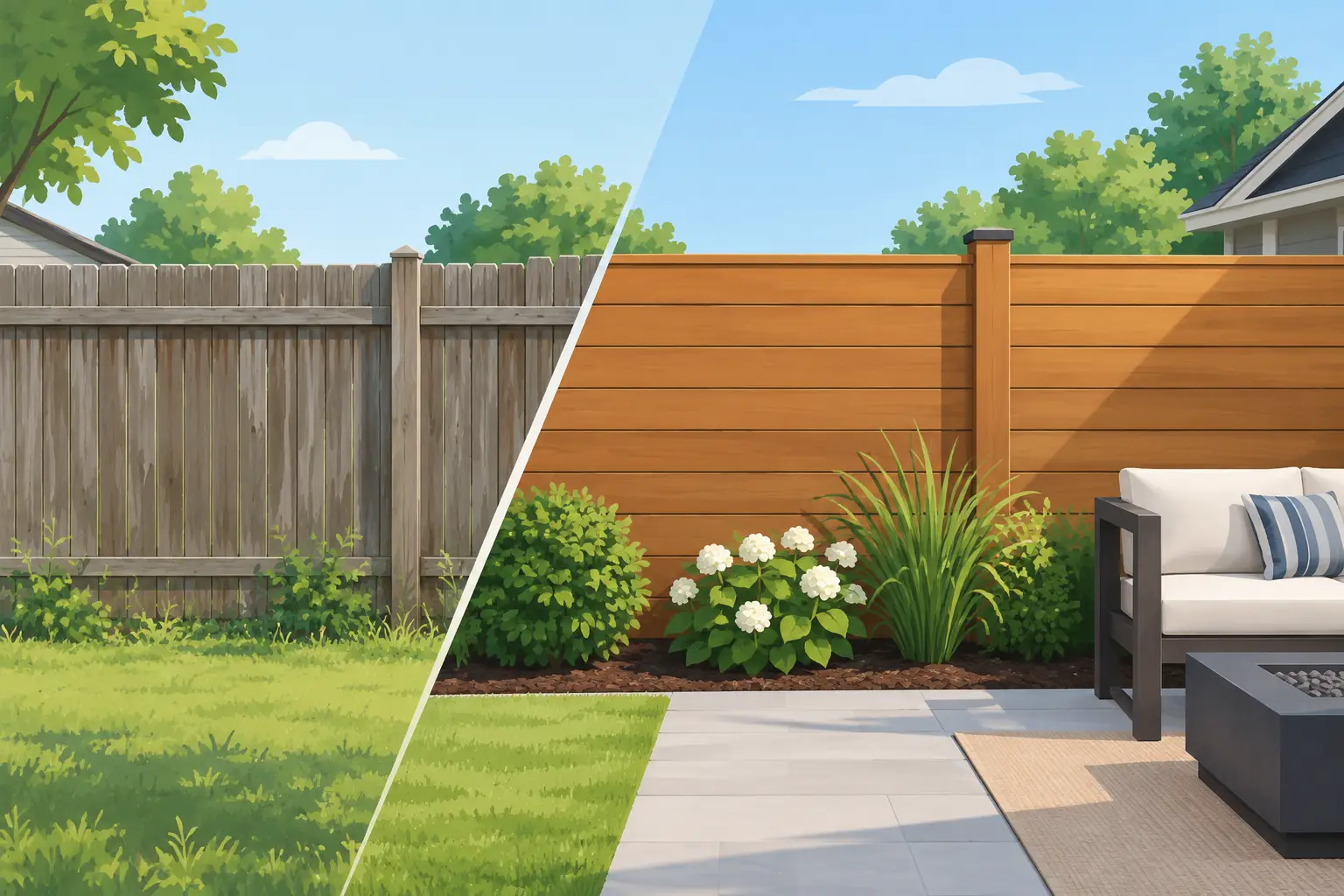
A backyard can have a beautiful patio, mature landscaping, and plenty of square footage yet still feel exposed to nearby homes, traffic, or an uninviting view. A well-planned backyard privacy fence makeover changes how the entire property feels. It creates a defined retreat for family time, entertaining, pets, and quiet evenings outdoors while adding a finished, well-cared-for appearance to the home.
For homeowners in Maryland and the Washington, DC area, the right fence is more than a quick boundary line. It needs to hold up to humid summers, freeze-thaw cycles, heavy rain, and years of everyday use. The best makeover begins with a practical plan for privacy, materials, layout, and the outdoor features around it.
Start With the Privacy Problem You Actually Need to Solve
Not every backyard needs the same kind of privacy. Some homeowners need to block a direct view from a neighboring second-story window. Others want to contain a play area, create separation from a busy street, or make a pool, patio, or fire pit feel more secluded. Those goals affect the height, style, placement, and material of the fence.
Walk the property at the times you use it most. Stand near the patio, deck, grill area, and children’s play space. Notice where sightlines begin and where they can be interrupted. A fence does not always need to be taller everywhere. In many yards, a full privacy fence along one side combined with attractive screening near a seating area delivers a better result than enclosing every inch with the same design.
Property lines, easements, local regulations, and HOA requirements should be reviewed before work begins. Fence height rules can vary by location, especially for corner lots and front-yard sections. A professional in-home consultation helps identify these details early, before material is ordered or posts are installed in the wrong location.
Choose Materials for Your Backyard Privacy Fence Makeover
Material selection is where appearance, maintenance, budget, and long-term performance come together. The lowest initial price is not always the best value if the fence requires frequent repairs, staining, or replacement after a few hard seasons.
Vinyl for Low-Maintenance Privacy
Vinyl privacy fencing offers a clean, consistent look and does not require painting or staining. It is a strong choice for homeowners who want a polished backyard with minimal upkeep. Quality vinyl systems resist moisture and insects, making them especially practical in the Mid-Atlantic climate.
Vinyl comes in several colors and panel styles, from simple solid white to more contemporary neutral tones. It can cost more upfront than some wood options, but its maintenance savings often make the investment worthwhile over time. Material quality matters here. A thin, poorly made panel can become brittle or less stable, while a high-quality system is built for dependable performance.
Wood for Natural Character
Wood remains a favorite for homeowners who want warmth, texture, and a more traditional landscape feel. It can be customized with board patterns, lattice tops, decorative post caps, and stains that complement the house or deck.
The trade-off is maintenance. Wood needs protection from moisture, sun exposure, and normal aging. Depending on the finish and conditions, it may need periodic cleaning, staining, sealing, or board repairs. A properly built wood fence with quality posts and careful installation can serve a property well for years, but it is best for homeowners prepared to maintain it.
Composite and Modern Privacy Options
Composite fencing can deliver the substantial look of wood with less routine maintenance. It works particularly well when a backyard makeover includes a composite deck or a contemporary hardscape design. Coordinating fence colors with decking, railings, and patio finishes creates a more intentional outdoor living space.
Composite materials generally carry a higher upfront cost, and the range of styles may be more limited than wood. Still, for homeowners seeking durability and a premium finished appearance, it is often a smart long-term choice.
Aluminum and Decorative Screening
Aluminum fencing is not a complete visual barrier on its own, but it can be an excellent part of a privacy strategy. It is ideal where homeowners want to preserve a view, define a pool area, or create a refined boundary without making the yard feel closed in. Decorative screens, landscaping, pergolas, and strategically placed privacy panels can add the visual separation an open-style fence does not provide.
Make the Fence Part of the Entire Backyard Design
The strongest makeovers treat the fence as a backdrop for outdoor living, not an isolated project. A plain fence line can become a design feature when it supports the patio, deck, walkway, retaining wall, or planting plan around it.
For example, a new patio may feel more private when paired with a solid fence behind the seating area and lower, more open fencing elsewhere in the yard. A retaining wall can help level a sloped yard, creating a usable terrace where a fence can be installed at the right elevation. A gate can be positioned to create an attractive and convenient route from the driveway to the backyard.
Color coordination matters as well. A gray or tan vinyl fence may pair beautifully with a Cambridge or Belgard patio, while a natural wood fence can soften the lines of a stone fire pit or garden border. When these elements are planned together, the property looks designed rather than added to in stages.
Landscaping should support the fence without creating future maintenance problems. Leave enough room for plants to mature, avoid placing irrigation directly against fence posts, and consider how tree roots may affect the installation. Climbing plants can be attractive, but aggressive vines may complicate cleaning and repairs over time.
Do Not Overlook Gates, Posts, and Installation Details
A privacy fence is only as dependable as its structure. Panels may be the most visible part of the project, but posts, footings, rails, hardware, and gate construction determine whether the fence stays straight and functional.
Gates deserve special attention. A gate that sags, drags, or will not latch properly becomes a daily frustration. The right gate width depends on how the yard is used. A standard walk gate may be enough for everyday access, while a wider double gate can be valuable for lawn equipment, future patio work, or access to a pool area.
Good installation accounts for grade changes, drainage, and the condition of the soil. On a sloped property, a contractor may recommend stepped sections, racked panels, or a combination of fencing and retaining work. Each option creates a different appearance and has different cost considerations. The goal is not simply to get the fence in place, but to make it look balanced and perform properly across the yard.
Know When Repair Is Enough and When Replacement Makes More Sense
A fence makeover does not always require full replacement. If the posts are sound and damage is limited to a few boards, panels, or hardware components, a repair may restore function and extend the fence’s service life. This can be a practical option after storm damage or isolated wear.
Replacement is often the better investment when posts are leaning, rot is widespread, multiple sections have shifted, or the fence no longer fits the way the backyard is used. Replacing one failing section at a time can become more expensive and less attractive than installing a unified new system. It can also be the right moment to upgrade the backyard with a patio, walkway, gate, or fire feature that makes the space more enjoyable.
Work With a Contractor Who Can See the Full Project
A privacy fence installation affects more than the property line. It intersects with drainage, landscaping, access, outdoor entertaining, and the overall value of the home. Working with a contractor experienced in both fencing and exterior improvements makes it easier to make decisions that work together.
A-1 Fencing provides free in-home consults and estimates for homeowners who want award-winning workmanship, clear upfront pricing, and a team that treats their property with care. From material selection and layout to gates, patios, retaining walls, and outdoor living upgrades, a coordinated approach can save time and prevent costly design conflicts later.
Your backyard should feel like part of your home, not a space you avoid because it feels exposed or unfinished. A thoughtfully built privacy fence gives you a stronger boundary today and a more comfortable place to gather for years to come.