
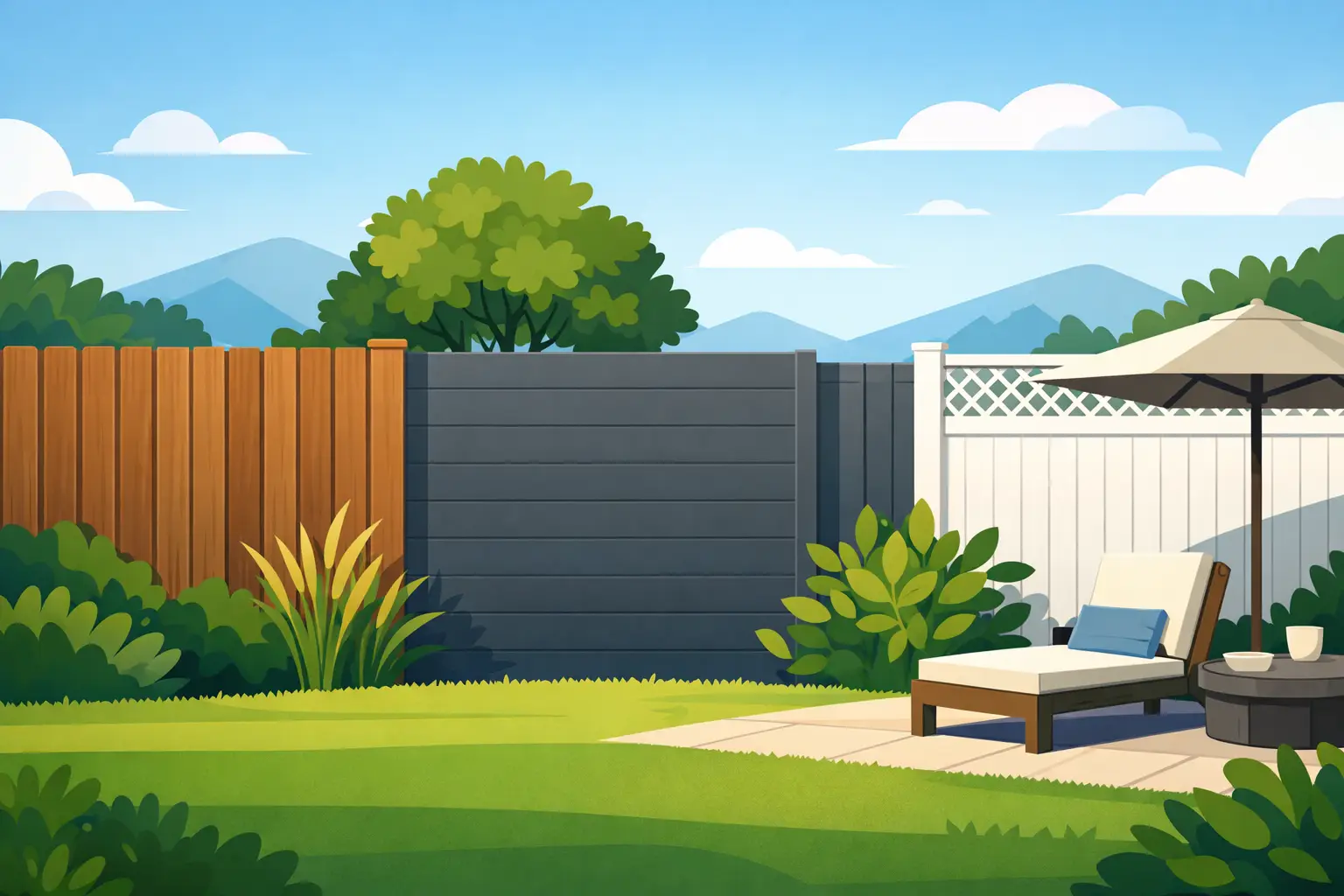
A backyard stops feeling private the moment you can see straight into a neighbor’s patio, pool, or kitchen window. If you are trying to choose the best fence for backyard privacy, the right answer usually comes down to three things: how much screening you want, how much maintenance you can tolerate, and how long you expect the fence to last.
For most homeowners in Maryland and the DC area, privacy is not just about blocking a view. It is about making the yard more usable. A good privacy fence gives kids and pets a safer space to play, makes outdoor dining more comfortable, and helps your property feel more finished and secure. The challenge is that not every fence material performs the same way once weather, upkeep, and long-term value are part of the decision.
What Is the Best Fence for Backyard Privacy?
If your priority is maximum visual screening, a full-panel privacy fence is the strongest choice. That usually means either vinyl privacy fencing or wood privacy fencing with little to no spacing between boards. Both can create a clean visual barrier, but they behave very differently over time.
Vinyl is often the best fit for homeowners who want a polished look and low ongoing maintenance. It does not need painting, staining, or sealing, and it resists rot, insect damage, and moisture better than wood. For busy families and homeowners who want a fence that continues to look sharp with minimal effort, vinyl is hard to beat.
Wood remains a strong contender because it offers warmth, character, and design flexibility. It can be customized more easily, and many homeowners simply prefer the natural appearance. But wood asks more from you. It can warp, fade, or deteriorate if it is not maintained properly, especially in a climate with humidity, seasonal temperature swings, and heavy storms.
So when customers ask for the best fence for backyard privacy, the practical answer is this: vinyl is usually best for low maintenance and long-term consistency, while wood is best for natural appearance and custom style.
Privacy Fence Materials and Their Trade-Offs
Vinyl privacy fencing
Vinyl privacy fencing is a popular choice for a reason. It delivers full coverage, a clean finished look, and dependable durability. High-quality vinyl panels hold up well against moisture and do not face the same rot issues as wood. That matters in backyards where sprinklers, rain runoff, and damp soil can shorten the life of less resilient materials.
The biggest advantage is ease. You are not budgeting for regular staining or wondering when boards will start to split. For homeowners who value convenience, vinyl is often the smarter long-term investment even if the upfront cost is higher.
The trade-off is appearance. While premium vinyl products have come a long way, they still do not duplicate the texture and variation of real wood. If your home leans heavily traditional or you want a more natural landscape look, vinyl may feel a bit more formal.
Wood privacy fencing
Wood fencing still has lasting appeal because it feels classic and substantial. Styles like board-on-board, stockade, and shadowbox can create different levels of privacy and airflow, and wood can be painted or stained to match the home and yard.
It is also a good option when you want more design flexibility. Decorative tops, custom heights where permitted, and tailored layouts are easier to achieve with wood than with many prefabricated systems.
But wood is not a set-it-and-forget-it material. Sun, moisture, and age all affect it. Some species hold up better than others, but every wood fence will need maintenance to preserve its appearance and extend its lifespan. If you know you do not want another item on your home maintenance list, that is worth taking seriously.
Aluminum, chain link, and composite
These materials have their place, but they are not usually the first answer for full backyard privacy. Standard aluminum fencing offers security and elegance, not seclusion. Chain link is functional and budget-friendly, but it does very little to block views unless combined with slats or landscaping, and even then it rarely gives the finished look most homeowners want.
Composite fencing can be an attractive middle ground. It offers a more premium appearance than basic vinyl and lower maintenance than wood. The downside is cost. For some projects, composite makes sense. For others, the price increase is hard to justify if vinyl already meets the goal.
Height Matters as Much as Material
A beautiful fence will not feel private if it is too short for the grade of your yard or the layout of neighboring homes. In many cases, a 6-foot privacy fence is the standard sweet spot because it blocks most direct lines of sight at ground level while staying appropriate for residential settings.
That said, privacy is highly site-specific. If your yard sits lower than the neighbor’s patio, a standard height may still leave you exposed. If you are trying to screen a pool area, hot tub, or outdoor kitchen, the placement of the fence matters just as much as the material itself.
This is where professional design guidance helps. A trusted contractor will look at slope, sightlines, lot boundaries, gates, and local code requirements before recommending a final fence plan. That saves homeowners from making a costly choice that looks good on paper but does not solve the actual privacy problem.
The Best Fence Style for Backyard Privacy
Not all privacy fences create the same experience. A solid panel fence gives the highest level of screening and is usually the best option when neighbors are close. Board-on-board wood fencing can also work well because overlapping boards reduce gaps as the material expands and contracts.
Shadowbox fencing is worth mentioning because many homeowners like its balanced look from both sides. It allows more airflow and can soften the visual weight of a solid wall of fencing. The trade-off is that it is not completely private at every angle, especially in winter when landscaping is sparse.
If complete visual separation is the goal, solid-panel vinyl or tightly installed wood privacy fencing usually performs best.
Cost, Upkeep, and Long-Term Value
The cheapest option upfront is not always the least expensive over the life of the fence. That is one of the biggest mistakes homeowners make when comparing bids. Installation price matters, but maintenance, repair frequency, and replacement timeline matter too.
Wood may start at a lower price point depending on style and lumber choice, but it brings recurring costs for sealing, staining, and occasional board repairs. Vinyl often costs more at the beginning, yet many homeowners recover that difference over time because upkeep is so limited.
There is also the question of resale appeal and daily satisfaction. A fence is one of the first things you notice in a backyard. If it starts leaning, fading, or looking worn after a few seasons, the savings fade fast. High-quality materials and skilled installation usually pay for themselves in a cleaner appearance and fewer headaches.
Why Installation Quality Changes Everything
Even the best fence for backyard privacy can disappoint if the installation is rushed or poorly planned. Posts need proper depth and spacing. Gates need to be built for frequent use without sagging. Transitions across slopes need to be handled carefully so the fence follows the yard without leaving awkward gaps.
This is why experienced installation matters so much. A well-built privacy fence should not just look good from the street. It should feel solid, operate smoothly, and hold up through changing weather. Homeowners investing in an outdoor upgrade want confidence that the job will be done right the first time.
That is especially true if the fence is part of a larger exterior plan. Many families are not only adding privacy. They are improving how the whole yard functions with patios, gates, walkways, or retaining walls. Working with a contractor that understands the full outdoor layout can lead to a much better result than treating the fence as a stand-alone project.
How to Choose the Right Fence for Your Yard
The right fence depends on how you use your backyard. If you want dependable privacy with minimal maintenance, vinyl is likely the front-runner. If you care most about natural beauty and custom style, wood may be worth the extra upkeep. If your budget is tight, you may need to balance immediate cost against future maintenance.
It also helps to think beyond the panel itself. Consider gate placement, traffic flow, pets, pool areas, and how the fence will look alongside your patio or deck. The best privacy fence should feel like part of the property, not an afterthought dropped at the lot line.
For homeowners who want a straightforward process, a professional consult can make the decision much easier. A family-run company like A-1 Fencing can walk the property, explain material options clearly, and provide an upfront estimate based on what your yard actually needs instead of pushing a one-size-fits-all answer.
If you are planning a privacy fence, the smartest next step is not guessing from photos online. It is looking at your yard, your maintenance tolerance, and your long-term goals, then choosing a fence that gives you privacy you will still appreciate years from now.