
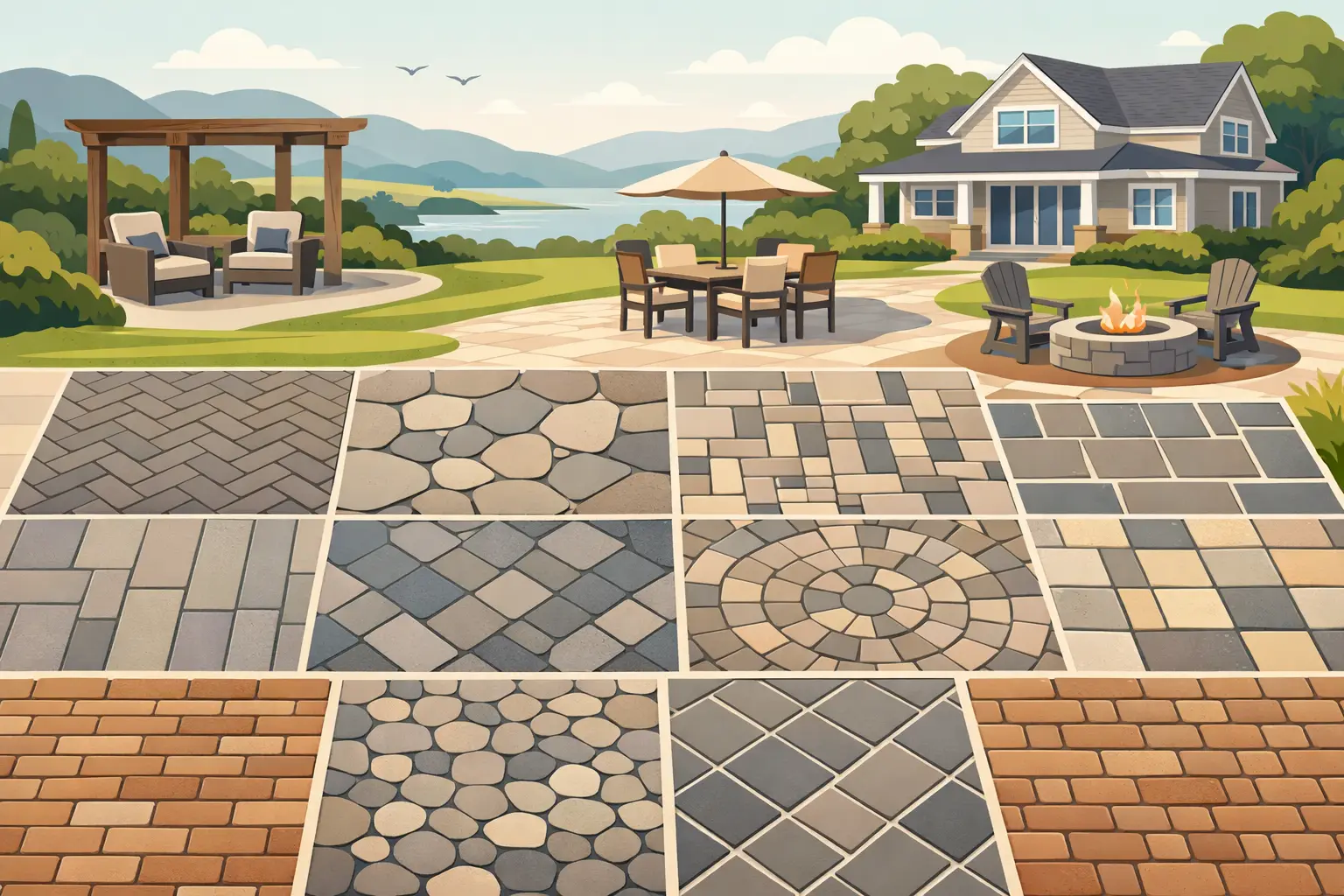
A patio can have beautiful pavers and still feel unfinished if the layout is wrong. The best patio paver patterns give an outdoor space direction, make its proportions feel intentional, and stand up to the freeze-thaw conditions common across Maryland and Washington, DC. The right choice depends on your home’s architecture, the size and shape of the patio, and how your family plans to use it.
For a busy family patio, a clean pattern may be the best fit because it keeps the space calm beneath furniture, grills, and fire features. For a formal backyard or a traditional brick home, a more detailed layout can create the finished look that makes the patio feel like a true extension of the house. A professional design-and-build contractor can help you balance appearance with the base preparation, edge restraint, drainage, and material selection that protect your investment.
How to Choose Among the Best Patio Paver Patterns
Start with the view from inside the home. Patio doors, kitchen windows, and family-room windows often frame the space more than homeowners realize. Pattern lines can lead the eye toward a seating area, outdoor fireplace, garden, or the far edge of the yard. They can also make a narrow patio feel wider or a large patio feel more grounded.
Scale matters just as much. Small pavers with a busy layout can overwhelm a compact townhouse yard, while oversized slabs may look sparse on a large entertaining patio. The pattern should also support the function of the space. Dining tables, sectionals, and fire pits all sit more comfortably on a surface that does not compete visually with every piece of furniture.
Maryland’s weather adds another consideration. Pattern is not a substitute for proper installation, but the paver system needs a well-built, compacted base, correct pitch away from the home, and durable edge restraints. Those details help minimize shifting and standing water through changing seasons.
1. Running Bond for Clean, Flexible Design
Running bond is one of the most familiar and dependable patio layouts. Rectangular pavers are installed in rows, with each paver offset from the one beside it. The result is simple, orderly, and easy to adapt to contemporary homes, traditional colonials, and casual outdoor living areas.
This pattern works especially well when a patio is long or narrow. Running the rows perpendicular to the long dimension can make the patio appear wider. Running them lengthwise can create a visual path toward a fire pit, deck steps, or garden gate. It is also a smart choice when homeowners want a polished design without a highly decorative look.
2. Herringbone for Strength and Traditional Character
Herringbone uses rectangular pavers set at right angles to form a repeating zigzag. It is a classic choice for brick homes and properties with a more traditional style, yet it can also look sharp with modern paver colors and a clean border.
A 45-degree herringbone pattern creates strong diagonal movement, while a 90-degree version feels more structured and formal. Because herringbone has numerous interlocking joints, it is often selected for areas that see regular foot traffic or occasional vehicle traffic, such as a driveway apron. On a patio, its biggest benefit is the visual energy it brings to a large, open surface.
The trade-off is that herringbone requires more cuts at the perimeter than a simple running bond. That is not a reason to avoid it, but it does make careful layout and skilled installation especially valuable.
3. Basketweave for a Timeless Brick Look
Basketweave pairs rectangular pavers in alternating horizontal and vertical blocks. The look resembles woven fabric and brings immediate warmth to cottage-style, colonial, and historic-inspired homes.
This pattern is a natural fit for smaller patios, walkways that connect to a patio, and intimate seating areas. It has more detail than running bond but less movement than herringbone, so it feels decorative without becoming busy. A contrasting soldier-course border can define the edge and give the patio a tailored finish.
Basketweave is best when the paver shape and color are consistent. Mixing too many colors or adding several decorative borders can make this already distinctive pattern feel crowded.
4. Modular Patterns for Larger Outdoor Living Spaces
Modular, or random ashlar, patterns combine pavers in several sizes. The layout repeats in a planned sequence, but it avoids the rigid grid of a single-size paver. This is one of the best patio paver patterns for homeowners who want the look of natural stone with the consistency and durability of manufactured pavers.
A modular layout has enough variation to make a broad patio feel custom, particularly around an outdoor kitchen, fireplace, retaining wall, or pool area. It also complements irregular patio shapes and gently curved edges well. Many homeowners choose a blended color palette in this format because the mix of sizes helps the colors look natural rather than patchy.
The key is restraint. Large-format pavers and mixed-size patterns need room to read properly. On a very small patio, the layout may feel chopped up. A professional can show you a scaled layout before installation so the pattern looks intentional from every angle.
5. Stack Bond for Modern Homes
Stack bond places rectangular or square pavers directly in line, creating a crisp grid. It is a natural choice for modern homes, clean-lined decks, and outdoor spaces with minimal furniture and architectural details.
The appeal is its simplicity. Straight joints can align with the house, steps, pergola posts, or an outdoor kitchen, giving the whole yard a coordinated appearance. Larger pavers in soft gray, charcoal, or warm neutral tones make the effect especially refined.
However, stack bond reveals installation inaccuracies more readily than a staggered pattern. The base, edges, and alignment must be handled with care. It is a pattern that looks effortless only when the workmanship is precise.
6. Circular Patterns for Fire Pit Areas
A circular paver pattern turns a fire pit into a true focal point. Pavers radiate outward from the center, creating a natural gathering zone for chairs and conversation. This design can be installed as the entire patio or as an inset feature surrounded by a more straightforward field pattern.
For many Maryland homeowners, an inset circle is the most practical option. It adds a custom detail without asking the rest of the patio to compete with it. A contrasting border around the circle can make the feature stand out, especially when it connects visually with a seat wall or outdoor fireplace.
Circular designs call for accurate measurements and clean cuts. They also need thoughtful furniture planning so chairs sit comfortably without covering the design completely.
7. Parquet Patterns for Formal Outdoor Areas
Parquet patterns use square units made from smaller rectangular pavers, often arranged in alternating directions. The result is geometric, polished, and more formal than most patio layouts. It suits homes with symmetrical architecture, structured landscaping, and defined garden rooms.
This is not the most common pattern, which is part of its appeal. It can give a covered patio or formal dining terrace a distinctive finish without relying on overly bold colors. Because the design has plenty of visual detail, it usually looks best with a limited color palette and simple outdoor furnishings.
8. European Fan for Old-World Appeal
European fan patterns create a series of curved, fan-shaped sections that resemble traditional cobblestone courtyards. They bring a sense of age and craftsmanship to patios near stone homes, English garden landscapes, and properties with classic architectural details.
This is a specialty look, not a universal answer. The pattern can be stunning on a spacious patio, but it may feel too decorative for a modern home or a small, square outdoor area. It also requires the right paver system and an experienced installer who can maintain consistent curves and joints.
9. Mixed Pattern Fields With Borders
Sometimes the strongest design is not one pattern but a combination. A modular field can be framed by a running-bond or soldier-course border. A large rectangular patio can use a clean stack-bond field with a circular fire-pit inset. Borders can define steps, highlight an outdoor kitchen, or connect the patio to a walkway.
A border is more than decoration. It gives the patio a finished edge and creates a visual transition between hardscape, lawn, planting beds, or retaining walls. The best contrast is usually subtle: a darker shade, a complementary texture, or a different paver size rather than a completely unrelated color.
Match the Pattern to the Whole Project
Your patio should not be designed in isolation. Existing fencing, deck materials, siding, masonry, and landscape walls all influence which paver colors and patterns will look at home on the property. A backyard with a new privacy fence and a natural-toned deck may benefit from a warm modular patio, while a contemporary home with dark railings may call for a crisp linear layout.
At A-1 Fencing, a free in-home consult and estimate gives homeowners a chance to consider the patio as part of the complete outdoor space, not a standalone surface. Experienced planning can address drainage, traffic flow, material options, and the features you may want to add later, from a retaining wall to a fire pit.
Choose a paver pattern that still feels right when the furniture is put away and the seasons change. A well-planned patio becomes a dependable place for everyday dinners, weekend gatherings, and quiet time outside for years to come.