
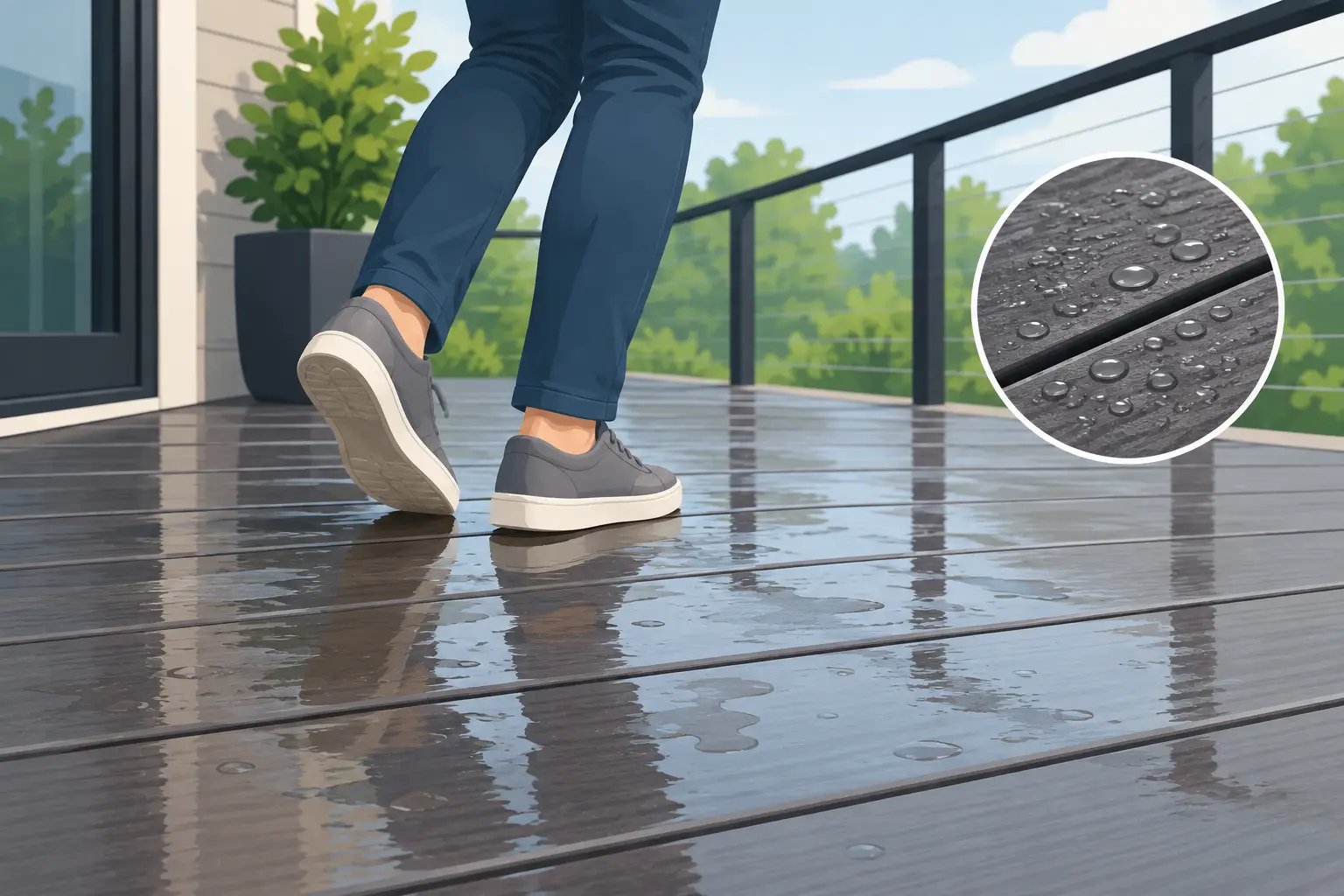
A composite deck should make outdoor living easier, not make you hesitate before stepping outside after a storm. If your composite deck slippery conditions seem worse than expected, the issue is usually not the decking itself. In Maryland and Washington, DC, heavy humidity, spring pollen, leaf debris, and shaded yards can create a thin, slick film on nearly any outdoor surface.
The good news is that most slippery composite decks can be improved with the right cleaning routine and a careful look at drainage, shade, and the deck’s overall condition. The right solution depends on what is causing the slickness, not just how slippery the boards feel underfoot.
Why a composite deck gets slippery
Composite boards are designed to resist rot, splinters, and many of the maintenance demands of wood. They are not completely immune to surface buildup, though. When moisture combines with organic material, the result can be a slick layer that reduces traction, particularly on older boards or boards with a smoother finish.
Mildew and algae are common culprits. They do not always appear as obvious green patches. Sometimes the deck simply looks dull, darkened, or slightly dirty, especially in the grooves and along the edges of boards. A nearly invisible layer of algae can be enough to make shoes slip after rain or morning dew.
Pollen, soil, fallen leaves, and tree sap also contribute. Homes with mature trees often have beautiful shade, but that shade can keep a deck wet longer after rainfall. If water sits on the surface for hours, organic residue has more time to support mildew growth.
The deck’s design can be part of the problem as well. Boards installed too close together, blocked drainage below the deck, clogged gutters, or grading that sends water toward the home can all keep the area damp. In some cases, the slippery surface is a warning that the deck needs more than a seasonal wash.
Is a slippery composite deck normal?
A deck may feel less grippy when it is wet, just as a wet patio, walkway, or set of stairs does. That is normal. What is not normal is a surface that remains dangerously slick, feels greasy, or becomes slippery in the same spots again and again shortly after cleaning.
Pay attention to where the problem occurs. If only the area below an overhanging tree feels slick, surface buildup and shade are likely driving the issue. If the entire deck holds water after every storm, drainage or ventilation may deserve a closer look. If stairs are the main concern, worn tread surfaces, poor lighting, or missing handrails can turn a manageable maintenance issue into a real fall hazard.
Older generations of composite decking may have a smoother surface than newer capped products. That does not mean replacement is automatically necessary. It does mean the deck should be evaluated honestly, especially if the boards are fading, cracking, lifting, or showing damage around fasteners.
How to clean a slippery composite deck safely
Start with the manufacturer’s care recommendations for your specific decking. Brands use different cap materials, finishes, and cleaning guidance, so one aggressive cleaning method does not fit every deck.
First, remove furniture, planters, rugs, and debris. Sweep the boards thoroughly, paying special attention to gaps where wet leaves and dirt collect. Then rinse the deck with a garden hose to loosen surface residue.
For most routine buildup, use a cleaner approved for composite decking and a soft-bristle brush. Work in manageable sections, brush in the direction of the board grain or texture, and rinse fully before the cleaner dries. This approach is slower than blasting the deck with a pressure washer, but it is far less likely to damage the board surface.
Avoid using harsh solvents, metal brushes, or unapproved chemical cleaners. Chlorine bleach can discolor certain materials, harm nearby plants, and may not address the underlying organic film as effectively as a product intended for composite surfaces. Mixing cleaning products is also unsafe and should never be done.
Pressure washing requires caution. Some manufacturers permit it only at a limited pressure setting, with a fan tip held a safe distance from the boards. Others discourage it altogether. A pressure washer used too closely can scar the cap, roughen the surface, and create areas that trap dirt more easily in the future.
After cleaning, let the deck dry completely and test it while wearing ordinary outdoor shoes. If it still feels slick after proper cleaning, the source may be drainage, persistent shade, or a deteriorating deck surface rather than simple dirt.
Prevent slippery conditions from returning
A cleaner deck is safer, but regular upkeep keeps the problem from coming back. During pollen season and after storms, sweep away leaves, seed pods, and standing debris before they break down on the boards. Move planters occasionally so moisture and dirt do not remain trapped underneath them.
Look beyond the deck surface, too. Trim back branches that constantly drop leaves or prevent sunlight from reaching the deck. Clean gutters and downspouts so roof runoff does not pour onto the stairs or deck edge. Check that the space beneath the deck drains properly and has adequate airflow.
Outdoor rugs can make a deck more comfortable, but choose rugs made for exterior use and lift them periodically. A rug that stays damp underneath can leave a discolored, slippery area behind. The same applies to furniture covers, grill mats, and anything else that holds moisture against the boards.
For households with children, older relatives, or frequent guests, it is worth treating the stairs as their own safety project. Secure handrails, consistent step heights, and well-placed lighting make a major difference when surfaces are wet. In many homes, a better railing layout or a repaired stair section provides more practical protection than any coating alone.
When cleaning is not enough
If a deck remains slippery despite regular care, a professional inspection can identify issues that are easy to miss from above. Loose boards, failing fasteners, inadequate framing support, and poor drainage beneath the deck all affect how safely the space performs over time.
A contractor can also determine whether replacement boards are available for a localized repair. This can be a cost-effective option when only a few damaged sections are causing concern. If the decking is older, discontinued, or worn across a large area, partial repairs may not provide a consistent appearance or dependable long-term result.
For some homeowners, upgrading to newer composite decking with a more textured, slip-resistant finish is the better investment. Material selection matters, but installation matters just as much. Proper board spacing, drainage planning, stair construction, and rail placement all contribute to a deck that feels secure in every season.
A safer deck starts with the full picture
Do not accept a slick deck as the price of having a low-maintenance outdoor space. A careful cleaning may solve the problem, but recurring wet spots, aging boards, or unsafe stairs deserve experienced attention before someone gets hurt. A-1 Fencing can evaluate the condition of your deck and help you plan repairs or an upgraded outdoor living space with the craftsmanship, materials, and clear upfront guidance your home deserves.
The best time to address traction concerns is before the next rainy weekend turns a favorite gathering place into an area everyone avoids.