
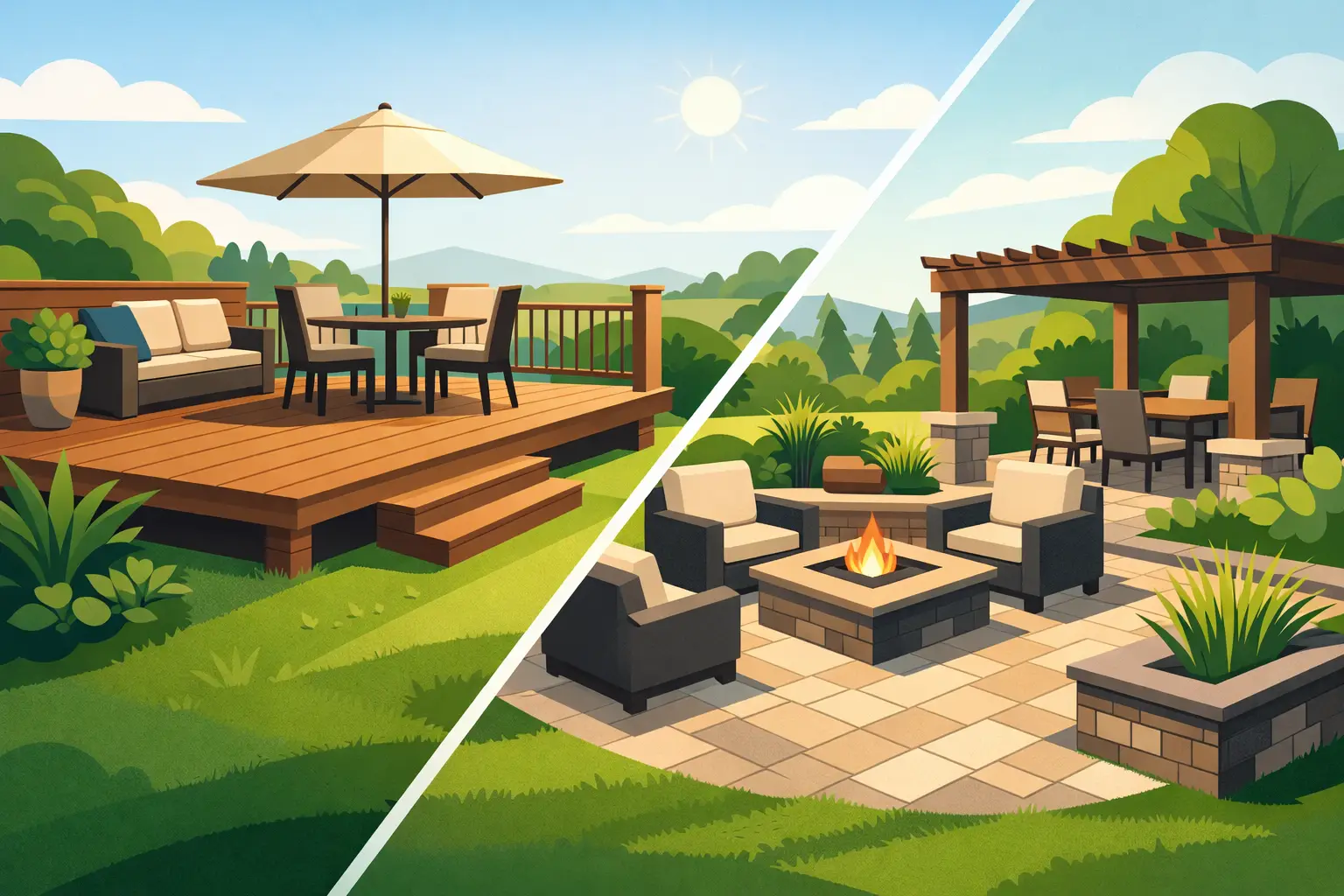
A lot of homeowners start with the same question: should you build a deck or patio for backyard living if you want something that looks great, lasts, and actually gets used? It sounds simple until you factor in slope, drainage, budget, maintenance, and how your family uses the space. The right answer is not the same for every property, especially in Maryland and the DC area where yards, grading, and weather can vary a lot from one neighborhood to the next.
If you are investing in your home’s exterior, this decision deserves more than a quick price comparison. A backyard upgrade should feel like a natural extension of your home, not a feature you work around later because the layout or materials were wrong for the space.
Deck or patio for backyard projects: start with the yard
The yard itself usually makes the first decision for you. If your back door sits well above grade, a deck often makes more sense because it can be built up to meet the elevation of the house. That creates an easy transition from inside to outside without a long set of steps dropping down to the lawn.
A patio is usually the better fit when the yard is relatively level and there is enough space to build directly on grade. It creates a grounded, permanent feel that works especially well for entertaining, dining areas, fire pits, and walkways that connect different parts of the yard.
Slope matters more than many homeowners expect. A steep or uneven yard can make a patio more complex and expensive because the area may need excavation, retaining walls, drainage work, or added base preparation. In those cases, a deck can sometimes solve the elevation issue more efficiently. On the other hand, if the site is flat and stable, a patio can deliver a high-end finished look with excellent long-term value.
How you plan to use the space matters just as much
Think about what happens in your backyard on a normal weekend, not just what looks good in photos. If you want a space for grilling outside the kitchen, lounging in outdoor furniture, or stepping out with your coffee in the morning, a deck can feel more connected to the house. It is often the choice for homeowners who want that elevated outdoor room effect.
If your goal is a larger entertaining area, a patio often gives you more flexibility. It can support dining spaces, seating walls, outdoor fireplaces, fire pits, and walkways more naturally than a deck. Patios also tend to blend better with landscaping, so the whole yard feels more finished instead of having one raised platform and lawn around it.
Families with kids and pets sometimes prefer patios because there are no stairs or railing requirements to work around. But that depends on the home. For a walkout basement or a backyard where the main gathering area is already at ground level, a patio can be the obvious answer. For a first-floor exit well above the yard, a deck may simply function better.
Cost is important, but it is not one number
Homeowners often ask which option is cheaper. The honest answer is that it depends on the yard, materials, size, and site prep. A basic ground-level patio can be cost-effective, especially on a flat site. A small elevated deck can also be very reasonable when it solves a grading problem without major excavation.
Where projects start to separate is in complexity. A patio may need excavation, compacted base material, edge restraints, drainage planning, and sometimes retaining walls. A deck may require framing, footings, stairs, railings, permits, and upgraded materials depending on height and design.
Material choices affect budget too. Composite decking from brands like Trex or TimberTech costs more upfront than many wood options, but it reduces long-term maintenance and can hold its appearance better over time. For patios, concrete pavers from established manufacturers like Cambridge or Belgard give homeowners more design flexibility and durability than a plain poured slab, though they come at a higher initial investment.
A good contractor should walk you through the real cost of ownership, not just the installation price. A lower upfront number can lose its appeal quickly if the space needs frequent repairs, staining, sealing, or drainage fixes later.
Maintenance can make the decision for busy homeowners
For many families, maintenance is where the deck-versus-patio question becomes clearer. Traditional wood decks need ongoing care. That usually means cleaning, staining, and monitoring for wear from sun, moisture, and seasonal temperature swings. Some homeowners do not mind that. Others know they would rather spend weekends enjoying the yard than maintaining it.
Composite decks are popular for that reason. They offer the look of a finished outdoor living area without the same level of upkeep as wood. You still need occasional cleaning, but the maintenance burden is much lighter.
Patios generally require less routine maintenance than wood decks. High-quality pavers hold up well, and if a section settles or is damaged, repairs can often be more targeted than with a large cracked slab. That said, patios are not maintenance-free. Weed growth between joints, surface buildup, and drainage issues can all become problems if the patio was not installed correctly from the start.
That last part matters. Whether you choose a deck or patio for backyard living, workmanship is what protects your investment. Materials matter, but proper base prep, grading, framing, fastening, and layout matter just as much.
Weather, drainage, and longevity in this region
In Maryland and the Washington, DC area, outdoor structures need to handle humidity, heavy rain, freeze-thaw cycles, and hot summer sun. Those conditions can expose shortcuts fast.
Decks need solid framing, proper footings, and careful flashing where they connect to the home. If those details are overlooked, moisture problems can follow. Patios need correct base installation and drainage planning so water moves away from the house and does not cause shifting or pooling.
This is one reason many homeowners prefer working with an experienced design-and-build contractor instead of trying to coordinate separate crews. The patio, retaining wall, walkway, gate, and fence all affect how the backyard works together. When one part is designed without considering the others, the finished result can feel pieced together.
Which looks better? That depends on the home
A deck tends to look right on homes where the rear elevation is prominent or where the outdoor space needs to connect to an upper main floor. It can create a clean architectural line and make the home feel larger.
A patio often looks more integrated with the landscape. It can feel custom, permanent, and upscale, especially when paired with seat walls, plantings, lighting, and a fire feature. If you want your backyard to feel like a complete outdoor living environment, patios usually offer more room for layered design.
Still, this is not a style contest with one winner. The best-looking project is the one that fits the house, the lot, and the way you live. In some cases, the strongest solution is both – a deck off the house with a patio below or beyond it, connected by steps and walkways.
How to choose the right deck or patio for backyard value
If resale value is part of the decision, focus less on trends and more on broad appeal. Buyers notice quality. They notice whether the project looks professionally designed, whether materials match the home, and whether the backyard feels usable.
An awkward oversized deck or a poorly placed patio does not add the same value as a well-planned space. Good outdoor living upgrades support the home’s layout and make the yard easier to enjoy. That is what helps a project feel worth the investment now and later.
If you are torn between options, start with a few practical questions. Is your yard flat or sloped? Do you want a raised connection from the house or a ground-level gathering area? How much maintenance do you realistically want? Are you building one feature, or are you planning a fuller backyard project with walkways, walls, fencing, or a fire pit?
Those answers usually point in the right direction quickly.
Homeowners do not need a hard sell. They need a clear recommendation based on the property, the budget, and the result they want five or ten years from now. That is where a free in-home consult and estimate can make a real difference. A trusted contractor can evaluate grading, drainage, layout, traffic flow, and material options before you commit to the wrong structure for the space.
If your goal is a backyard that feels finished, functional, and built to last, the best choice is the one designed around your home instead of forced into it. The right outdoor space should make life easier the moment you step outside.