
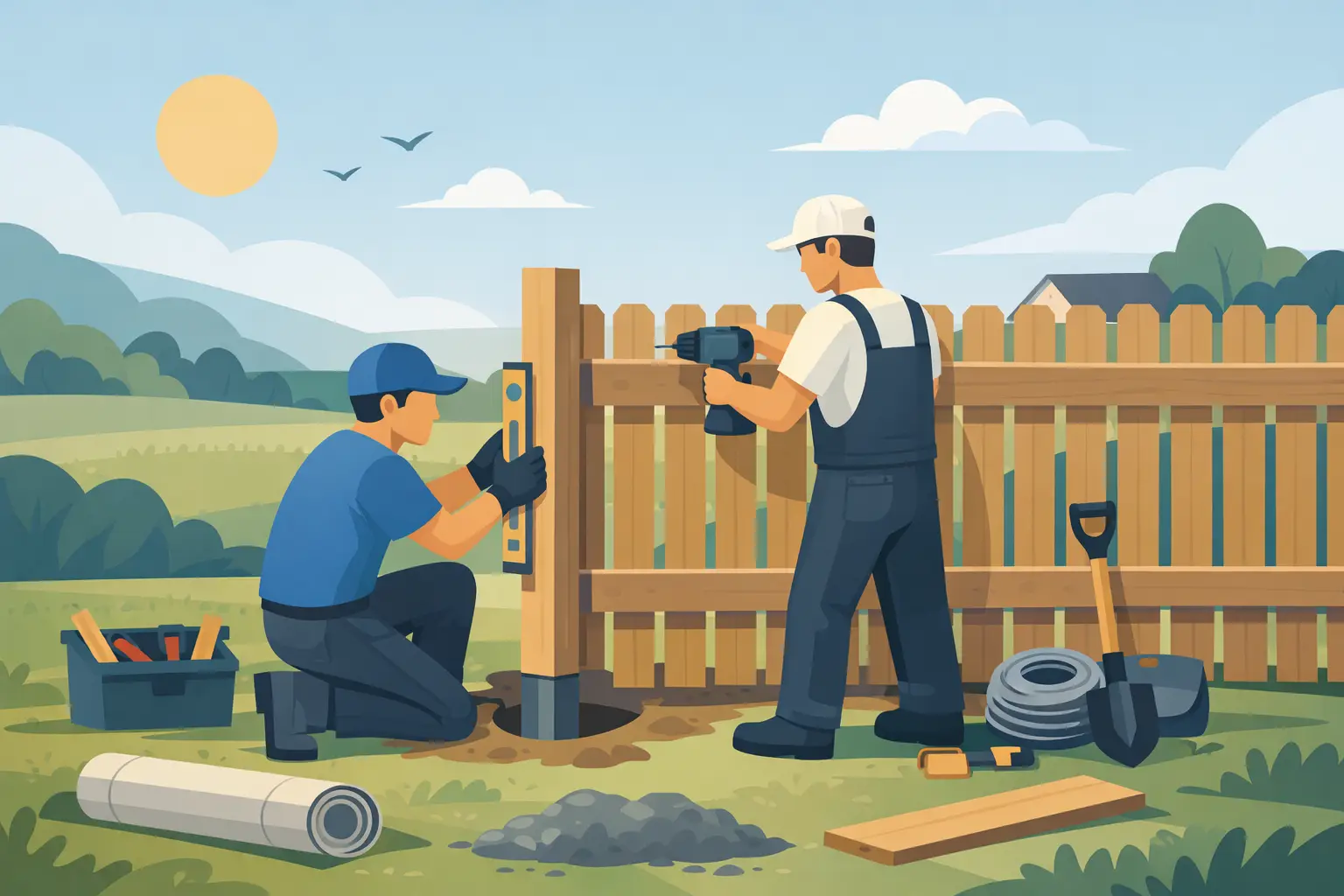
A fence can fix a lot at once. It can give your backyard privacy, make the space safer for kids and pets, sharpen curb appeal, and add real structure to the property. But if you are wondering how to install a fence, the part that matters most is not simply getting it in the ground. It is getting it straight, secure, code-compliant, and built to last through years of weather.
That is where many fence projects go sideways. Homeowners often assume the job is mostly about digging holes and attaching panels. In practice, the quality of the finished fence depends on what happens before the first post is set. Layout, material choice, soil conditions, grading, gate placement, and local requirements all affect how the fence performs over time.
How to install a fence starts with planning
The first step is understanding exactly what the fence needs to do. A privacy fence around a backyard has different demands than a decorative front-yard fence or a security-focused metal perimeter. Height, style, spacing, and gate access should all match the purpose of the project.
Property lines are the next big issue. This is one area where guessing can become expensive. Installing even a few inches over the line can create a dispute with a neighbor and force a partial tear-out. If the lot line is not crystal clear, a survey is often worth it.
You also need to confirm local zoning rules, neighborhood association guidelines, and permit requirements. In many Maryland and DC-area communities, fence height, placement, and style are regulated. Corner lots, pool areas, and front-yard fencing can come with added restrictions. A trusted contractor handles these checks upfront, which saves homeowners from delays and rework later.
Before any digging begins, utility lines must be marked. This step is non-negotiable. Gas, electric, cable, and water lines may run through areas that look completely clear from the surface.
Choosing the right fence material
The best fence material depends on your priorities. There is no single right answer for every home.
Wood remains a popular choice for privacy and a classic residential look. It offers warmth and versatility, and it can be customized in style and stain color. The trade-off is maintenance. Wood fencing needs more attention over time, especially in a climate with humidity, rain, and seasonal temperature swings.
Vinyl appeals to homeowners who want a clean look with less upkeep. It does not need painting, and quality products hold up well against moisture and insects. The upfront cost can be higher than some wood options, but the long-term maintenance is lower.
Aluminum and steel are often chosen for elegance, visibility, and security. They work especially well around front yards, pool enclosures, and sloped properties where a more open design is preferred. These materials are durable, but the look is very different from a full privacy fence.
For many homeowners, the right material decision comes down to balancing privacy, maintenance, appearance, and budget. That is why a consultative approach matters. The fence should fit the property and the way the outdoor space is actually used.
Site layout matters more than most people expect
Once the design is set, the fence line needs to be laid out carefully. This includes marking corners, ends, gate openings, and changes in direction. String lines are typically used to establish alignment and help keep runs straight.
This is also when grade changes need to be addressed. On a flat yard, installation is simpler. On a sloped lot, the fence may need to be stepped or racked depending on the material and style. A poorly planned layout can leave awkward gaps at the bottom, uneven panel heights, or a fence that looks crooked from the street.
Gate placement deserves extra attention. Gates get the most daily use, so they should be positioned for convenience and supported to prevent sagging. It is much easier to build this correctly from the start than to repair a misaligned gate later.
Setting posts is the foundation of the job
If you want to know how to install a fence that lasts, pay close attention to the posts. They carry the load of the entire system. When posts are too shallow, improperly spaced, or set out of plumb, the fence will eventually show it.
Post holes must be dug to the proper depth based on fence height, soil conditions, and local frost considerations. In general, taller fences need deeper and more substantial footings. Corner posts and gate posts often require even more support because they handle added stress.
After the holes are dug, posts are set and aligned carefully before concrete is placed. Spacing has to match the panel or rail system being installed. Even small inconsistencies at this stage can create larger fit and alignment problems down the line.
This part of the project requires patience. Rushing through post installation is one of the main reasons fences lean, shift, or wear unevenly. Good craftsmanship shows up here long before the finished product is visible.
Installing rails, panels, and pickets
After the posts are secure, the fence structure starts taking shape. For wood fencing, this typically means attaching horizontal rails first, then installing pickets or boards. For vinyl and metal systems, pre-engineered panels may be mounted between posts according to manufacturer specifications.
Consistency matters at every stage. Top lines should be level or intentionally stepped with the grade. Board spacing should be uniform. Fasteners should be appropriate for the material and outdoor exposure. Corners and transitions should look intentional, not improvised.
Privacy fencing requires particular care because visual flaws stand out immediately. A panel that is slightly off, a post that is out of line, or a gate that does not match the surrounding sections can throw off the entire yard. That is why professional installation tends to produce a cleaner result than a quick build approach.
How to install a fence gate that works well for years
A fence gate is a small part of the project, but it often causes the biggest headaches when it is not built properly. Gates must be square, reinforced, and hung with hardware that matches the weight and usage level.
The post support on either side of the gate is especially important. If those posts shift, the gate can drag, latch poorly, or stop closing altogether. Width matters too. A pedestrian gate has different clearance needs than a wider opening intended for lawn equipment or vehicle access.
This is one area where quality materials and installation make a real difference over time. A well-built gate should feel solid on day one and continue operating smoothly through regular use and seasonal weather changes.
Common mistakes homeowners should avoid
The biggest fence installation mistakes are usually not dramatic. They are small decisions that add up to a disappointing result.
Poor planning is one. So is choosing materials based only on lowest price. Another common issue is underestimating the effect of slope, drainage, and soil movement on the fence line. Homeowners also run into trouble when they skip utility marking, overlook permit rules, or assume a gate can be added anywhere without structural changes.
There is also the question of value. A fence is a visible, permanent part of the property. If it looks uneven, weathers poorly, or needs repair early, the lower upfront price does not feel like a bargain for long.
Why many homeowners choose professional installation
For a homeowner, the real question is often not just how to install a fence. It is whether the project is worth taking on without experienced help. Fence installation looks straightforward from the curb, but a lot has to go right beneath the surface and along the layout for the finished product to perform the way it should.
Professional installation brings more than labor. It brings design guidance, code awareness, material knowledge, site evaluation, proper equipment, and accountability. It also shortens the timeline and reduces the risk of expensive corrections.
For homeowners in Maryland and the Washington, DC area, working with an established contractor can simplify the process from start to finish. A family-run company like A-1 Fencing helps homeowners think through style, durability, property layout, and budget while delivering the kind of workmanship that holds up over time.
A fence should do more than mark a boundary. It should make your home feel more private, more polished, and more usable every day. If you are thinking about your next exterior upgrade, the best first step is not picking up a post-hole digger. It is making sure the plan, materials, and installation are right from the start.