
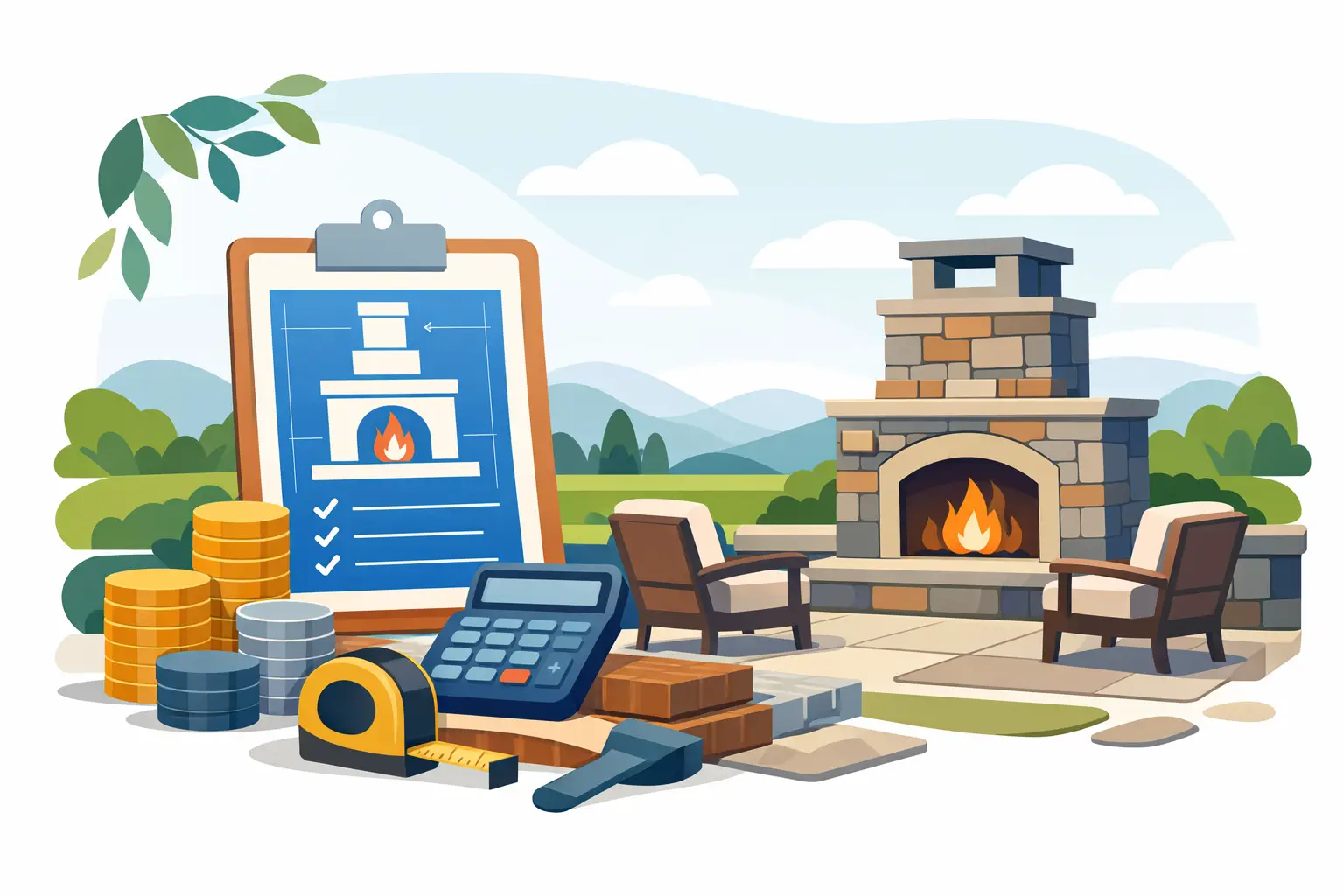
A backyard fireplace can turn an underused patio into the place where your family gathers on cool Maryland evenings. But the outdoor fireplace installation cost is not a one-size-fits-all number. A compact gas unit on an existing patio has very different requirements than a custom stone fireplace built into a new hardscape, complete with seating walls, lighting, and a dining area.
For homeowners in Maryland and the Washington, DC metro area, most professionally installed outdoor fireplaces fall between $8,000 and $35,000 or more. The final price depends on the fuel source, materials, site conditions, permits, utility work, and how much of the surrounding outdoor space is included in the project.
What Does an Outdoor Fireplace Cost to Install?
A professionally installed prefabricated gas outdoor fireplace often starts around $8,000 to $15,000 when the site is accessible and the project is relatively straightforward. This range may include the fireplace unit, a finished surround, basic gas connections, labor, and a suitable foundation.
A masonry fireplace made from stone, brick, or manufactured veneer generally costs $15,000 to $35,000+. These fireplaces require more labor, a stronger base, detailed masonry work, and a chimney system designed for safe operation. A custom-built fireplace with premium natural stone, a large hearth, storage niches, and integrated features can exceed that range.
The best number is the one built around your property, not a generic online estimate. A free in-home consult allows an experienced contractor to evaluate access, grade, patio conditions, utility routes, and the design goals that will affect your investment.
Typical price ranges by fireplace type
Gas fireplaces are often the most convenient choice for busy families. They start quickly, produce reliable heat, and do not require wood storage or ash cleanup. A finished gas fireplace project typically ranges from $8,000 to $25,000, depending on the unit and surround.
Wood-burning fireplaces create the traditional crackle, aroma, and visual appeal many homeowners want. Because they require a properly built firebox, chimney, smoke control, and additional clearance planning, they commonly range from $15,000 to $35,000 or more.
Electric outdoor fireplaces can cost less in some applications, particularly under a covered porch where a ventless feature is appropriate. They do not deliver the same heat output or authentic fire experience as gas or wood, but they can be a practical design feature where gas service or a chimney is not feasible.
The Factors That Shape Outdoor Fireplace Installation Cost
The fireplace itself is only one part of the project. A dependable estimate accounts for the complete installation, so there are no surprises once work is underway.
Fuel source and utility connections
A gas fireplace needs a safe, correctly sized gas line. If your patio is close to an existing gas supply, the connection may be fairly simple. If the line must run across a large yard, under hardscape, or from a propane tank installation, utility work can add significantly to the project cost.
Wood-burning fireplaces do not require gas piping, but they require more masonry and chimney construction. They also need thoughtful placement to manage smoke and meet local setback requirements. The right option comes down to the atmosphere you want, how often you expect to use the fireplace, and the layout of your property.
Materials and finish selections
Stone veneer, brick, block, stucco, and natural stone can all create a beautiful finished fireplace. Their costs vary widely. Manufactured stone offers a broad range of colors and profiles at a more approachable price point, while natural stone provides a distinctive, high-end look with a higher material and installation cost.
The fireplace surround should also work with the rest of your exterior. Homeowners often coordinate it with a Belgard or Cambridge patio, a retaining wall, steps, columns, or the colors on their home. Investing in a cohesive design can make the space feel intentional rather than like separate projects added over time.
Foundation, patio, and site preparation
Outdoor fireplaces are heavy. A masonry structure needs a properly prepared base that can support its weight through seasonal temperature changes and Maryland’s freeze-thaw cycles. If an existing patio is undersized, uneven, or not built for a fireplace load, it may need to be expanded or rebuilt.
Site access matters, too. A level backyard with a wide side gate is easier to work in than a sloped property with limited access. Hauling materials by hand, removing old hardscape, correcting drainage, or building into a hillside can all affect labor and equipment needs.
Chimney height, clearances, and code requirements
A fireplace must be designed for safe performance, not just good looks. Chimney height, firebox construction, setbacks from structures and property lines, combustible clearances, and local code requirements can influence the design and price.
Permits may be required for masonry, gas work, electrical additions, or structural components. Permit costs are usually a smaller portion of the overall investment, but following the required process protects your property and helps ensure the installation is completed correctly.
Should You Build the Fireplace With a New Patio?
Building an outdoor fireplace as part of a larger patio project is often the smartest value. The same team can coordinate excavation, base preparation, drainage, pavers, retaining walls, walkways, and the fireplace structure in the right order. That avoids the expense and inconvenience of removing newly installed materials later to add utilities or expand the footprint.
A fireplace can also define how the space is used. It may serve as the focal point for a seating area, create a comfortable edge around an open patio, or anchor an outdoor kitchen and dining space. Planning circulation around the fireplace matters. You want enough room for seating, safe passage, and comfortable gathering without making the patio feel crowded.
If your current patio is in excellent condition and has the proper footprint, adding a fireplace may still make sense as a stand-alone project. An in-home evaluation can determine whether the existing surface and base are suitable before design decisions are finalized.
Ways to Manage Your Budget Without Cutting Quality
The goal is not to choose the cheapest fireplace. It is to choose a design that delivers long-term enjoyment, uses quality materials, and is built to perform safely through years of use.
Start with the feature that matters most to your family. If easy operation is the priority, a gas fireplace with a refined manufactured stone surround may provide more value than a larger wood-burning structure. If you host large gatherings and want a true architectural centerpiece, investing in custom masonry and a larger patio may be worthwhile.
Keeping the footprint simple can also control costs. Straight walls, a standard-height structure, and an accessible location typically cost less than curved stonework, elevated construction, or complex multi-level designs. You can still create a polished result by selecting materials that complement your home and including practical details such as a hearth, mantel, or built-in wood storage.
Financing can make a larger outdoor living project more manageable by allowing homeowners to build the space they want now rather than completing disconnected upgrades over several years. The right approach depends on your budget, timeline, and plans for the property.
Why Professional Installation Is Worth It
An outdoor fireplace combines fire, fuel, weight, weather exposure, and structural work. It is not a feature where shortcuts pay off. Poor base preparation can lead to settling. Improper gas work creates serious safety concerns. A badly designed chimney can send smoke back toward the seating area or your home.
A design-and-build contractor brings the planning and workmanship together. At A-1 Fencing, homeowners can work with one experienced team for fireplaces, patios, retaining walls, walkways, and other exterior improvements, rather than trying to coordinate multiple contractors. That creates a clearer plan, more consistent craftsmanship, and a finished space designed to work as a whole.
The most useful next step is simple: picture how you want to use the space on a cool fall night, then request a free in-home consult and estimate. With the right design, material selection, and professional installation, your fireplace can become the feature that brings your backyard to life long after summer ends.