
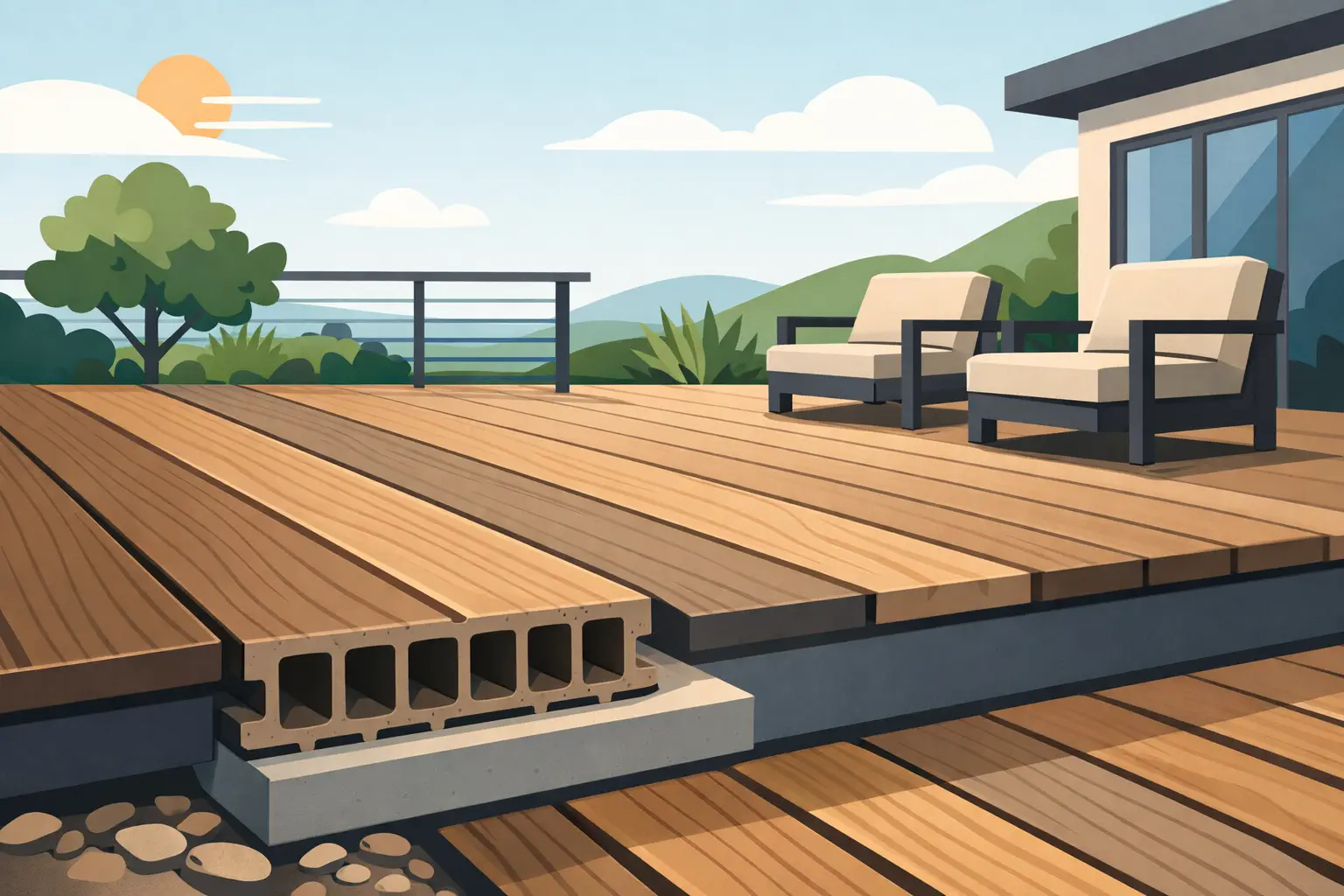
A deck should make your backyard easier to enjoy, not give you one more weekend chore. If you have been asking what is a composite decking, the short answer is this: it is a deck board made from a blend of wood fibers and recycled plastics, designed to look like wood while requiring far less upkeep.
For many homeowners in Maryland and the DC area, that difference matters. Between humid summers, heavy rain, freezing winters, and the normal wear of family life, outdoor materials get tested fast. Composite decking has become a popular choice because it offers a cleaner, more durable, lower-maintenance alternative to traditional wood in many situations.
What Is a Composite Decking Material?
Composite decking is a manufactured decking product made from a mix of plastic and wood byproducts. The exact formula varies by brand, but the goal is usually the same: give homeowners the appearance of wood without the constant sanding, staining, sealing, and splinter concerns that often come with natural lumber.
Most composite boards are capped, meaning they have a protective outer shell that resists moisture, fading, staining, and surface wear better than older generations of composite products. That cap is one reason brands like Trex and TimberTech have become so common in modern deck construction.
In practical terms, composite decking is built for homeowners who want the look and function of a deck without signing up for regular maintenance year after year.
How Composite Decking Differs From Wood
The biggest difference is upkeep. A wood deck can be beautiful, but it typically needs ongoing care to stay that way. Depending on the species and exposure, wood may need staining or sealing every few years, and even well-maintained boards can crack, warp, rot, or splinter over time.
Composite decking is made to avoid many of those issues. It does not need staining, and it is less likely to split or become rough under normal use. For busy families, that alone can make a strong case.
That said, composite is not identical to wood, and it is not automatically the best answer for every project. Wood often has a lower upfront cost, and some homeowners strongly prefer the natural variation and texture of real lumber. Composite usually costs more at the beginning, but many homeowners feel the lower maintenance and longer lifespan make up the difference.
What Is a Composite Decking Best For?
Composite decking is often best for homeowners who plan to stay in their home, use their outdoor space regularly, and want a deck that stays attractive with less effort. It works especially well for entertaining spaces, poolside areas, family backyards, and elevated decks where long-term durability matters.
It is also a smart option if you want a finished, polished look. Composite boards are available in a range of colors and grain patterns, so you can create a deck that feels warm and upscale without depending on frequent maintenance to keep it looking that way.
If your goal is to build once and enjoy it for years, composite usually deserves serious consideration.
Pros of Composite Decking
The biggest advantage is low maintenance. You can skip annual staining and sealing, and routine care is generally limited to basic cleaning. For many homeowners, that saves time, hassle, and long-term maintenance costs.
Composite decking also resists many of the problems that affect wood. It is less vulnerable to rot, insect damage, splintering, and moisture-related deterioration. In a climate with seasonal swings like Maryland and Washington, DC, that added durability can be a major benefit.
Appearance is another selling point. Today’s composite products look far better than early versions did. Higher-quality boards offer realistic wood tones, improved texture, and hidden fastener systems that create a cleaner finished surface.
There is also a safety and comfort angle. Composite is often a good choice for families with children or pets because it is less likely to splinter. That can make a difference on a deck where people walk barefoot, gather often, and move furniture around throughout the season.
Cons of Composite Decking
The clearest trade-off is price. Composite decking usually costs more upfront than pressure-treated wood. If budget is the main driver, that can be a sticking point.
Heat retention is another factor. Some darker composite colors can get hotter in direct sun than lighter materials. That does not make composite a bad product, but it does mean color selection matters, especially for decks with full southern or western exposure.
Not all composite boards are created equal, either. Entry-level products can perform very differently from premium lines. That is why material selection and proper installation matter so much. A strong product installed poorly is still a problem, and a cheap board may not deliver the long-term value homeowners expect.
How Long Does Composite Decking Last?
A professionally installed composite deck can last for decades. The exact lifespan depends on the product line, the framing system, local conditions, and how well the deck is maintained, but many premium manufacturers offer long-term warranties that reflect that durability.
That does not mean it is maintenance-free forever. Composite still needs occasional cleaning, and the structure underneath the deck matters just as much as the boards on top. If the framing, footings, and drainage are not done correctly, surface materials alone will not solve those problems.
This is one reason experienced installation matters. A deck is a system, not just a set of boards.
What Does Composite Decking Cost?
Composite decking usually costs more than basic wood decking at the start, but less in ongoing maintenance over time. The total project cost depends on board selection, deck size, railings, stairs, substructure, layout complexity, site access, and whether you are replacing an old deck or building from scratch.
For homeowners comparing options, the better question is often not just, “What does it cost today?” but “What will this deck cost me over the next 10 to 20 years?” A wood deck may look less expensive on paper at first, but staining, repairs, and earlier board replacement can narrow that gap.
If you are planning a major outdoor upgrade, it helps to evaluate the full value of the project rather than focusing only on the initial material price.
Is Composite Decking Worth It?
For many homeowners, yes. If you want a durable, attractive deck with less maintenance and more predictable long-term performance, composite is often worth the investment.
It is especially appealing if you are tired of power washing, staining, or replacing worn wood boards. It is also a strong fit if your deck is part of a larger outdoor living plan and you want materials that hold their appearance well over time.
Still, it depends on your priorities. If your main goal is minimizing upfront cost, wood may be the better fit. If your goal is reducing maintenance and improving long-term value, composite often comes out ahead.
Choosing the Right Composite Decking for Your Home
The right board depends on more than color. You should think about sun exposure, traffic level, railing style, drainage, board profile, and the overall look you want for your backyard. A busy family deck may call for one product, while a low-traffic platform deck may point to another.
This is where a consultative contractor adds real value. The best choice is not always the most expensive line on the shelf. It is the material that fits your home, your budget, and how you actually use the space.
For homeowners who want a deck that feels like a true extension of the home, product selection and craftsmanship go hand in hand. That is why many choose experienced design-and-build contractors who can guide the process from layout to final finish, instead of treating decking as a one-size-fits-all purchase.
What Is a Composite Decking Project Like From Start to Finish?
A quality composite deck project starts with planning, not boards. The design should account for traffic flow, yard layout, door access, grade changes, stairs, railings, and how the deck connects to the rest of the property. If you are also considering fencing, a patio, or other backyard improvements, coordinating those elements early usually leads to a better final result.
From there, the focus shifts to materials, structure, and installation details. Proper framing, spacing, ventilation, and fastening all affect how the deck performs over time. Homeowners often notice the color first, but the hidden work underneath is what protects the investment.
A-1 Fencing sees that firsthand on projects where homeowners want not just a new deck, but a backyard that functions better as a whole. When the design, materials, and installation are handled the right way, composite decking becomes more than a product choice. It becomes the reason your outdoor space is easier to enjoy year after year.
If you are weighing your options, the best next step is not guessing from photos. It is getting expert guidance on what fits your home, your goals, and the way you want to live outside.