
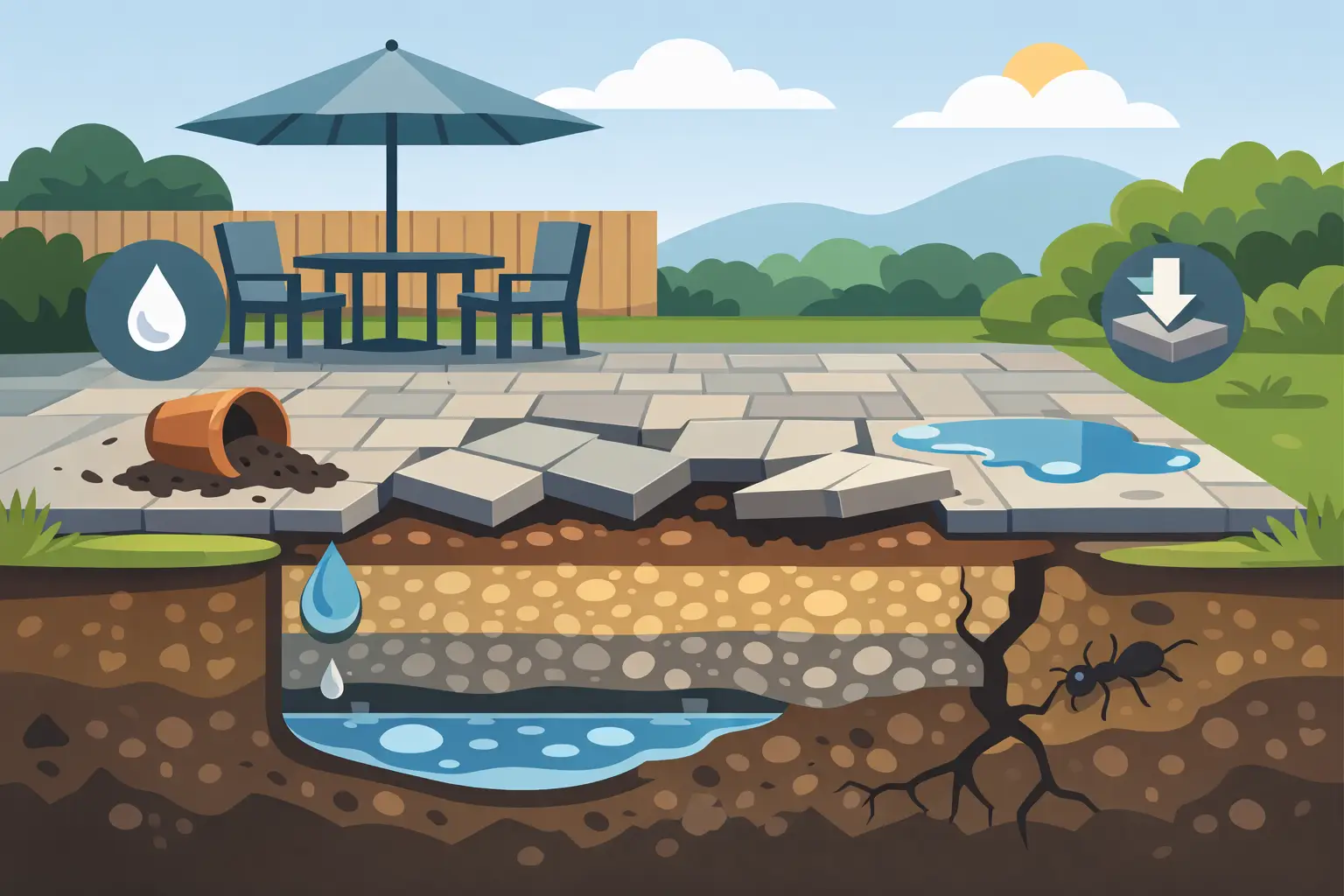
A patio can look perfectly level when it is installed, then develop one low spot that catches rainwater, rocks underfoot, or creates a trip hazard near the steps. Homeowners often ask what causes patio pavers to sink, especially after a wet Maryland winter or a season of heavy use. The short answer is that the pavers themselves are rarely the problem. In most cases, the material beneath them has shifted, washed away, or was not built to support the patio in the first place.
A well-built paver patio is a layered system. The pavers sit on bedding material, which sits on a compacted aggregate base over prepared soil. When any layer is weak or water is allowed to move through the system unchecked, the finished surface can settle. Identifying the real cause matters because simply adding sand beneath a sunken paver may provide a temporary improvement without solving the issue below.
What Causes Patio Pavers to Sink Most Often?
1. An underprepared or poorly compacted base
The most common cause of sinking pavers is insufficient base preparation. Before pavers are installed, the contractor should excavate to the appropriate depth, place the proper amount of crushed aggregate, and compact it in controlled layers. If the base is too thin, not compacted thoroughly, or installed over loose soil, it can settle under its own weight and under regular foot traffic.
This issue may not show up immediately. A new patio can appear level for months before rain, freeze-thaw cycles, and normal use expose weak areas. You may notice broad, gradual depressions rather than a single sharply sunken paver. On patios that support outdoor kitchens, fire pits, furniture, or frequent entertaining, proper base depth and compaction are especially important.
2. Poor drainage around the patio
Water is one of the biggest threats to a paver installation. A patio needs a deliberate slope that directs water away from the home and toward an appropriate drainage area. Without it, water can collect on the surface, seep through joints, and saturate the base below.
Standing water softens the soil and can move fine particles out of the base. Over time, voids form beneath the pavers and the surface drops into them. Runoff from a roof, downspout, neighboring slope, or poorly graded yard can make the problem worse. If one area of your patio repeatedly holds water after a storm, that is not just an inconvenience. It is often an early warning sign of a drainage problem that deserves attention.
3. Soil movement and settling beneath the patio
Not all soil behaves the same way. Clay-heavy soils, which are common in many parts of Maryland and the Washington, DC area, expand when wet and contract as they dry. That seasonal movement can affect the support beneath a patio, particularly if the soil was not properly stabilized during installation.
Newer homes can also experience normal settlement as surrounding ground adjusts after construction. Soil that was disturbed for utilities, additions, retaining walls, or drainage work may settle more than undisturbed ground. A professional assessment should consider what is happening around the patio, not only the visible low spot. Repairing the surface without addressing an unstable subgrade can lead to the same issue returning.
4. Water washing out sand or base material
Paver patios are designed to drain through their joints, but they are not designed to handle concentrated, uncontrolled water flow. A downspout that empties directly onto the patio, a leaking outdoor faucet, or runoff rushing down a hillside can wash away joint sand and base material over time.
This type of settlement is often localized. A few pavers may dip near a downspout, along the outside edge of the patio, or beside a retaining wall. You may also see open joints, loose pavers, exposed base stone, or erosion at the patio perimeter. The repair needs to include correcting the water source, whether that means extending a downspout, improving grading, or adding a drainage solution.
5. Failing edge restraints
Edge restraints keep pavers locked together. They are an essential structural part of the installation, not a cosmetic finishing detail. When restraints crack, shift, or are missing, the patio can begin spreading outward. As pavers move apart, joint sand is lost and individual units become more likely to rock or settle.
Edges near garden beds, driveways, steps, and lawn areas are particularly vulnerable. If the perimeter of your patio is separating or pavers along the edge are tilting, the issue may be larger than a few loose stones. Rebuilding the border correctly can protect the rest of the patio from further movement.
6. Freeze-thaw cycles
Winter weather places extra stress on outdoor hardscapes. When water enters the base or soil beneath a patio and freezes, it expands. When it thaws, the ground can shift again. Repeated cycles can create uneven support and contribute to settling, heaving, or loose pavers.
Freeze-thaw activity alone does not usually cause a properly built patio to fail. It typically exposes an existing weakness, such as poor drainage, inadequate compaction, or open joints that allow too much water into the system. This is why a repair should focus on structure and drainage rather than simply resetting the visible pavers.
7. Heavy loads or changes in how the patio is used
Most residential paver patios are designed for people, patio furniture, and everyday outdoor living. Problems can develop when a patio is subjected to loads it was not designed to carry, such as vehicles, dumpsters, heavy equipment, or a large permanent feature installed without adequate support.
A hot tub, masonry fireplace, outdoor kitchen, or retaining wall may require a stronger base and a more carefully engineered layout than a standard seating area. This does not mean pavers are unsuitable for these upgrades. It means the base must match the project. A design-and-build contractor can help ensure the patio, drainage, and adjacent structures work together before construction begins.
How to Tell Whether Your Patio Needs Repair
A small settled area is often repairable, but waiting can turn a manageable correction into a larger project. Pay attention to puddles that remain long after rain, pavers that rock when stepped on, widening joints, cracked border restraints, or a patio surface that slopes toward the house. A sudden dip near a downspout or retaining wall deserves prompt evaluation because erosion may be occurring below the surface.
It also helps to distinguish between a few low pavers and widespread settlement. If only a small section has dropped and the surrounding base is stable, a contractor may be able to lift the pavers, rebuild the bedding layer, reinstall the pavers, and reapply joint sand. If multiple areas are sinking, drainage is poor, or the patio is moving away from a wall or steps, a more extensive rebuild may be the more durable and cost-effective choice.
Why Surface-Level Fixes Often Do Not Last
It can be tempting to remove a sunken paver, add a little sand, and put it back in place. That approach may work for a minor bedding-sand issue, but it will not correct a washed-out base, failed edge restraint, or drainage problem. In fact, adding too much loose sand can create a soft spot that settles again quickly.
A proper patio repair begins by carefully removing the affected pavers and examining the layers underneath. The contractor should identify whether the base needs to be rebuilt, compacted, regraded, or protected from water. Once the support is restored, the pavers can be reset to the correct elevation and locked together with fresh joint material. The goal is not just to make the patio look level on the day of repair. The goal is to give it a stable foundation for years of use.
Protecting Your Patio From Future Settlement
Good maintenance cannot replace quality installation, but it can help preserve a patio. Keep gutters and downspouts directing water away from the paver area. Watch for soil erosion along patio edges, especially after major storms. Refill joint sand when it has noticeably washed out, and avoid allowing heavy equipment to cross areas that were not built for vehicle loads.
If you are planning a new patio, retaining wall, walkway, fire pit, or deck addition, consider the entire outdoor space as one connected system. Grading, drainage, transitions, and material choices should be addressed before construction begins. A-1 Fencing provides free in-home consultations and estimates for homeowners who want an experienced local team to evaluate a settling patio or plan a durable new outdoor living space.
A level patio should feel effortless: water moves where it should, furniture sits flat, and every step feels secure. If yours is starting to sink, addressing the cause now can protect both your investment and the way your family enjoys the space.