
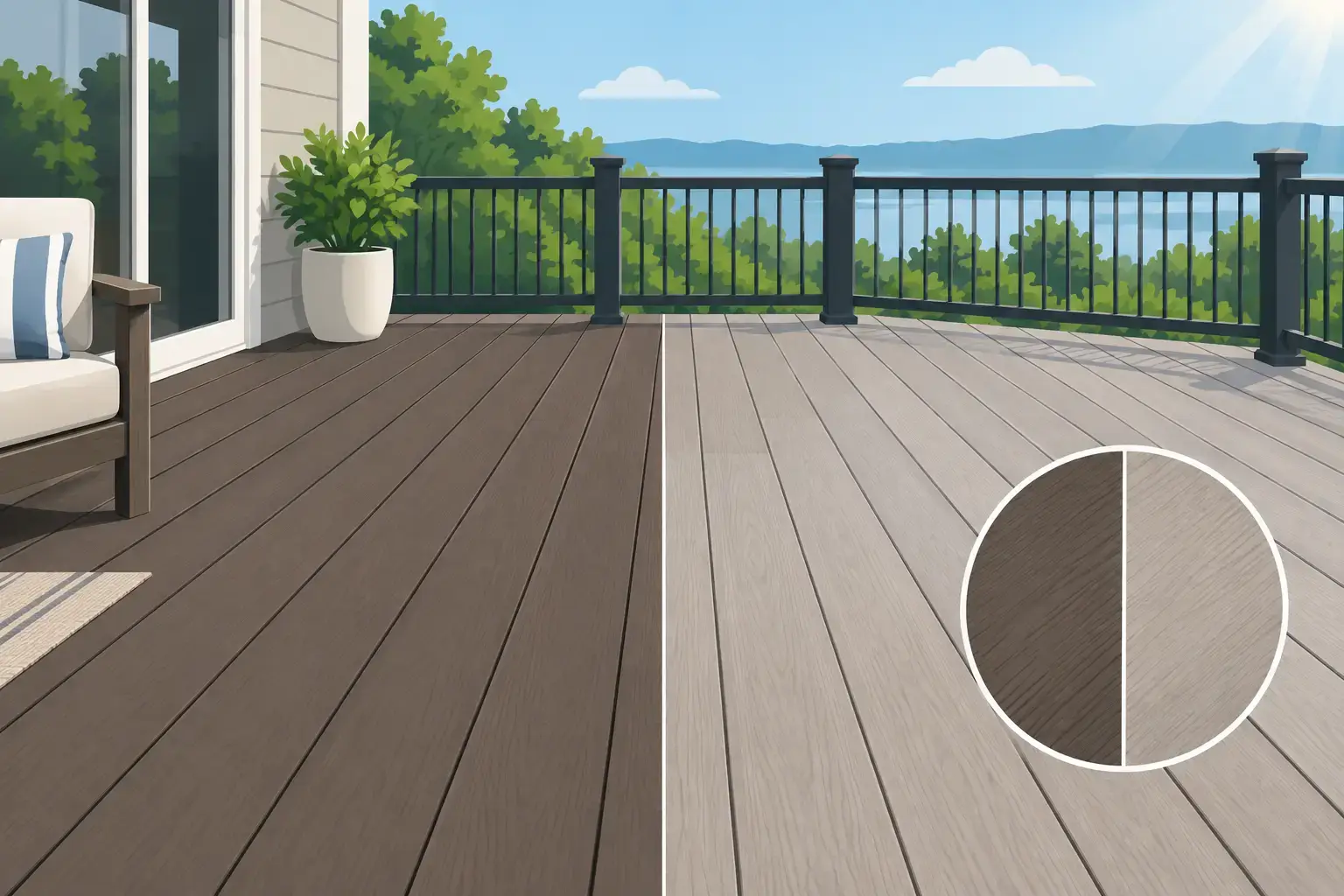
A new composite deck can make a backyard feel finished from the day it is installed. The color is rich, the boards are uniform, and there is no annual staining project waiting next spring. But do composite decks fade? Yes, some degree of color change is possible. The difference is that quality modern composite decking is engineered to resist the dramatic fading, graying, and uneven weathering homeowners often see with natural wood.
For Maryland and Washington, DC homeowners, that distinction matters. Our summers bring intense sun and humidity, while winter delivers moisture, freezing temperatures, and repeated thaw cycles. Choosing the right decking material and color can make a meaningful difference in how your outdoor living space looks several years from now.
Do Composite Decks Fade Over Time?
All exterior materials change somewhat when exposed to sun, rain, temperature swings, and foot traffic. Composite decking is no exception. Ultraviolet rays can gradually affect pigments, and airborne dirt, pollen, mildew, and spilled food can make a deck appear duller than it actually is.
However, high-quality capped composite boards are designed with a protective outer shell that provides substantially better fade resistance than older, uncapped composite products. This cap helps shield the composite core from moisture and UV exposure while protecting the board against many everyday stains and scratches.
A small amount of initial weathering can occur during the first few months after installation, particularly with certain colors and product lines. After that adjustment period, premium decking typically holds its color remarkably well when it is properly installed and routinely cleaned. It will not stay visually identical to the day it came off the truck, but it should not quickly turn pale, blotchy, or gray.
Why Some Composite Decks Change Color More Than Others
Not all composite decking is built to the same standard. Material quality is the largest factor, followed closely by the amount of direct sun the deck receives and how well the surface is maintained.
Older generations of composite decking were more vulnerable to fading because the color was incorporated throughout an exposed composite board. Today’s leading capped products use protective technology that better preserves color. Brands such as Trex and TimberTech offer lines specifically developed for long-term outdoor exposure, though each collection has its own color options, warranty terms, texture, and price point.
Deck color also affects what you notice. Dark brown, charcoal, and deep red-toned boards absorb more heat and may show dust, pollen, and water spots more readily. Lighter gray, tan, and weathered wood tones can be more forgiving in sunny, open yards. That does not automatically make lighter decking the better choice. A darker deck can provide a striking contrast against light siding or stonework, but it deserves thoughtful planning when the space receives full afternoon sun.
Location matters as well. A deck facing south or west without tree cover will receive more UV exposure than a shaded deck. Reflected light from windows, water, light-colored siding, or nearby hardscapes can also concentrate heat in specific areas. In some cases, the issue is less about fading and more about heat buildup, especially for families who expect children and pets to use the deck barefoot in summer.
Fading vs. Surface Buildup: Know the Difference
Homeowners sometimes assume their composite deck has faded when it has actually developed a layer of pollen, soil, mildew, or residue. In the DC metro area, spring pollen can coat every horizontal outdoor surface quickly. Humid weather can also encourage organic growth in shaded areas where leaves and moisture collect.
Before deciding a deck has lost its color, clean a small inconspicuous section according to the manufacturer’s care instructions. A gentle composite-deck cleaner, soft-bristle brush, and regular garden hose are often enough to restore the board’s appearance. Avoid harsh solvents, abrasive pads, and pressure washing at excessive settings, since these can damage the protective cap or void material warranty coverage.
Stains are another separate concern. Most capped composite decking handles ordinary spills well when they are addressed promptly, but sunscreen, grease, mulch, fertilizer, and metal furniture can leave marks if allowed to sit. Cleaning spills early protects the finish and prevents a maintenance issue from looking like permanent discoloration.
How to Help Your Composite Deck Keep Its Color
Composite decking requires far less upkeep than wood, but low maintenance does not mean no maintenance. A few sensible habits can help preserve the appearance of your investment.
Keep gaps between boards clear so water can drain properly, and sweep away leaves, seed pods, and standing debris. Trim nearby shrubs and trees to improve airflow, especially around the deck perimeter and beneath stair landings. If planters or outdoor rugs stay in one place all season, move them occasionally to prevent trapped moisture and uneven surface buildup.
Clean the deck at least once or twice a year, with additional cleaning after heavy pollen season or a messy outdoor gathering. Use only products approved for the specific decking material. This is particularly important because different product lines may have different cleaning recommendations.
Be selective with furniture accessories. Rubber-backed mats, vinyl items, and certain patio furniture feet may react with some decking surfaces or trap moisture. Use furniture pads that are appropriate for composite decking and choose breathable outdoor rugs. If you use a grill, a proper grill mat can help protect the deck from grease while keeping the area easier to clean.
Is Composite Better Than Wood for Color Retention?
For most homeowners, yes. Pressure-treated wood is economical upfront, but its appearance depends heavily on regular washing, sealing, and staining. Without that care, wood can fade, split, warp, and develop an uneven gray finish. Even a well-maintained wood deck will typically need refinishing over its lifespan.
Composite decking costs more at the beginning, but it can reduce the ongoing work and expense of maintaining a finished look. There is no staining or painting schedule to manage, and premium capped boards are built to resist the moisture damage that challenges wood in our regional climate.
That said, composite is not the right answer for every project. Homeowners who prefer the natural variation of real wood, have a limited upfront budget, or plan for a smaller short-term project may still choose wood. The best decision depends on how long you expect to stay in the home, how you use the space, the amount of sun exposure, and the appearance you want around your patio, fence, and landscaping.
Choosing a Fade-Resistant Composite Deck
The best way to avoid disappointment is to select the material before focusing only on the color sample. Ask your contractor which product line is being proposed, whether it is capped on all sides or only the walking surface, and what the manufacturer’s fade and stain warranty covers. Review full-size samples outdoors at different times of day, not only under indoor showroom lighting.
A knowledgeable installer should also discuss framing, drainage, ventilation, stair design, railing options, and transitions to existing hardscapes. A beautiful composite board cannot perform as intended if the structure beneath it is poorly built or water is allowed to collect against the home.
At A-1 Fencing, our team helps homeowners compare trusted decking options based on their property, budget, and long-term plans. A free in-home consult and estimate gives you an opportunity to see how decking colors and layouts will work with your home rather than guessing from a small sample in isolation.
A composite deck should be chosen as a long-term part of your home, not as a seasonal purchase. With quality capped materials, proper installation, and simple routine care, you can expect lasting color and a backyard that continues to look ready for company year after year.