
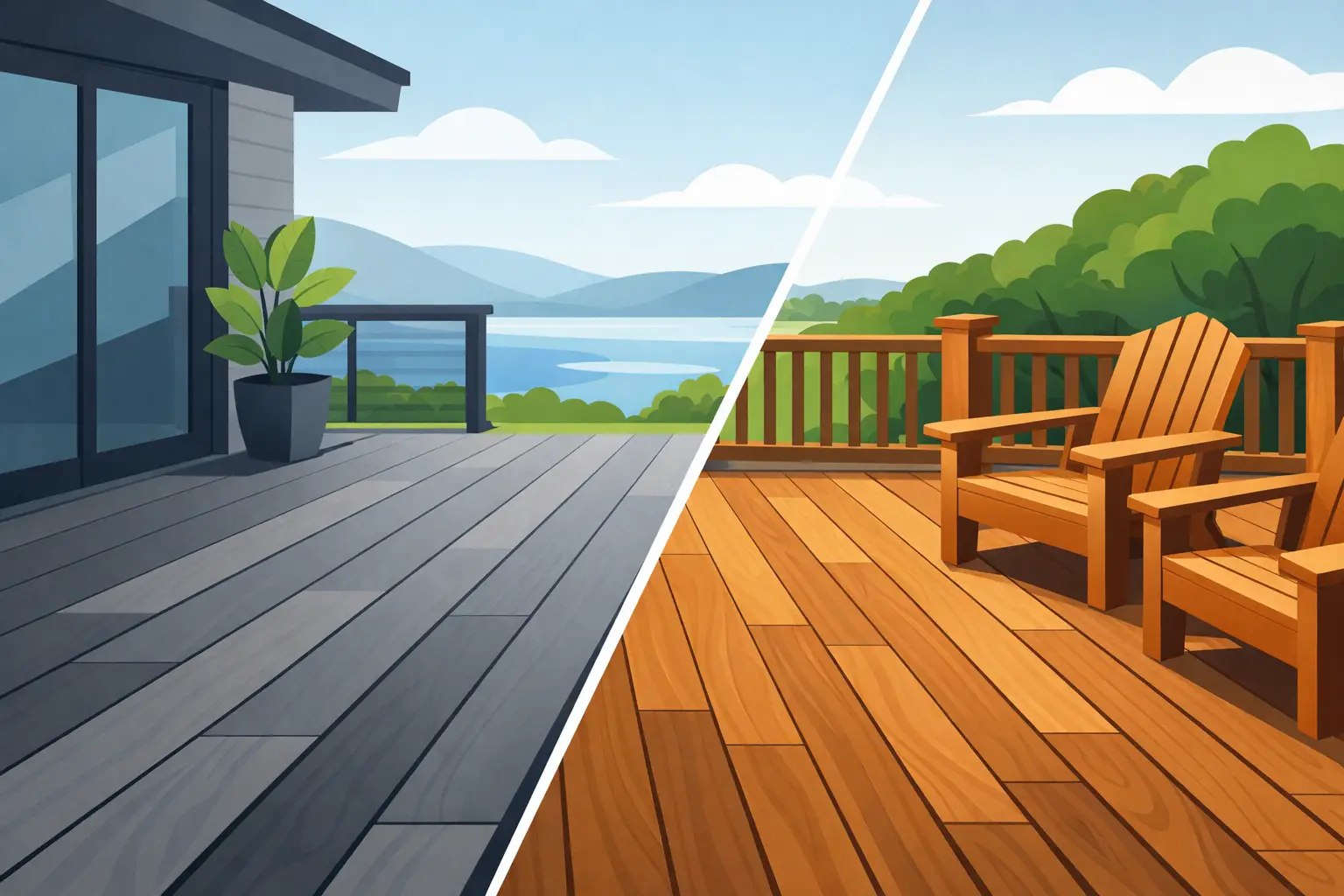
A new deck should make your backyard easier to enjoy, not add another demanding item to your weekend to-do list. For homeowners weighing composite vs wood decking, the right answer comes down to more than the initial price. It depends on how you use your outdoor space, how much maintenance you want to take on, and how long you expect the deck to serve your family.
In Maryland and the Washington, DC area, decks face humid summers, heavy rain, winter freeze-thaw cycles, falling leaves, and plenty of foot traffic. Choosing the right material before construction begins helps protect your investment and creates an outdoor space that fits your home for years to come.
Composite vs Wood Decking: The Core Difference
Wood decking is the traditional choice. Most pressure-treated lumber decks use softwood treated to resist insects and decay. Premium wood options, such as cedar or tropical hardwoods, offer different colors, grain patterns, and durability levels at a higher cost.
Composite decking is made from a blend of recycled wood fibers and plastic, often protected by a durable outer cap. Products from recognized manufacturers such as Trex and TimberTech are designed to resist moisture, fading, staining, and splintering better than traditional wood.
Neither material is automatically right for every home. A wood deck can be an excellent fit for a homeowner seeking a lower upfront cost and a classic natural look. Composite is often the better long-term choice for busy households that want a polished outdoor living area with far less upkeep.
Upfront Cost Versus Long-Term Value
The most noticeable difference between composite and wood decking is the initial project cost. Pressure-treated wood is generally less expensive per square foot than composite boards, which can make it appealing when a homeowner needs a functional deck within a tighter budget.
But the purchase price is only one part of the investment. Wood needs regular care to maintain its appearance and performance. Over the life of the deck, homeowners should budget for cleaning, sanding where needed, staining or sealing, and replacing damaged boards. Those costs can add up, especially on larger decks.
Composite decking costs more at the start, but its maintenance needs are much lower. It generally requires periodic washing with soap and water rather than yearly staining or sealing. For homeowners planning to stay in their property for many years, that lower maintenance burden can make composite a strong value.
The supporting structure matters as much as the deck boards. A quality deck should be designed around proper footings, framing, drainage, fasteners, stairs, railings, and code requirements. Choosing a less expensive surface material does not make up for poor installation. A professionally built deck protects both your budget and your peace of mind.
Maintenance: How Much Time Do You Want to Spend?
Wood rewards consistent care. A pressure-treated deck should be cleaned regularly to remove dirt, mildew, pollen, and leaves that can trap moisture. Depending on sun exposure and weather conditions, it may need to be sealed or stained every one to three years. Neglect can lead to discoloration, cracking, splintering, warping, and surface deterioration.
For some homeowners, that maintenance is part of the appeal. Wood can be refreshed, restained, and changed to a different color over time. If you enjoy hands-on property care and appreciate the evolving character of natural lumber, a wood deck can feel worth the effort.
Composite decking is the more convenient option. It will still need basic cleaning, particularly under trees or in shaded areas where mold and mildew can develop on surface debris. However, it does not typically require sanding, staining, or sealing. That makes it especially appealing for families who would rather spend weekends using the deck than maintaining it.
Homeowners should still follow the manufacturer’s care instructions. Not every cleaner or pressure-washing method is suitable for every composite product, and a professional installer can explain the best approach for the material selected.
Durability in Maryland and DC Weather
Our local climate can be tough on exterior materials. Summer humidity can encourage mildew, winter moisture can penetrate untreated or poorly maintained wood, and repeated temperature changes can stress boards and fasteners.
Pressure-treated lumber is built to handle outdoor exposure, but it is not maintenance-free. Even well-installed wood can eventually check, split, cup, or fade. Proper spacing, ventilation, and drainage are essential because trapped water is one of the biggest threats to a deck’s long-term performance.
Composite decking handles moisture more consistently than wood. Capped composite boards are highly resistant to rot, insects, and splinters, making them a practical choice around pools, hot tubs, garden areas, and frequently used patios. Quality composite products also resist fading better than older generations of composite boards, although color changes can still occur over time depending on exposure.
That said, composite is not indestructible. Darker boards may become warmer in direct summer sun, and sharp objects or heavy furniture can scratch the surface. A knowledgeable contractor can help you select a board color, texture, and layout that work well for your home’s orientation and how you plan to use the deck.
Appearance and Design Flexibility
Wood has a natural warmth that many homeowners love. Its grain variation is genuine, and it can be stained in a broad range of colors. A wood deck may be particularly well suited to traditional homes, wooded lots, or projects where a natural, understated finish is the priority.
Composite has expanded far beyond the uniform appearance of early products. Today’s boards are available in multi-tonal colors and wood-inspired grain patterns, from light coastal shades to rich browns and contemporary grays. Hidden fasteners can create a clean, refined surface without visible screw heads across every board.
For a complete outdoor living project, the deck surface should work with the rest of the property. Railings, stairs, lighting, privacy screens, walkways, patios, retaining walls, and fire features all affect the finished look. Coordinating these details from the start can make the backyard feel intentional rather than pieced together over several seasons.
When Wood Decking Makes Sense
Wood remains a sensible choice when upfront affordability is the primary concern, when you strongly prefer authentic natural grain, or when you are comfortable committing to ongoing maintenance. It can also be a good fit for a smaller deck, a short-term property plan, or a project where the deck needs to match existing wood features.
The key is to be realistic about care. A wood deck should be treated as a living exterior surface, not a one-time installation that can be ignored for a decade. With proper materials, professional construction, and regular maintenance, it can provide many years of enjoyable use.
When Composite Decking Is Worth It
Composite is often the preferred option for homeowners who want durability, lower maintenance, and a consistently finished appearance. It is a strong choice for active families, homes with pets, entertaining spaces, and homeowners who do not want to stain and seal a deck on a regular schedule.
It also makes sense when the deck is a major part of the home’s outdoor living plan. If you are adding a large entertaining area, outdoor kitchen access, upgraded railings, or a connection to a patio or fire pit, composite can provide a dependable foundation for the entire project.
A-1 Fencing helps homeowners compare materials based on their budget, design goals, and property conditions during a free in-home consult and estimate. The best recommendation should account for the whole project, including the structure beneath the boards and the features that will make the space more useful.
Choose the Deck You Will Enjoy Owning
The composite vs wood decking decision is not just about which board looks best on installation day. Think about how the deck will look after several humid summers, how much maintenance you are willing to handle, and what kind of outdoor time you want with family and friends.
A well-built wood deck can bring natural character at a lower initial cost. A well-built composite deck can deliver years of low-maintenance comfort and dependable performance. The right choice is the one that fits your home, your budget, and the way you want to live outside.