
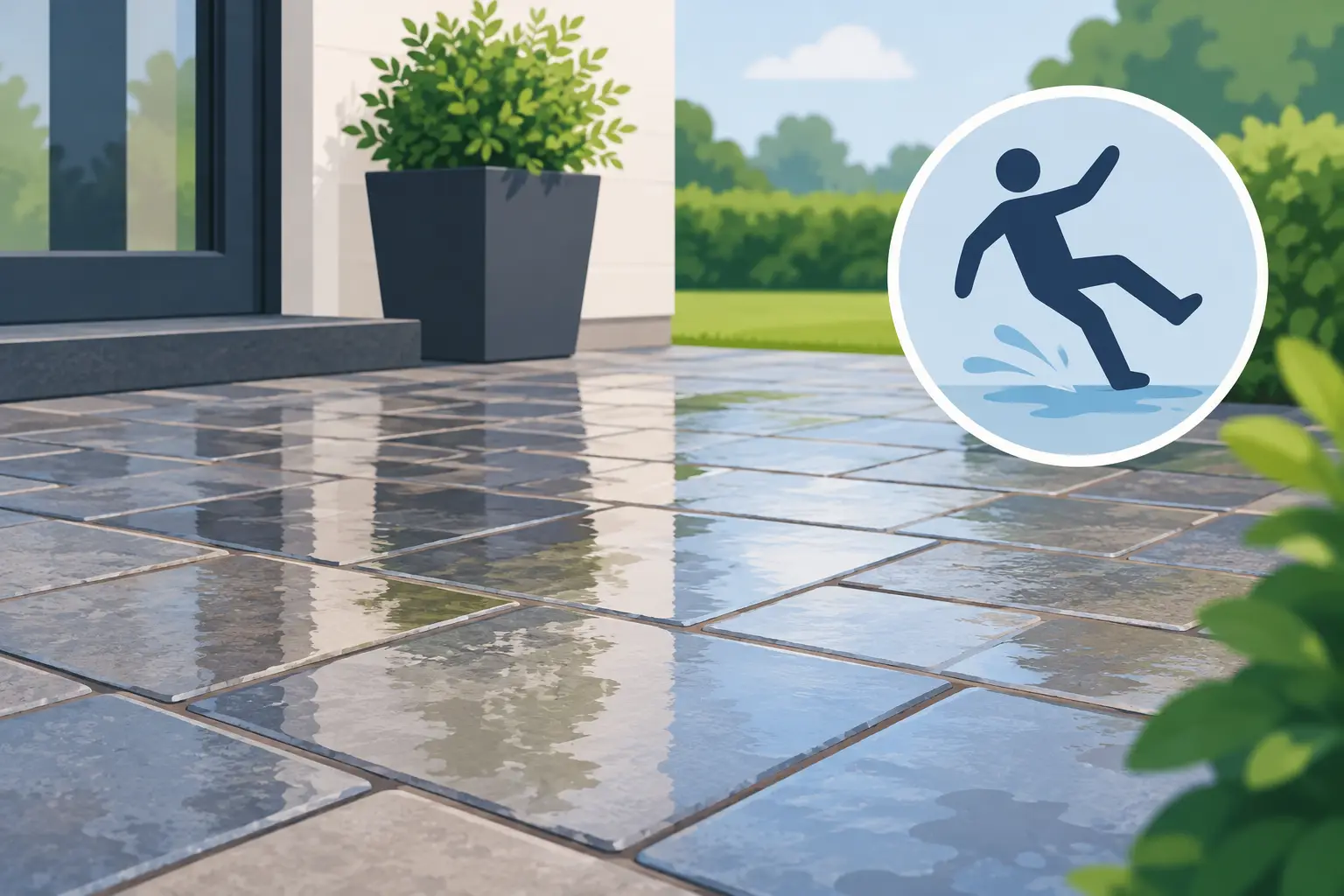
A rain-soaked patio should not make you hesitate before carrying groceries to the back door, letting children play outside, or inviting guests over. So, are pavers slippery when wet? They can be, but a properly designed and installed paver surface is typically far less slippery than many homeowners expect. The answer depends on the paver finish, drainage, slope, maintenance, and the conditions around the patio or walkway.
For homeowners in Maryland and the Washington, DC area, wet-weather traction deserves real attention. Our climate brings heavy rain, humid summers, leaf buildup, freeze-thaw cycles, and shaded areas where moss can take hold. Choosing the right materials and having them installed correctly makes a meaningful difference in both safety and long-term appearance.
Are Pavers Slippery When Wet?
Most standard concrete pavers have a textured, slightly uneven surface that provides reasonable traction when wet. They are generally not as slick as smooth poured concrete, glazed tile, or polished natural stone. That texture, combined with the joints between individual pavers, helps break up surface water rather than creating one broad, slick plane.
Still, no exterior material is completely slip-proof. A smooth-faced paver can become slippery in a downpour, especially when it is covered with algae, wet leaves, mud, ice, or an overly glossy sealer. Pool decks, front walks, and sloped paths deserve extra care because people tend to move quickly through those spaces and may be wearing less supportive footwear.
The good news is that slip resistance is something a qualified hardscape contractor can plan for before construction starts. Material selection, layout, grading, and drainage should all work together instead of being treated as separate decisions.
What Makes a Paver Patio or Walkway Slick?
The paver itself is only one part of the equation. Surface finish is often the first consideration. Tumbled, textured, and lightly embossed concrete pavers usually offer better footing than pavers with a very smooth or glossy finish. Natural stone varies widely as well. Cleft or thermal-finished stone has more texture than honed stone, which is why finish matters as much as the type of stone.
Water management is equally important. Pavers need a deliberate slope so water drains away from the house and does not settle in low spots. A patio that looks level may still need subtle grading to move rainwater toward an appropriate drainage area. Poorly graded hardscapes can leave standing water, create icy patches in winter, and allow algae to grow.
Shade and surrounding landscaping also affect traction. A walkway beneath mature trees or along the north side of a home may stay damp longer than an open patio. Leaves, pollen, mulch, and soil can collect in paver joints, holding moisture on the surface. In these areas, the design may call for a more textured paver and easy access for routine cleaning.
Finally, sealer choice matters. Sealer can enhance color, reduce staining, and protect certain pavers, but a high-gloss product can reduce traction if it is not designed for walking surfaces. If you want a wet-look finish, ask about a breathable, slip-resistant sealer and whether an anti-slip additive is appropriate for the specific area.
The Best Paver Choices for Wet Areas
For most patios, walkways, and front entries, quality concrete pavers with a textured finish are a dependable choice. They offer strong traction, a wide range of colors and patterns, and individual units that can be repaired if needed. Brands such as Cambridge and Belgard offer options that can complement traditional Maryland homes, newer construction, and outdoor living spaces with retaining walls or fire features.
Larger-format pavers can look clean and contemporary, but they should not automatically be assumed to be safer or less safe. The finish is more important than size. That said, a pattern with more joints can provide additional visual definition and natural breaks in surface water, while a properly compacted base keeps the finished area stable underfoot.
Permeable pavers are another worthwhile option where drainage is a major concern. Their wider joints allow water to move through the surface and into a prepared stone base below. They can reduce runoff and puddling, but they require the right site conditions, base design, and ongoing joint maintenance. They are not a one-size-fits-all solution, particularly in areas with heavy tree debris or difficult soil conditions.
Natural stone can be beautiful, but homeowners should be selective. Bluestone, flagstone, and similar materials can perform well when chosen with a naturally textured finish and installed with appropriate drainage. Smooth, polished, or heavily sealed stone is usually a poorer choice for an exposed entry, steep walkway, or poolside area.
Installation Details That Improve Traction
A high-quality installation starts below the pavers. The excavation depth, compacted aggregate base, edge restraints, bedding layer, and joint material all contribute to a stable surface. When the base is poorly prepared, pavers can shift, settle, or develop uneven edges. Those issues are trip hazards even when the surface itself has good grip.
Proper pitch is just as critical. Water should move away from foundations and out of walking areas without making the patio feel noticeably sloped. An experienced contractor evaluates existing grades, downspout locations, nearby landscape beds, and drainage paths before recommending a final layout.
Transitions also deserve attention. Steps, landings, and changes in elevation should be clearly defined and consistently sized. If a walkway connects a driveway to a front door, the paver pattern and border can help people see where the walking path begins and ends. Thoughtful design supports safety without sacrificing curb appeal.
At A-1 Fencing, a free in-home consult and estimate gives homeowners the chance to discuss how they use the space, where water collects, and whether the project should include a patio, walkway, retaining wall, fence, or gate. Addressing those details together often produces a more functional result than completing each exterior project in isolation.
How to Keep Pavers Safer Over Time
Even the best paver installation needs routine care. Sweep leaves and debris before they break down and create a damp, slippery layer. After pollen season or a long stretch of humid weather, rinse or gently clean the surface to remove buildup. A mild cleaner suited to the paver material is often enough for regular maintenance.
If algae, moss, or mildew appears, deal with it early. These growths are common in shaded Maryland yards and can make any hardscape surface slick. Use a paver-safe cleaning approach, and avoid aggressive pressure washing that can disturb joint sand, scar the paver face, or damage nearby landscaping.
Inspect the area after winter, especially near downspouts, steps, and low spots. If you see persistent puddles, shifting pavers, open joints, or water flowing toward the home, it is worth having the area evaluated. Prompt repairs are usually simpler and more affordable than allowing drainage problems to worsen.
During icy weather, use de-icing products carefully. Some products can damage concrete pavers, natural stone, or nearby plantings. Sand can provide temporary traction, but it should be cleaned up once conditions improve. Your contractor can recommend products that fit the material used in your project.
When Pavers May Not Be the Right Choice
Pavers are an excellent fit for many exterior spaces, but they are not automatically the best material for every application. A steep route with major drainage challenges may need steps, landings, railings, or a revised path rather than simply a different paver. A heavily shaded location may require a maintenance plan that the homeowner is comfortable following.
For a pool area, traction should be discussed alongside heat retention, bare-foot comfort, drainage, and local code requirements. For a front entry used by older family members or guests with mobility concerns, a wider path, handrails, well-designed lighting, and gradual grade changes may improve safety more than material choice alone.
The right hardscape should make daily life easier in every season. With textured materials, sound drainage, and professional installation, pavers can provide an attractive, durable surface that feels secure after the rain stops.