
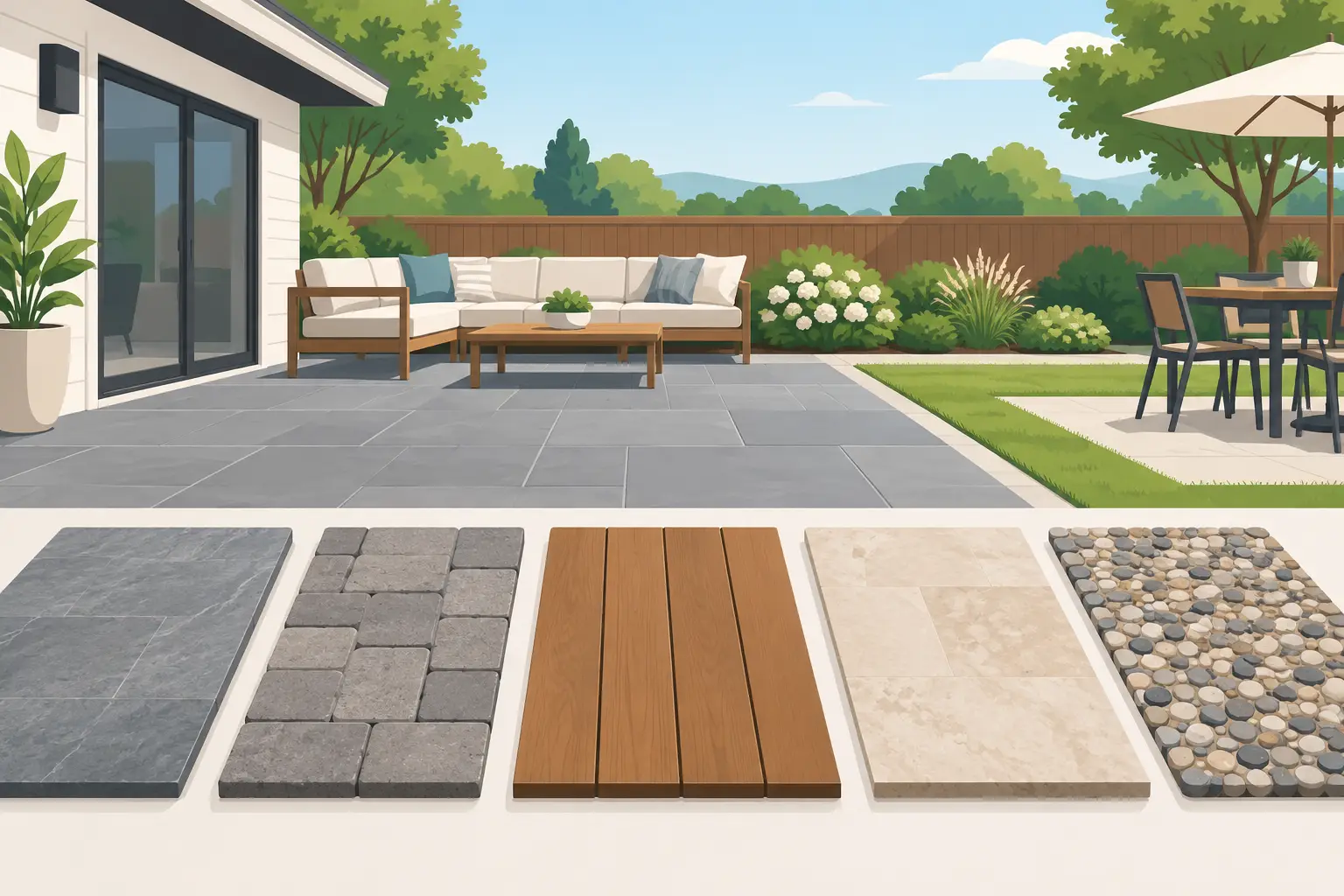
A backyard patio has to do more than look good on installation day. In Maryland and Washington, DC, it needs to handle humid summers, freezing winters, heavy rain, muddy paws, outdoor meals, and the everyday traffic of a busy home. The best patio materials for backyard projects are the ones that match your style, budget, drainage needs, and plans for how you will actually use the space.
For many homeowners, that means choosing between concrete pavers, poured concrete, natural stone, porcelain pavers, or gravel. Each has a place, but they do not offer the same long-term performance or design flexibility. A thoughtful design-and-build consultation can prevent a material choice that looks appealing now but becomes difficult to maintain a few seasons later.
Best Patio Materials for Backyard Living
Concrete pavers: the most versatile choice
Concrete pavers are a leading choice for patios throughout the DC metro area because they balance durability, appearance, and repairability. Available in a wide range of colors, shapes, patterns, and textures, they can complement a traditional brick home, a newer craftsman-style exterior, or a clean contemporary landscape.
A properly installed paver patio begins with excavation, a compacted aggregate base, edge restraints, bedding sand, and carefully finished joints. That preparation matters. It helps the surface remain stable through seasonal freeze-thaw cycles and directs water away from the house when the patio is graded correctly.
Pavers are especially practical for homeowners who want a larger outdoor living plan. They work beautifully around fire pits, outdoor fireplaces, retaining walls, walkways, and seating areas. If access is needed beneath the patio for drainage or utility work in the future, individual pavers can generally be lifted and reset without replacing the entire surface.
The trade-off is that quality installation requires more labor and material than a basic concrete slab. Joint sand may also need occasional refreshing, and the patio should be maintained to discourage weeds or shifting. For homeowners focused on long-term value and a custom finished appearance, those considerations are often worthwhile.
Poured concrete: clean, practical, and budget-conscious
Poured concrete creates a smooth, simple patio surface and is often one of the more cost-conscious options for a larger backyard area. It can be finished in a standard broom texture for traction or upgraded with stamping, coloring, or exposed aggregate for a more decorative result.
Concrete works well for straightforward patio layouts, grilling pads, or spaces where a smooth surface is a priority. It is also easy to clean and provides stable footing for patio furniture. A well-built concrete patio includes proper base preparation, reinforcement where appropriate, control joints, and a slope that moves water away from the foundation.
Its biggest limitation is cracking. Even quality concrete can develop cracks over time as the ground moves and temperatures change. Control joints help manage where cracking occurs, but they do not eliminate the possibility. Repairs are possible, though color and texture matching can be difficult on an older slab.
Stamped concrete can offer the look of stone or pavers at a lower initial cost, but homeowners should consider the long view. The finish may need resealing, and cracks can be more noticeable across a patterned surface. It can be a good fit for the right project, but it does not provide the individual-piece repairability of pavers.
Natural stone: lasting character with a premium look
Natural stone delivers the kind of variation that manufactured products cannot fully duplicate. Flagstone, bluestone, limestone, and other natural options can make a backyard feel established, refined, and closely connected to the surrounding landscape.
Bluestone is particularly popular for formal patios and front-to-back hardscape designs. Its consistent color family and relatively uniform pieces support a tailored appearance. Irregular flagstone offers a more organic look and can be an excellent choice for garden settings, curved patios, and properties where the landscape is meant to feel less structured.
Natural stone is a premium material, both because of the stone itself and the skilled installation it requires. Some types can be more porous or prone to surface changes than others, so material selection should account for shade, moisture, and expected maintenance. A patio near a pool, for example, needs a surface with reliable traction and a finish that performs well around water.
For homeowners who see their patio as a long-term architectural feature, natural stone is often worth considering. The key is selecting the right stone and installing it on a foundation designed for local conditions.
Porcelain pavers: modern style with low absorption
Porcelain pavers have become an appealing option for homeowners who prefer a crisp, contemporary outdoor design. They are manufactured in consistent sizes and can resemble natural stone, concrete, or wood while offering low water absorption and strong resistance to staining and fading.
This material is particularly attractive for clean-lined patios, outdoor kitchens, and spaces that need to coordinate with modern interior finishes. Porcelain is easy to clean and does not usually require sealing in the way some natural stone materials do.
However, porcelain pavers are not a shortcut. They require a suitable installation system and experienced handling, especially when cuts, edges, drainage, and transitions are involved. The material can cost more than standard concrete pavers, and the finished patio depends heavily on the quality of the base and installation details.
Gravel: useful for casual spaces, not every patio
Gravel is an affordable, fast-draining material that can work well for informal sitting areas, side-yard gathering spaces, or a secondary fire pit zone. It has a relaxed appearance and can be installed around garden beds or mature landscaping with less visual weight than a paved patio.
Still, gravel is not the best fit for every backyard. Furniture legs can sink, loose stone can migrate into the lawn, and the surface may be uncomfortable for bare feet or difficult for anyone using a wheelchair, walker, or stroller. It also needs periodic raking and replenishment.
Gravel can be a smart supporting material within a larger landscape plan, but most homeowners seeking a primary dining and entertaining patio prefer the stability of pavers, concrete, porcelain, or stone.
How to Choose the Right Patio Material
Start with how the patio will serve your household. A compact space for two chairs and a grill has different requirements than a large entertaining area with a dining table, fire feature, built-in seating, and access to a deck or pool. The more traffic and furniture the space will handle, the more valuable a stable, professionally prepared surface becomes.
Next, consider your home’s architecture and the rest of the property. A patio should feel connected to the house, fencing, walkways, retaining walls, and planting beds instead of looking like an isolated addition. Concrete pavers offer the broadest selection for matching colors and patterns. Natural stone provides a higher-end, timeless look. Poured concrete can keep the design simple and costs controlled.
Drainage deserves equal attention. Water should move away from your home, not collect against the foundation or run toward a neighbor’s property. On sloped lots, a patio may need retaining walls, carefully planned grading, drainage solutions, or steps to create a level and usable outdoor area. Material selection matters, but the base, slope, and water management behind it matter just as much.
Finally, be realistic about maintenance and future changes. Pavers make localized repairs easier. Concrete requires less routine attention but is harder to blend after repair. Natural stone and porcelain can offer excellent durability, but each should be chosen with its specific finish and care needs in mind.
Why Installation Quality Matters as Much as Material
The most attractive patio material can fail when the installation is rushed. A shallow base, poor compaction, weak edging, or incorrect slope can lead to settling, standing water, loose pavers, and premature wear. Those problems are frustrating because they are often hidden beneath the finished surface until after the project is complete.
An experienced contractor evaluates the grade, soil conditions, access, existing structures, and intended use before recommending a solution. That is especially valuable when a patio connects to a fence, deck, gate, walkway, retaining wall, or fire feature. Coordinating these elements as one project creates a more polished result and avoids costly adjustments later.
A-1 Fencing helps homeowners across Maryland and Washington, DC plan outdoor spaces with award-winning workmanship, quality materials, and clear upfront guidance. A free in-home consult and estimate gives you the opportunity to compare options based on your property, not a one-size-fits-all recommendation.
The right patio should make it easier to use your backyard more often, whether that means quiet coffee outside, safer play space for the family, or a place to host the people you care about. Choose a material that fits the way you live, then give it the foundation and craftsmanship it deserves.