
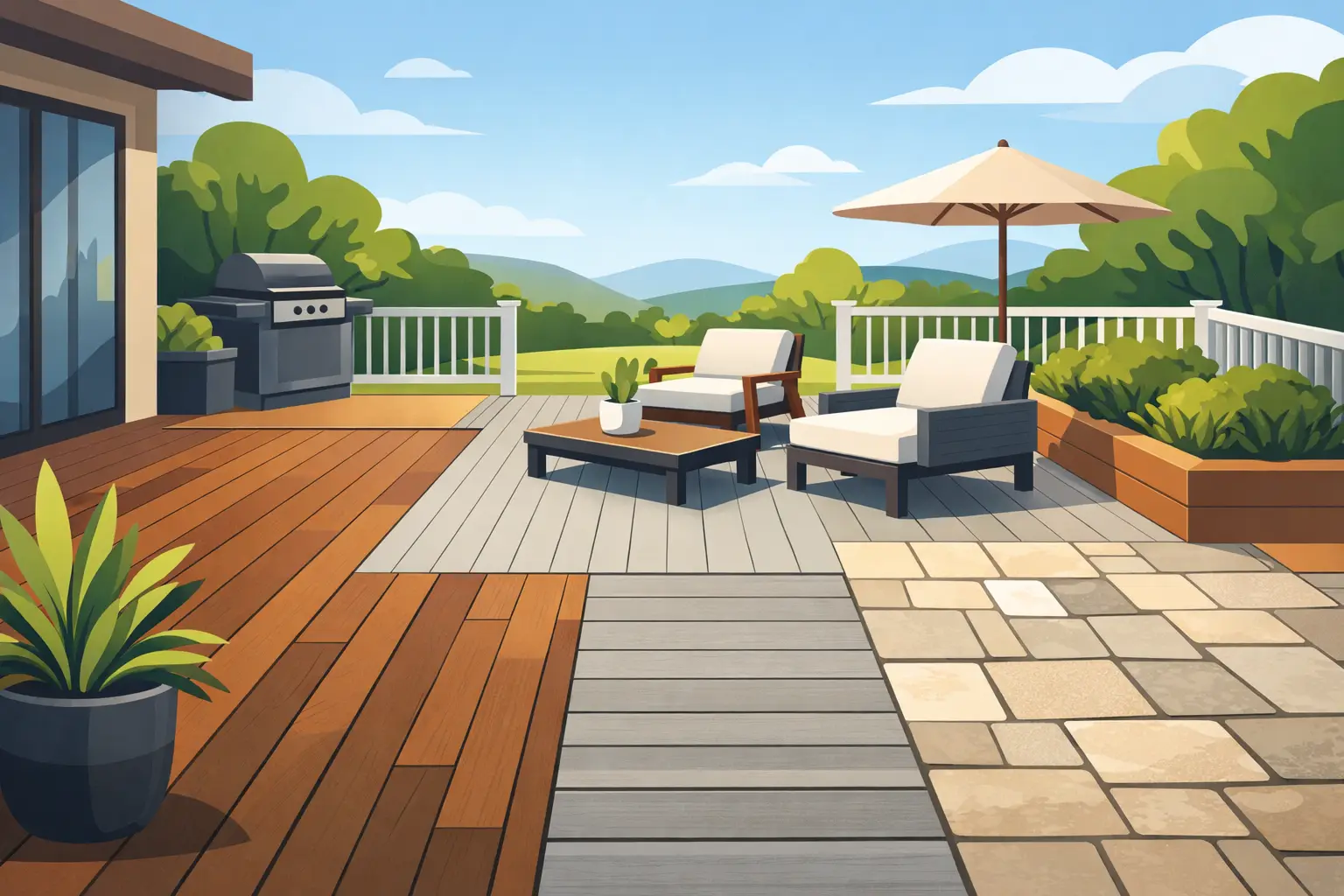
A deck can make the whole backyard feel finished – until the boards start splintering, the stain wears off, and every loose step reminds you the space is overdue for attention. If the frame is still structurally sound, deck resurfacing options can give you a safer, better-looking outdoor space without the cost of tearing everything out and starting over.
For many homeowners in Maryland and the DC area, resurfacing is the sweet spot between a minor repair and a full replacement. The right approach depends on the condition of the substructure, your budget, how much maintenance you want long term, and whether you want this upgrade to simply solve a problem or fully improve how you use your backyard.
What deck resurfacing actually means
Resurfacing means keeping the existing deck frame and replacing the visible surface materials. In most cases, that includes deck boards, and sometimes stairs, railings, skirting, or trim if those parts are also worn or outdated. It is not a cosmetic cover-up for a failing deck. Before any resurfacing begins, the framing, footings, and structural connections need to be evaluated carefully.
That distinction matters. If the joists are rotted, the ledger is compromised, or the deck no longer meets current safety expectations, resurfacing is not the right investment. A professional inspection should come first, especially on older decks that have dealt with years of moisture, freeze-thaw cycles, and heavy sun exposure.
Deck resurfacing options to consider
The best deck resurfacing options usually fall into a few practical categories. Each one has real advantages, but each comes with trade-offs too.
Replacing boards with pressure-treated wood
Pressure-treated wood is often the most budget-friendly resurfacing material. If you want to refresh the deck and keep initial costs lower, it remains a common choice. It can work well when the homeowner is comfortable with routine maintenance and likes the traditional look of real wood.
The trade-off is upkeep. Pressure-treated boards need ongoing sealing or staining, and over time they can crack, warp, or splinter. In our region, where decks see hot summers, wet weather, and winter temperature swings, wood can age quickly if it is not maintained consistently.
For some homeowners, that is acceptable. If the goal is to restore function and appearance at the lowest upfront cost, wood resurfacing can make sense. If the goal is to reduce maintenance for the next decade or more, there are stronger options.
Upgrading to composite decking
Composite is one of the most popular deck resurfacing options for homeowners who want durability and a more polished finish. Brands like Trex and TimberTech are widely chosen because they hold color better than wood, resist splintering, and do not require annual staining.
This option usually costs more upfront than pressure-treated lumber, but the long-term value is often better. You spend less time maintaining the deck, and the appearance stays more consistent over the years. For busy families or homeowners planning to stay in the home for a while, that matters.
Composite is not identical across product lines, though. Some lines offer better scratch resistance, cooler surface technology, or more realistic wood-grain patterns. A contractor should also confirm that your existing frame spacing is appropriate for the composite product you choose, since some boards have stricter installation requirements than wood.
Replacing railings at the same time
Resurfacing the boards but keeping dated or unstable railings can leave the deck looking half-finished. That is why many homeowners include railings as part of the same project. If your current rail system wobbles, has peeling paint, or no longer matches the style of the home, this is a smart time to update it.
Composite, vinyl, aluminum, and metal railing systems each have their place. Aluminum is especially appealing when you want a clean look with low maintenance. Composite railings can create a coordinated appearance if you are resurfacing with composite boards. The right choice depends on aesthetics, maintenance preferences, and budget.
Rebuilding stairs and trim details
Stairs often wear out faster than the main deck surface because they take concentrated foot traffic and collect more moisture. Even if the main frame is reusable, stair treads, risers, and fascia may need a more thorough update.
This is also where resurfacing can shift from basic repair to real improvement. Clean trim lines, updated skirting, and properly finished stair details can make an older deck feel new again. If the deck connects to a patio, walkway, or fenced backyard, coordinating those features can also improve the overall look and flow of the space.
When resurfacing is a smart investment
Resurfacing is worth serious consideration when the framing is in good condition and the problems are mostly on the surface. Maybe the boards are weathered, maybe the railings look dated, or maybe the deck still functions but no longer feels like a space you enjoy using.
It is also a smart investment when you want to upgrade materials without changing the entire footprint. Many homeowners like their deck size and layout but want a better-performing surface and a cleaner, more modern appearance. In that case, resurfacing can deliver a major visual upgrade without the bigger cost of a full custom rebuild.
If you are already improving the backyard with a fence, patio, or retaining wall, resurfacing may fit naturally into a broader exterior plan. Working with one experienced contractor can make the process much easier and more consistent from a design and scheduling standpoint.
When a full replacement is the better move
Not every aging deck should be resurfaced. If the substructure has rot, sagging, code issues, or widespread instability, replacing surface materials will not solve the real problem. In that case, putting money into resurfacing can actually delay the smarter decision.
A full replacement may also be the better route if you want to change the deck size, improve traffic flow, add features, or correct poor original construction. Sometimes homeowners come in asking about resurfacing, but what they really want is a better outdoor living space. If the current deck no longer fits how you entertain, supervise kids, or move between the house and yard, rebuilding may create more value than refreshing what is there.
Cost versus long-term value
Homeowners often start with price, and that is understandable. Wood resurfacing generally has the lowest upfront cost. Composite usually costs more at the beginning. But cost should be weighed against maintenance, lifespan, and how long you plan to stay in the home.
A lower upfront number does not always mean lower ownership cost. If a wood deck needs repeated staining, more frequent repairs, and earlier replacement, the savings can narrow over time. Composite products tend to appeal to homeowners who want predictable performance and less hassle.
That said, there is no one-size-fits-all answer. If you are preparing to sell in the near future, a simpler resurfacing package might be enough. If this is your long-term home and you want a deck that supports everyday outdoor living with less upkeep, premium materials are often worth it.
Choosing the right contractor matters as much as the material
Even the best deck boards will not perform well if they are installed over a compromised frame or finished carelessly. Resurfacing requires more judgment than many homeowners expect. The contractor needs to know what can safely stay, what should be replaced, and how to match the right materials to the existing structure.
This is where experience matters. A trusted local contractor should be able to inspect the deck honestly, explain whether resurfacing is appropriate, and give you clear recommendations based on safety, value, and long-term performance. You should not be pushed into a larger project if resurfacing is enough, and you should not be sold resurfacing if the structure really needs replacement.
At A-1 Fencing, that consultative approach is a big part of how outdoor projects should be handled. Homeowners deserve straightforward guidance, quality workmanship, and a finished result that looks right and lasts.
How to decide among deck resurfacing options
The best decision usually comes down to four questions. Is the frame structurally sound? How much maintenance are you willing to take on? How long do you plan to stay in the home? And do you want a basic refresh or a more complete upgrade to your outdoor space?
Once those answers are clear, the right path gets easier. Some decks need simple new boards. Some deserve composite surfaces and railing upgrades. Others have reached the point where rebuilding is the better investment.
A good resurfacing project should do more than make the deck look newer. It should make the space feel safe, comfortable, and worth using again every chance you get.