
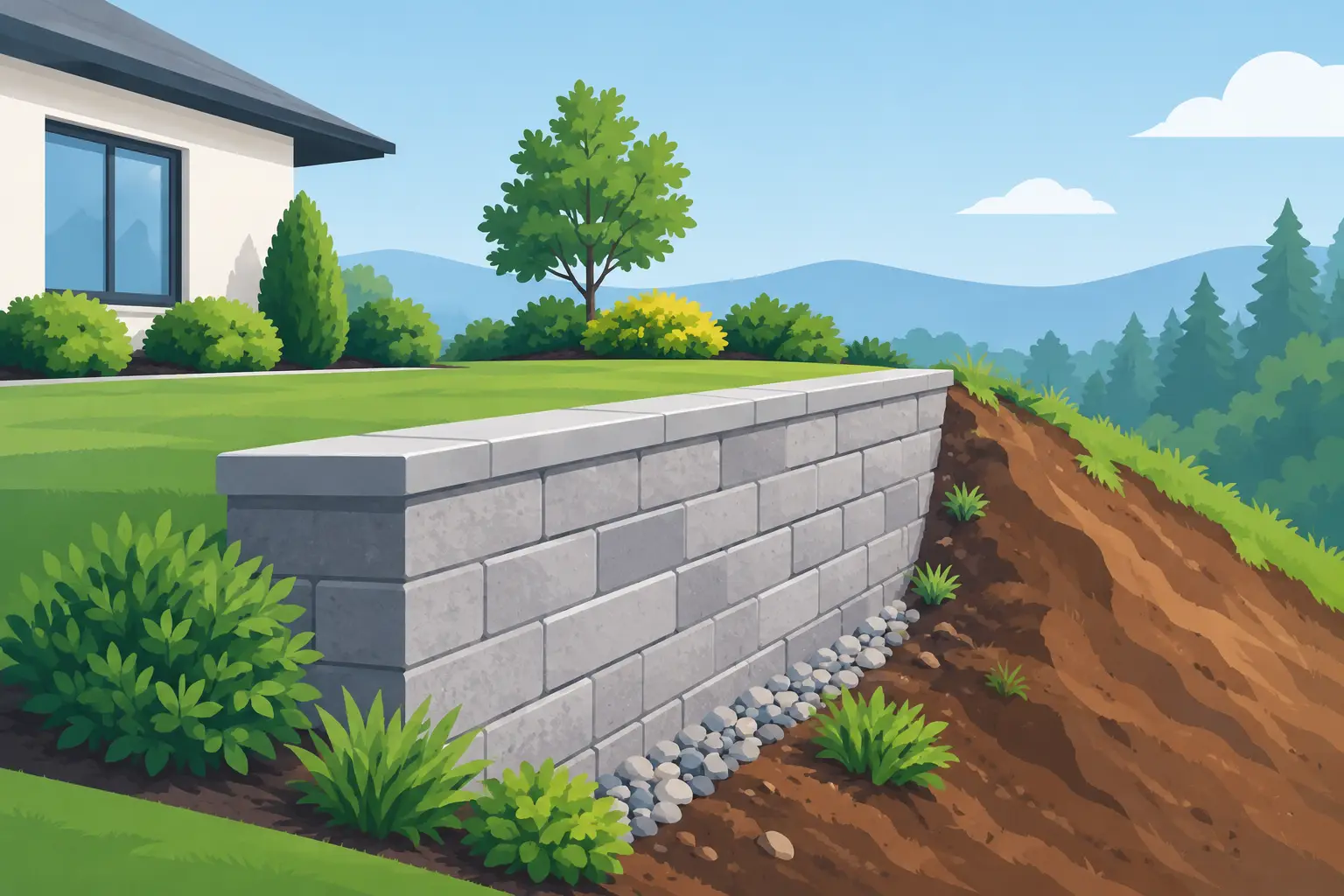
A sloped backyard can look perfectly manageable until a heavy Maryland rain leaves mulch, soil, and gravel at the bottom of the hill. If water is carrying your landscape downhill, can retaining walls prevent erosion before it damages your yard, fence, patio, or foundation? In many cases, yes. A professionally designed retaining wall can stabilize vulnerable slopes and direct water where it belongs – but the wall itself is only part of the solution.
For homeowners in Maryland and the Washington, DC metro area, erosion control often becomes urgent after repeated storms, changing drainage patterns, or a new outdoor project. The right retaining wall can protect the property you already enjoy while creating more usable outdoor space for a patio, walkway, garden, or play area.
How Retaining Walls Prevent Erosion
Erosion happens when moving water, wind, or gravity loosens and carries away soil. On most residential properties, water is the main concern. Rainfall flows down a slope, gathers speed, and begins cutting channels through exposed soil. Over time, that process can undermine landscaping, wash out mulch, expose roots, and weaken the ground near hardscape features.
A retaining wall holds soil in place at a change in elevation. Instead of allowing one long, unstable slope to continue downhill, the wall creates a supported grade. This reduces the distance water can travel across loose soil and helps stop the gradual loss of earth behind and below the slope.
The most effective walls do more than resist pressure from the soil. They are installed with proper base preparation, backfill, drainage material, and a planned route for water to escape. Without those details, water can build up behind the wall, adding pressure and increasing the chance of leaning, cracking, or failure.
A well-built retaining wall can also create terraces. Breaking a steep yard into two or more level sections slows runoff and gives water more opportunities to soak into the ground rather than rush downhill. For many homeowners, that means less erosion and a yard that is easier to maintain and use.
When a Retaining Wall Is the Right Erosion Solution
Retaining walls are especially valuable when erosion is tied to a clear elevation change. You may be a good candidate for a wall if soil is washing down a hill, the edge of a patio or driveway is losing support, or a sloped area is too difficult to landscape successfully. Walls can also help protect a fence line when the grade on either side is shifting or washing away.
They are commonly installed along backyard slopes, beside walkout basements, around raised patios, near driveways, and at property boundaries where one yard sits higher than another. In these locations, a retaining wall provides structure that landscaping alone may not be able to deliver.
Still, a wall is not always the complete answer. If erosion is caused by a broken downspout, a poorly pitched driveway, runoff from a neighboring property, or a drainage problem near the home, that water issue should be addressed as part of the project. Building a wall in the path of uncontrolled water without providing drainage can move the problem rather than solve it.
An experienced contractor will look at the full site: the slope, soil conditions, existing drainage, nearby structures, and the direction water travels during a storm. That assessment helps determine whether the property needs one wall, a terraced wall system, regrading, drainage improvements, or a coordinated combination of these solutions.
Signs Your Yard May Need Erosion Control
Some erosion starts quietly. A thin layer of soil may disappear from a planting bed after each storm, or mulch may repeatedly end up on the lawn. Other signs are harder to ignore, including exposed tree roots, small gullies across a slope, sinking areas near a patio, or mud collecting against the house.
Pay close attention if a fence begins to look unsupported at the bottom of a hill or if pavers shift after heavy rain. These problems may not be caused by the fence or patio itself. The ground beneath them could be losing stability. Addressing erosion early is generally less disruptive than rebuilding outdoor features after the soil has already moved.
Drainage Makes or Breaks a Retaining Wall
Water is the biggest design consideration in retaining wall construction. Even a wall built with premium materials can fail if groundwater and runoff are trapped behind it. This is why professional installation typically includes a compacted gravel base, drainage stone behind the wall, filter fabric where appropriate, and a perforated drain pipe to carry water away.
The specific system depends on the property. A gently sloped backyard may need only basic drainage provisions, while a steep grade receiving roof runoff may require more involved planning. The goal is consistent: relieve water pressure behind the wall and keep runoff from concentrating in one damaging location.
Grading matters just as much. Soil near the top of the wall should be shaped so surface water moves away from the wall rather than straight behind it. Downspouts should not empty onto vulnerable slopes. If a new patio, walkway, or fence is part of the project, those elements should be planned together so the finished space manages water responsibly.
This is where a design-and-build contractor provides real value. Rather than treating the wall as an isolated feature, the project can be coordinated around how your entire outdoor space functions through every season.
Choosing the Best Retaining Wall Material
The best material depends on the height of the wall, the style of your home, site conditions, budget, and how you plan to use the space. For many residential projects, segmental concrete block is a strong choice because it offers dependable performance, flexible design options, and a finished appearance that complements patios and walkways.
Natural stone can create a classic, high-end look, particularly for homes with traditional architecture or established landscaping. It may be an excellent fit for lower garden walls and visually prominent areas, though material and labor costs can be higher. Poured concrete can be appropriate for certain structural applications, but it has a more formal appearance and requires careful finishing to avoid a plain, industrial look.
Pressure-treated timber walls are sometimes used for smaller projects, but they generally have a shorter service life than quality masonry products. They may be less suitable where there is significant soil pressure, persistent moisture, or a need for a long-term upgrade that adds curb appeal.
For walls that are taller, support major slopes, or sit close to a home, driveway, or property line, engineering and local permitting may be required. Those requirements are not obstacles to work around. They are safeguards that help ensure the wall is designed for the load it will carry.
Why Professional Installation Protects Your Investment
A retaining wall can look simple from the finished side, but the work below grade determines whether it performs over time. Proper excavation, a level and compacted base, correct wall batter, drainage installation, and backfill compaction all require experience and the right equipment.
A wall installed without adequate base depth or drainage may look good at first. After seasonal freezing, heavy rainfall, and years of soil pressure, it can begin to settle or bow. Repairing a failed wall is often more expensive than building it correctly from the start, particularly if it has damaged a fence, patio, or landscaping along the way.
Homeowners also benefit from having one team consider the bigger picture. If erosion has affected an existing walkway, outdoor living area, or fence line, coordinating the improvements can create a cleaner result and reduce the frustration of hiring separate contractors. A-1 Fencing helps homeowners plan retaining walls as part of a complete exterior project, with award-winning workmanship, quality materials, and a free in-home consult and estimate.
Can Retaining Walls Prevent Erosion Permanently?
No erosion-control solution is completely maintenance-free, because weather, settling, landscaping changes, and drainage conditions can change over time. However, a professionally designed retaining wall can provide long-term protection when it is built for the site and maintained properly.
Keep drainage outlets clear, avoid piling excessive soil or heavy materials near the top of the wall, and watch for changes after major storms. Small issues, such as displaced capstones or a clogged drain outlet, are far easier to correct before they affect the wall’s structure.
If your yard is losing soil, developing washouts, or becoming harder to use after every storm, do not wait for the damage to spread. A thoughtful on-site evaluation can identify the source of the water, determine whether a retaining wall is the right solution, and help turn an unstable slope into an outdoor space your family can enjoy with confidence.