
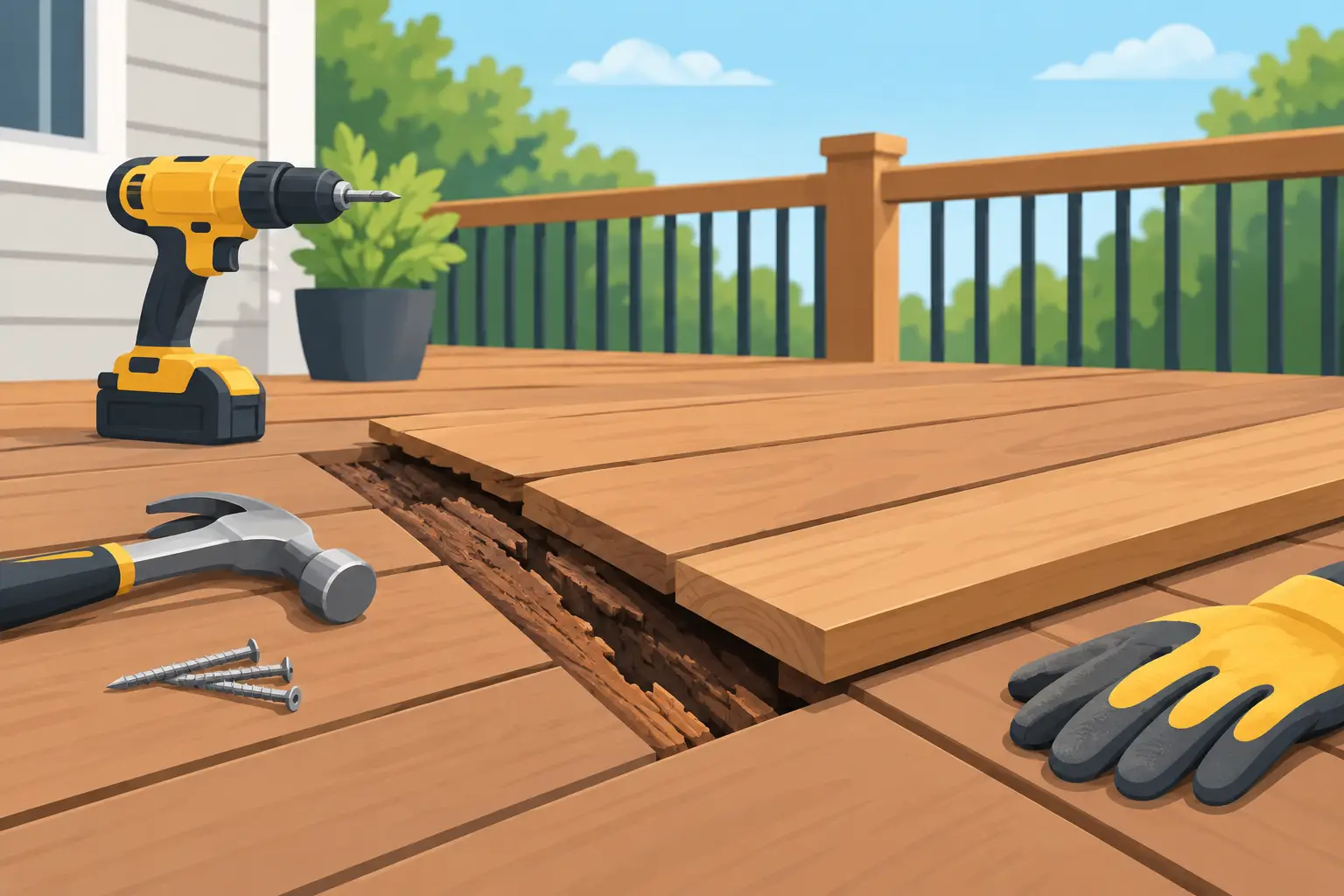
A soft spot underfoot can turn a relaxing afternoon on the deck into a real safety concern. So, can you repair rotted deck boards? Sometimes, yes – but only when the damage is limited to a few surface boards and the framing beneath them remains solid, dry, and structurally sound. When rot has reached joists, beams, posts, or the ledger board attached to your home, a simple board swap is not enough.
For homeowners across Maryland and Washington, DC, deck rot is especially common. Our humid summers, wet springs, falling leaves, and freeze-thaw cycles create the conditions wood needs to hold moisture and decay. The right repair protects your family, preserves your investment, and keeps a small issue from becoming a costly rebuild.
Can You Repair Rotted Deck Boards or Do They Need Replacement?
Deck boards that are rotted cannot be restored to their original strength with stain, wood filler, or a surface treatment. Once wood fibers have decayed, the dependable fix is to remove the damaged board and replace it. The key question is whether the rot is isolated or part of a larger structural problem.
A qualified deck contractor starts by checking more than the visible walking surface. A board can look weathered but still be sound, while a deck that looks fine from above may have moisture damage hidden along the framing. The area around fasteners, board ends, stairs, rail posts, and the deck-to-house connection deserves close attention because these locations tend to trap water.
Targeted board replacement is often a practical choice when the deck’s joists are firm, posts are stable, hardware is in good condition, and only a small number of boards show deterioration. It can restore a safe, clean appearance without replacing a deck that still has years of useful life.
Replacement becomes the better value when rot appears across multiple areas, boards are repeatedly failing, or the support system has been compromised. Patching a visibly damaged deck one board at a time may seem less expensive at first, but it can leave homeowners paying for recurring repairs while the underlying cause continues.
Signs the Rot May Go Beyond the Deck Boards
Surface discoloration alone does not always mean a board is unsafe. Weathered wood can often be cleaned, sealed, or refinished. Rot is different: it changes the wood’s texture and strength.
Watch for these warning signs:
- Boards that feel spongy, flex deeply, crumble at the edges, or split around screws and nails
- Dark, damp areas that do not dry out, particularly beneath planters, rugs, furniture, or leaf buildup
- Soft or cracked joists beneath the deck, sagging sections, or a bouncy feel when walking across the surface
- Loose railings, unstable steps, corroded connectors, or visible decay where posts meet the ground or framing
A screwdriver test can reveal whether wood is soft below the surface, but it should not be the only inspection method. Probing too aggressively can damage a board, and homeowners may not be able to see hidden issues around the ledger or support structure. If there is any question about stability, keep people off the affected section until it can be evaluated.
Why Deck Boards Rot in Maryland and DC
Wood needs persistent moisture to decay. On a deck, that moisture often comes from more than rain. Poor drainage, clogged gaps between boards, shaded yards, nearby landscaping, and debris caught against the house can all prevent a deck from drying properly.
Water can also reach vulnerable areas through improperly flashed ledger boards, loose fasteners, end grain that was never sealed, or boards installed too close together. A deck built low to the ground is at greater risk because air cannot circulate freely beneath it. Ground-level decks may look attractive and convenient, but they need thoughtful material selection and drainage planning to avoid premature deterioration.
Age matters, too. Pressure-treated lumber offers valuable protection, yet it is not maintenance-free or immune to damage. If the original deck was built with lower-grade materials, installed without adequate spacing, or neglected for years, replacement may offer better long-term results than repeated repairs.
What a Proper Deck Board Repair Includes
A professional repair begins with identifying the cause of the rot. Replacing boards without correcting drainage, ventilation, flashing, or debris issues only resets the clock. The repair should address both the damaged material and the conditions that allowed moisture to remain in place.
After removing deteriorated boards, the contractor inspects the joists and blocking below. Any compromised framing should be replaced before new decking is installed. New boards need to be matched carefully for thickness, profile, spacing, and attachment method so the repaired section sits level and drains correctly.
Color matching can be challenging on an older wood deck. New pressure-treated boards may look noticeably lighter until they weather, while existing boards may have faded unevenly from sun exposure. In some situations, replacing an entire deck section and refinishing the remaining wood produces a more consistent appearance than scattering individual new boards across an aged surface.
Fasteners are another detail worth getting right. Corroded nails and screws can stain boards, loosen over time, and contribute to water entry. Modern exterior-rated screws and properly installed hardware help protect the repair and create a cleaner finished look.
When Deck Repair Stops Being the Smart Investment
There is no universal rule that says a deck must be rebuilt after a certain number of years. A well-maintained wood deck can remain serviceable for a long time. Still, a rebuild often makes more sense when repairs start to involve structural components, extensive decking, railings, stairs, and multiple areas of deterioration at once.
A full replacement also gives homeowners the opportunity to improve the way the deck functions. You may want wider stairs, safer railings, built-in seating, improved traffic flow from the house, or a layout that better fits outdoor dining and family gatherings. If the current deck feels undersized or outdated, investing in repairs alone may limit what your outdoor space can become.
For homeowners tired of the maintenance cycle, composite decking can be worth considering. Materials from respected manufacturers such as Trex and TimberTech are designed to resist rot, splintering, and insect damage. They still require proper framing, drainage, and installation, but they eliminate the need for routine staining and can deliver a more consistent look over time.
The trade-off is upfront cost. Composite decking generally costs more than basic wood materials, and not every deck needs a complete material change. For a structurally sound deck with a few isolated damaged boards, a quality wood repair can be the sensible choice. The best answer depends on the deck’s condition, your plans for the home, and how much ongoing maintenance you want to manage.
Protecting a Repaired or New Deck
Once damaged areas have been corrected, a few regular habits can help prevent future rot. Keep gaps between boards free of leaves and soil, move planters occasionally, and avoid letting outdoor rugs trap moisture for weeks at a time. Trim back plants that block airflow, and make sure downspouts direct water away from the deck and foundation.
Wood decks should be cleaned and protected on a schedule that fits the material and exposure. A professional can recommend whether your deck needs a water-repellent sealer, stain, or more extensive maintenance. During that visit, it is also wise to inspect railings, stairs, connections, and posts before minor wear develops into a safety issue.
If you are seeing soft boards, loose railings, or recurring moisture damage, do not guess at the extent of the problem. A-1 Fencing can provide a free in-home consult and estimate for deck repair or replacement, with dependable recommendations based on your deck’s actual condition. A well-built repair should do more than cover up rot – it should give you a safer outdoor space you can enjoy with confidence.