
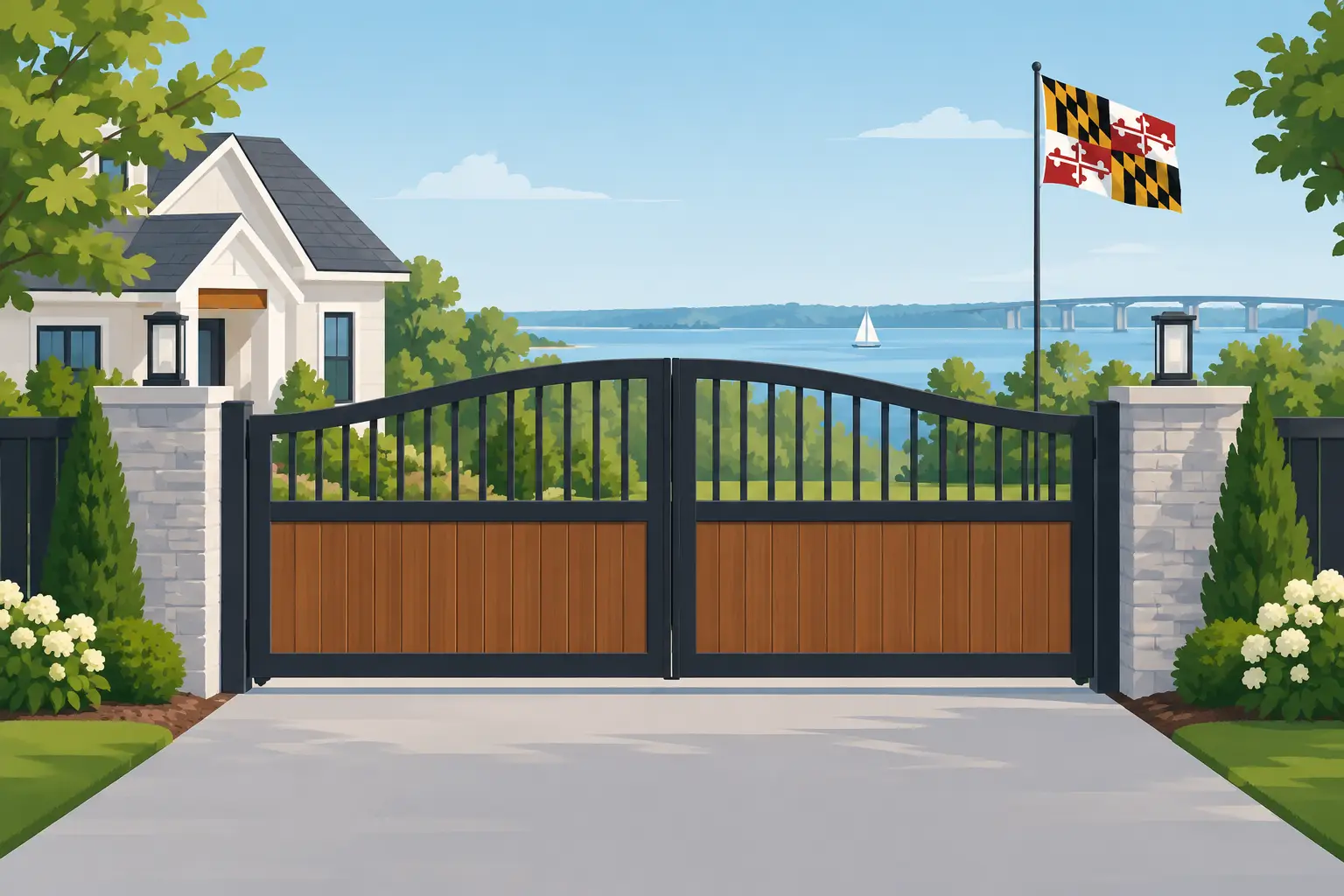
A gate is often the first moving part of your property that guests, delivery drivers, and family members use. When it sags, sticks, looks out of place, or fails to secure the yard, it affects daily life quickly. This custom gate design guide helps Maryland and Washington, DC homeowners make practical choices that improve privacy, safety, curb appeal, and long-term performance.
A well-designed gate should feel like a natural extension of the fence, driveway, patio, or garden around it. That takes more than selecting a material from a sample board. The opening size, slope, hardware, traffic pattern, and surrounding landscape all shape the right solution.
Start With What the Gate Needs to Do
Before choosing a style, decide how the gate will be used. A side-yard walk gate has different demands than a double driveway gate, pool enclosure gate, or decorative garden entry. The best design begins with a clear purpose.
For families with children or pets, dependable latching and a height that discourages climbing may be the first priorities. Homeowners enclosing a pool need to consider applicable safety requirements, self-closing hardware, and secure latch placement. A driveway gate may need to accommodate vehicles, service crews, lawn equipment, and snow removal while still looking appropriate for the home.
Also consider who will use the gate most often. A beautiful, heavy wood gate can be a poor fit if an older family member will need to open it daily. An automated driveway gate adds convenience and controlled access, but it requires careful planning for power, safety devices, clearance, and ongoing service. There is no single best gate material or layout. The right choice depends on how your household actually moves through the property.
Choose a Gate Style That Belongs on Your Property
Your gate should complement the architecture of your home and the fence that supports it. A formal brick Colonial in Montgomery County may suit a black aluminum gate with clean lines and decorative finials. A more private backyard in Howard County may call for a wood or vinyl gate that matches a solid privacy fence. For a contemporary home, horizontal boards, simple metal framing, or a streamlined composite look can create a more intentional finish.
The gate does not need to be an exact copy of the fence, but it should look connected to it. Matching color, rail profile, picket spacing, and post details usually creates the strongest result. A contrasting gate can work well at a garden entrance or front walk, provided it repeats another feature on the property, such as the front door color, exterior trim, or metal railings.
Single Gates, Double Gates, and Sliding Options
A single swing gate is a practical choice for most pedestrian openings. It is straightforward, space-efficient, and easy to operate when built with properly sized posts and hardware.
Double gates are commonly used for wider access points, including driveways and locations where equipment needs to enter the yard. They can be attractive and functional, but wide openings place greater demands on hinges, posts, drop rods, and alignment. A poorly built double gate is more likely to sag or drag over time, especially when the ground freezes, thaws, and shifts.
Sliding gates are useful where a swing gate would interfere with a driveway, slope, parked cars, or walkway. They need sufficient room alongside the opening and a properly prepared track or cantilever system. This is a situation where professional design and installation matter because small alignment errors can create ongoing operating problems.
Select Materials for Maryland Weather and Maintenance
Maryland and the DC metro area experience humid summers, frequent rain, winter freeze-thaw cycles, and changing soil conditions. Gate materials must handle more movement and exposure than many homeowners expect.
Wood offers warmth, privacy, and design flexibility. It can be built in traditional, board-on-board, shadowbox, or custom styles, and it can be stained or painted to suit the home. The trade-off is maintenance. Wood needs periodic sealing, staining, or painting, and its condition should be monitored around hardware connections and ground-level areas where moisture can cause deterioration.
Vinyl is popular for its clean appearance and lower routine maintenance needs. It will not rot like wood and can be an excellent choice for privacy and picket gate styles. However, vinyl gate frames need proper reinforcement. A large or frequently used vinyl gate should not rely on light-duty components that can flex under repeated use.
Aluminum provides a refined appearance with excellent resistance to rust. It works especially well for pool enclosures, ornamental front-yard fencing, and properties where visibility matters as much as security. Aluminum is lighter than steel, which can make it easier to operate, though it may not provide the same level of visual privacy as solid wood or vinyl.
Steel and other ornamental metal options provide strength and a more substantial presence for certain applications. They are often a strong fit for driveway gates and high-security areas when properly finished and maintained. The material is only part of the equation. Posts, hinges, latch systems, and the foundation beneath them need to be designed for the gate’s weight and use.
Do Not Overlook Posts, Hardware, and Ground Conditions
Most gate failures are not caused by the gate panel itself. They begin at the posts or hardware. A gate is a moving load, and every opening and closing cycle puts pressure on the hinge side. If the posts are undersized, set too shallow, or installed in unstable ground, even a premium gate can become misaligned.
The local terrain matters. Many properties in the region have uneven grades, mature landscaping, drainage concerns, or hardscape features near the gate opening. A gate that swings downhill may require a stepped design, modified clearance, or a different operating method. Trying to force a standard gate into a sloped opening often creates a gap at the bottom or a panel that scrapes the ground.
Quality hardware is equally important. Heavy-duty hinges, adjustable components, reliable latches, drop rods for double gates, and weather-resistant fasteners help a gate perform year after year. For child and pet safety, the latch location and clearance around the gate should be planned carefully. A gate that looks finished but leaves an unsafe gap is not a successful installation.
Plan for Privacy, Security, and Visibility Together
Privacy and security are related, but they are not identical. A six-foot privacy gate can screen a backyard from neighboring views, while an ornamental gate can define a property line and control access without blocking the street-facing landscape. Think about where privacy matters most: near a patio, pool, side yard, or service area.
For a front-facing or driveway gate, visibility may be valuable. You may want to see approaching visitors, preserve sightlines near a street, or maintain the open feel of a landscaped front yard. In those cases, aluminum or ornamental designs can provide a clear boundary without making the property feel closed off.
Security features should fit the level of access control you need. A lockable latch may be sufficient for a backyard walk gate. A driveway entrance may benefit from keypad access, remote controls, intercom capability, or automatic operation. Adding automation later is sometimes possible, but it is often more efficient to plan the gate structure, conduit, and power needs from the beginning.
Coordinate the Gate With Other Outdoor Improvements
A gate project can be the right time to address other areas of the property. If a new fence meets an aging retaining wall, uneven walkway, or outdated patio, the transition between these features deserves attention. A gate opening should not create a trip hazard, drainage problem, or awkward step onto a path.
This is where a design-and-build contractor can provide real value. Coordinating fencing, gates, hardscapes, and access points under one plan helps avoid the common problem of hiring separate crews that leave mismatched elevations, unfinished edges, or conflicting schedules. The goal is not simply to install a gate. It is to create an entry that works with the entire outdoor space.
What to Expect From a Professional Gate Consultation
A productive in-home consultation should include more than measurements. Your contractor should review the intended use, traffic flow, existing fence condition, grade changes, material preferences, desired maintenance level, and budget. They should also explain where a design choice may involve a trade-off, such as choosing a heavier gate for privacy versus a lighter gate for easier daily operation.
Ask how posts will be installed, what hardware will be used, whether the gate frame is reinforced, and how the design accounts for the slope of the yard. For automated systems, ask about safety features, access options, power requirements, and service needs. Clear answers before installation help prevent expensive revisions later.
A-1 Fencing provides free in-home consults and estimates for homeowners who want experienced guidance on gates, fencing, patios, retaining walls, and other exterior improvements. A thoughtful plan, quality materials, and skilled installation give your gate the best chance to look right and work reliably for years.
The most satisfying gate is one you barely have to think about: it opens easily, closes securely, fits the property, and lets your family enjoy the yard with greater confidence every day.