
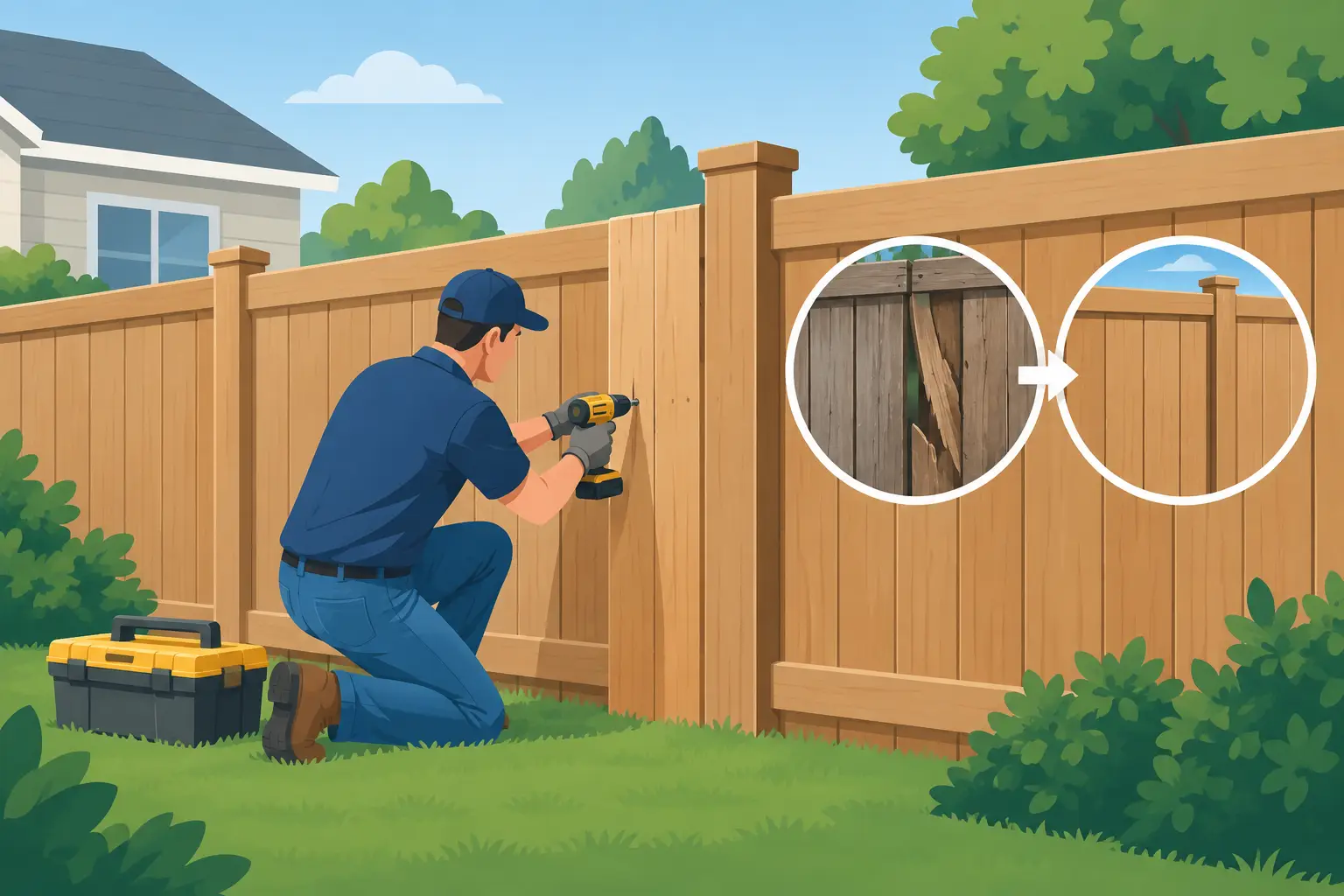
A leaning post, a dragging gate, or a few loose boards can make a homeowner ask a fair question: does fence repair last, or is it only buying time before a full replacement? The honest answer depends on the fence material, the source of the damage, and whether the repair addresses the underlying problem instead of the visible symptom.
A well-planned repair can add years of dependable service to a fence. A quick patch on a fence with widespread rot, failing posts, or a poor original installation may last only a season or two. For homeowners in Maryland and Washington, DC, where humidity, winter freeze-thaw cycles, summer storms, and dense clay soil can all affect a fence, a professional assessment makes the difference.
How Long Does Fence Repair Last?
Fence repairs can last anywhere from a few years to a decade or more. Replacing one storm-damaged panel on an otherwise sound vinyl fence can be a long-term fix. Resetting a single wood post that failed early, while the surrounding posts remain solid, may restore the fence for many more years.
The repair life gets shorter when the issue is systemic. For example, replacing several rotted pickets without addressing posts that are soft at ground level will not stop the fence from leaning. Tightening a gate may help temporarily, but it will not last if the supporting posts are shifting or the opening was not properly framed.
The goal should never be to make a failing fence merely look better. It should be to restore its strength, function, and appearance with materials and installation methods that match the rest of the structure.
What Determines Whether a Fence Repair Will Last?
The condition of the posts
Posts carry the load of the entire fence. They support the panels, resist wind pressure, and keep gates aligned. In wood fencing, the section at or just below ground level is often the first place rot develops. In metal, vinyl, and aluminum systems, posts can loosen because of soil movement, inadequate footings, vehicle impact, or years of gate stress.
If posts are structurally sound, repairing rails, pickets, panels, or hardware is often a smart investment. If multiple posts are moving, cracked, rotted, or out of plumb, a broader repair or replacement is usually the more dependable choice.
The cause of the damage
A single event calls for a different solution than gradual deterioration. A fallen branch may damage one section of a fence that is otherwise in excellent condition. That is a straightforward repair opportunity. A fence that has begun leaning along its entire length may be responding to poor drainage, shifting soil, undersized posts, or years of neglected maintenance.
Maryland’s heavy rain events can expose drainage issues quickly. Water collecting near fence posts accelerates wood decay and can loosen surrounding soil. Repairing the fence without correcting the drainage pattern can lead to the same failure again.
The material and its age
Wood fences are repairable in many cases, especially when damage is limited to rails, pickets, or a small number of posts. The catch is that wood ages unevenly. New boards can look noticeably different beside weathered ones until they have had time to blend, and a repair will only be as durable as the older portions left in place.
Vinyl fencing does not rot, but it can crack from impact, become brittle with age, or shift when posts settle. If matching panels and components are available, a vinyl repair can look clean and last for years. Aluminum and steel fencing are also excellent candidates for targeted repair, provided corrosion is limited and posts remain stable.
The quality of the original installation
A fence installed with proper post depth, sound footings, correctly spaced fasteners, and well-supported gates is easier to repair successfully. When the original work cut corners, repairs often reveal additional weaknesses.
This is especially true with gates. Gates are moving parts, and even a small alignment issue can create ongoing strain. A lasting gate repair may require new hinges, a stronger latch, reinforcement, post correction, or all of the above. Simply forcing the gate back into position is rarely a long-term answer.
Repairs That Usually Make Sense
Targeted repairs are often the right choice when most of the fence is stable and attractive. Replacing a damaged panel, several missing pickets, a broken rail, a section affected by a fallen tree limb, or worn gate hardware can protect your privacy and restore curb appeal without replacing an entire perimeter.
Repair also makes sense when a fence is relatively new and the damage is isolated. Homeowners may be able to preserve a cohesive look by using compatible materials and matching the existing fence style, height, and color as closely as possible.
For families, a timely repair can also be a safety decision. A compromised gate or loose section may allow a pet or child to get out, or allow unwanted access to the yard. In those cases, waiting for a complete replacement project is not always practical.
When Replacement Is the Better Long-Term Value
There is a point when continuing to repair a fence costs more than it saves. If damage appears across multiple areas, posts are failing, boards are consistently rotting, or the fence has reached the end of its expected service life, replacement can offer better value and far less frustration.
Consider replacement when:
- Several posts are leaning, loose, rotted, or damaged at the base.
- Repairs are needed in multiple sections rather than one isolated area.
- The gate cannot remain aligned because its posts are unstable.
- The fence no longer provides the privacy, security, or appearance your property needs.
- Matching materials are unavailable or the repaired sections will be noticeably inconsistent.
Replacement also gives homeowners an opportunity to choose a material that better fits how they use their yard. A wood privacy fence may suit a traditional landscape, while vinyl can reduce maintenance. Aluminum fencing can preserve views around a patio, garden, or pool area while providing dependable boundaries. The right choice depends on your priorities, neighborhood requirements, budget, and the character of the property.
How to Help a Repaired Fence Last Longer
Once the repair is complete, routine attention can extend its life. Keep mulch and soil from piling against wood posts and boards, since trapped moisture encourages decay. Trim vines and shrubs that hold moisture against the fence or place extra weight on panels. After strong storms, walk the fence line and look for loose sections, shifted posts, or gate alignment changes before small issues become larger ones.
For wood fencing, periodic sealing or staining can help defend against moisture and sun exposure. For metal fencing, address chips in the finish before corrosion spreads. Vinyl requires less maintenance, but it should still be inspected for cracks, loose components, and post movement.
Most of all, avoid treating a dragging gate or a slight lean as cosmetic. Those are often early signs that the fence is under stress. Addressing them promptly is usually less disruptive and more affordable than waiting until a section fails.
Get an Honest Assessment Before You Commit
A trusted fencing contractor should be willing to tell you when a repair is worthwhile and when it is not. That means looking beyond the broken board or crooked panel to evaluate the posts, footings, hardware, grade, drainage, and condition of the surrounding fence.
At A-1 Fencing, our team helps homeowners across Maryland and the Washington, DC area make practical decisions about fence repair and replacement. We provide a free in-home consult and estimate, clear upfront pricing, and workmanship focused on protecting the value and usability of your property.
If your fence still has a strong foundation, the right repair can give it many more useful years. If it does not, knowing that before spending money on repeated patches gives you the confidence to plan a replacement that will serve your home well for years to come.