
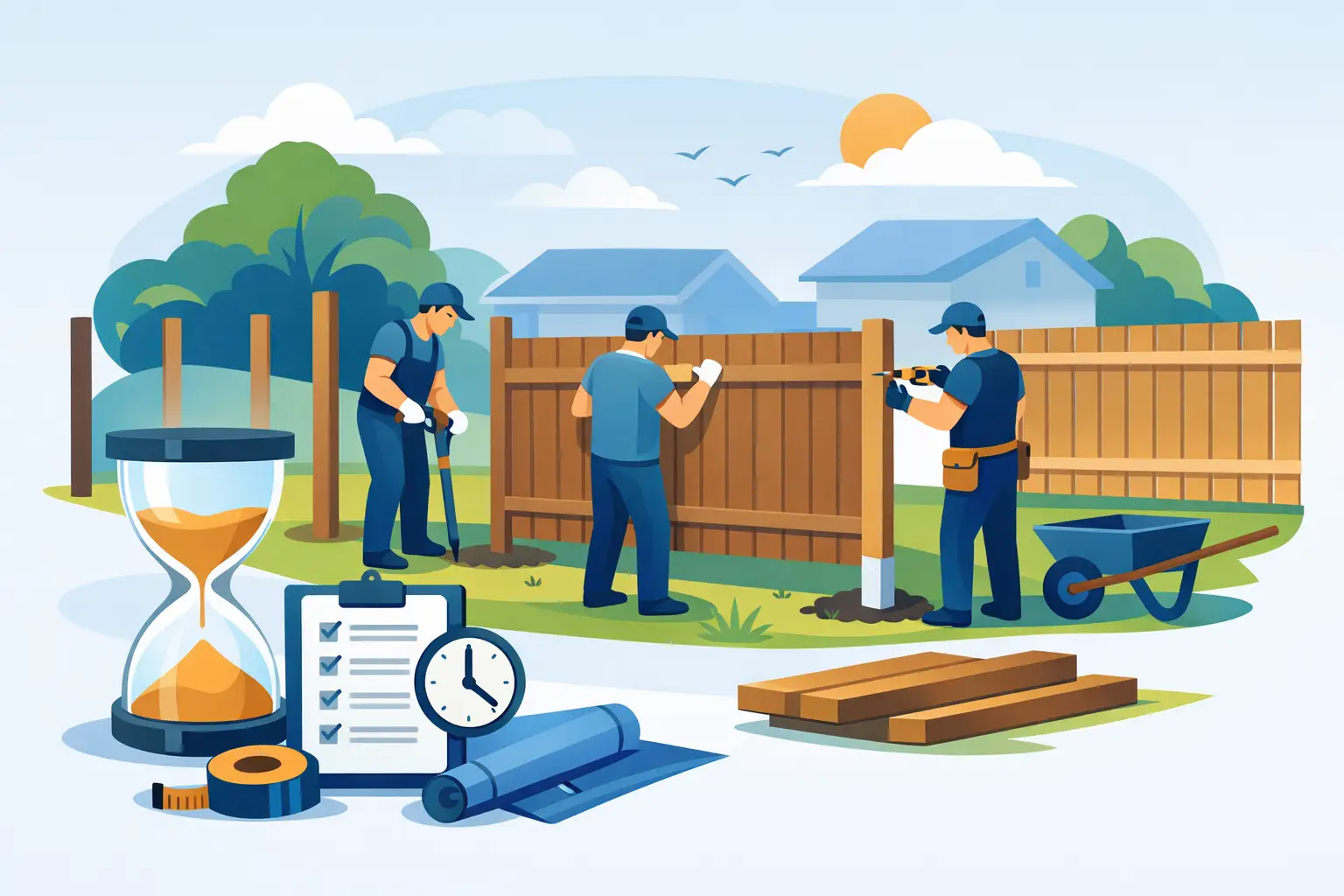
How long does fence installation take for a typical Maryland or Washington, DC-area home? The on-site construction itself is often completed in one to three days. The full process, from your first consultation to a finished fence, may take several weeks because material selection, property approvals, utility marking, weather, and crew scheduling all happen before installation day.
That distinction matters. A trusted contractor should give you a clear picture of both the installation timeline and the planning steps that protect your property, investment, and peace of mind.
How Long Does Fence Installation Take From Start to Finish?
For many residential projects, homeowners can expect a total timeline of roughly two to six weeks after approving the proposal. A straightforward backyard privacy fence with readily available materials may move faster. A larger property, custom gate system, HOA approval, permit requirements, or specialty material can add time before the crew arrives.
Once work begins, a typical fence installation follows a predictable rhythm. The crew confirms the layout, removes an existing fence if that is included in the scope, sets posts, installs rails and panels or pickets, builds gates, and completes a final cleanup. A small to average-sized residential fence can frequently be installed in a day or two. Larger jobs may require three to five working days.
The most accurate answer comes after an in-home consultation. Lot access, slope, fence style, total footage, and local requirements can change the schedule significantly. An experienced installer will walk the property, identify potential complications early, and provide a realistic timeline rather than promising a date that is difficult to keep.
The Installation Timeline by Project Size
A simple fence enclosing a modest backyard is usually the quickest type of project. If the area is accessible, the layout is clear, and materials are on hand, installation may be completed in one or two days. Vinyl and aluminum systems can be especially efficient to assemble once posts are set, although precise layout and gate placement still require careful work.
A larger privacy fence around a corner lot, pool area, or expansive yard typically takes two to four days. More linear footage means more posts, more digging, more panels, and more opportunities to encounter roots, rock, uneven grades, or landscaping that requires extra care.
Projects involving multiple gates, decorative caps, curved fence lines, stepped sections on a slope, or mixed materials may take longer. The same is true when an old fence must be removed and hauled away. Removal is not simply a matter of pulling panels down. Concrete footings, buried posts, tight side yards, and nearby landscaping all need to be handled responsibly.
A custom fence project can also require additional lead time before installation. Specialty colors, premium composite fencing, ornamental aluminum, and made-to-order gates may not be available as quickly as standard materials. Waiting for the right materials is preferable to substituting a lower-quality option that does not match your home or long-term goals.
What Can Delay a Fence Installation?
Most delays are manageable when they are identified early. Homeowners should be especially aware of permitting, approvals, weather, utilities, and property conditions.
Permits and HOA approvals
Many Maryland and DC-area communities have requirements for fence height, location, style, or placement near streets and corners. Your municipality may require a permit, while a homeowners association may require a separate architectural review. Approval timelines vary widely, from a few days to several weeks.
It is wise to begin these steps as soon as you have chosen a design. Installing before approvals are in place can create a far more expensive delay if the fence must be changed or removed. A professional contractor can help you understand what documentation may be needed, but homeowners should also review their HOA rules and property records carefully.
Utility marking and property lines
Before posts are dug, underground utilities must be marked. This is a necessary safety step, not a formality. Marking availability can affect the start date, particularly during busy seasons.
Clear property boundaries are equally important. If there is any uncertainty about where your lot ends, a survey may be needed before finalizing the layout. A fence built even slightly over a property line can lead to difficult conversations and costly corrections later. Existing pins, plats, and surveys are helpful to have available during the initial consultation.
Weather and ground conditions
Fence crews work in a range of weather conditions, but heavy rain, snow, frozen ground, high winds, or saturated soil can delay installation. Posts need stable, properly prepared holes and the concrete around them needs the right conditions to cure as intended.
Spring and fall are popular seasons for fence projects in Maryland, which can mean a fuller schedule. Planning ahead gives you more flexibility in choosing your material and installation window. Summer can be productive for installation, but severe heat and thunderstorms may require crews to adjust for safety and quality.
Access and site preparation
A narrow side yard, steep grade, mature trees, extensive roots, irrigation lines, or a backyard with limited access can all add labor time. Good contractors take these conditions into account before work starts rather than treating them as surprises on installation day.
Homeowners can help keep the project moving by clearing personal items, outdoor furniture, toys, and low-hanging branches from the fence line. If pets use the yard, plan for a safe, secure place for them while gates are open and the perimeter is temporarily incomplete.
Does the Fence Need Time to Set After Installation?
Posts set in concrete need time to cure, but that does not always mean the entire project must stop for days. Installation methods and timing depend on the material, soil conditions, fence height, and weather. A skilled crew will use the approach that gives your fence the strength it needs without rushing the process.
For homeowners, the practical takeaway is simple: do not put immediate pressure on fresh posts or gates. Keep children and pets away from active work areas, and wait for your installer’s guidance before hanging heavy decorations, attaching accessories, or relying on a new gate for frequent use.
A quality fence should look straight on day one and remain secure for years. Fast installation is valuable, but proper post depth, spacing, alignment, and gate construction matter much more than shaving a few hours off the schedule.
Choosing a Timeline You Can Trust
The fastest quote is not always the best path to a finished fence. A low-price contractor may overlook permits, use inadequate post depth, schedule before materials are confirmed, or leave you with vague answers when weather changes the plan. Those shortcuts can turn a one-week project into a frustrating repair issue.
Look for a contractor that explains the scope in plain language, confirms materials before scheduling, respects your property, and communicates promptly if conditions require an adjustment. Upfront pricing and a detailed plan make it easier to compare proposals on more than just the advertised installation date.
A-1 Fencing provides free in-home consultations and estimates for homeowners who want a clear plan for privacy, security, curb appeal, or a more functional outdoor living space. With experienced crews, high-quality materials, and family-run accountability, the goal is to make the process feel organized from the first measurement through final cleanup.
If your new fence is connected to a larger exterior project, such as a patio, retaining wall, walkway, or deck, discuss the complete vision before work begins. Coordinating the layout early can prevent a new fence from conflicting with future improvements and can make your outdoor space feel intentionally designed rather than added in stages.
The right time to start is before you need the fence in a hurry. A little lead time gives you room to choose materials you will be proud of, handle approvals correctly, and schedule installation around your family’s plans – all while giving your property the lasting protection and polish it deserves.