
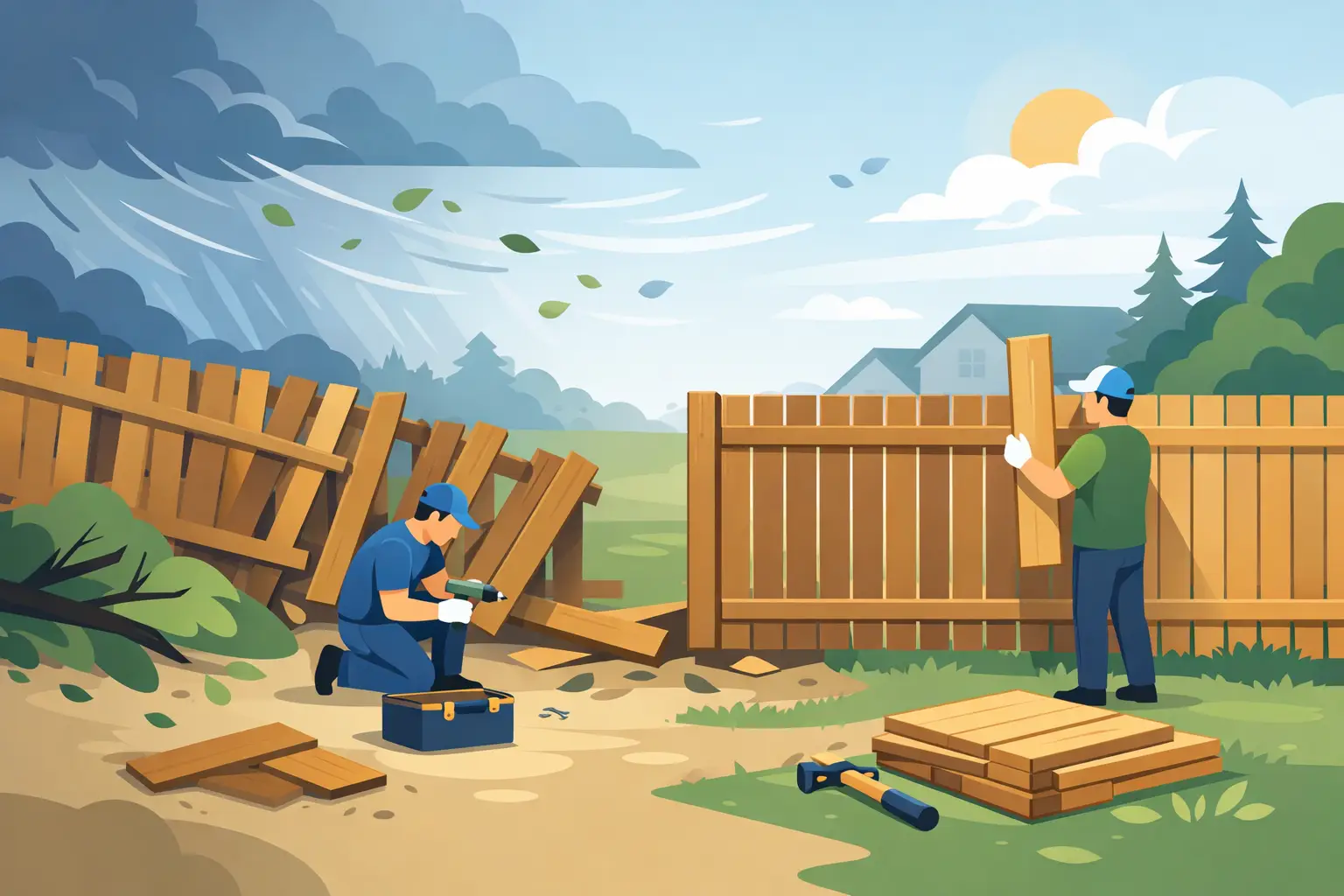
A fence can look fine from the kitchen window, then reveal a leaning post, split rail, or loose gate the moment you step outside. Knowing how to repair fence storm damage starts with a careful inspection, not a quick patch. High winds, saturated soil, falling branches, and flying debris can create damage that affects your privacy, security, and the safety of everyone using the yard.
For homeowners across Maryland and Washington, DC, the right response depends on what failed and why. A single broken board may be a straightforward repair. A row of leaning sections after heavy rain often points to compromised posts, unstable footings, or a fence that has reached the end of its service life.
Start With Safety and a Full Fence Inspection
Do not rush to pull, straighten, or remove damaged fence sections while the yard is still unsafe. Downed utility lines, hanging limbs, standing water, and unstable panels all require caution. If a tree has fallen onto the fence, or a fence section is resting against a structure, keep children and pets away until the area can be assessed safely.
Once conditions are clear, walk the entire fence line from both sides. Storm damage is not always limited to the most obvious collapsed section. Wind puts pressure on panels, rails, posts, gates, and hardware at the same time. A panel that remains standing may still have pulled fasteners loose or shifted enough to create a future failure.
Take clear photos before moving anything. Document the overall fence line, close-ups of broken materials, fallen trees or branches, and any affected landscaping or structures. This record can be useful if you plan to contact your insurance company, homeowners association, or repair contractor.
Pay close attention to these warning signs:
- Posts that lean, twist, lift out of the ground, or move when pushed
- Rails that are cracked, detached, or pulling away from posts
- Panels with bowed pickets, torn vinyl, broken welds, or missing fasteners
- Gates that drag, will not latch, or no longer line up with their posts
- Soil erosion, washout, or standing water around fence footings
A fence may have more than one damaged area, especially after a severe wind event. Identifying every issue before repairs begin helps prevent spending money on a visible panel only to have the adjoining section fail weeks later.
How to Repair Fence Storm Damage by Type
The best repair is the one that restores the fence’s structure, appearance, and useful life. That may mean replacing a few components, resetting posts, or rebuilding a longer run that has been weakened by the storm.
Loose or Damaged Fence Panels
Wood panels can crack along rails, lose pickets, or pull away from their posts. Vinyl panels may pop out of their channels, crack under impact, or bend when wind pressure exceeds their design limits. Aluminum and steel fencing can sustain bent sections, damaged brackets, or broken fasteners.
If the posts are solid, a contractor can often replace the damaged panel or individual components while preserving the rest of the fence. Matching matters here. Wood species, picket style, vinyl color, rail profile, and decorative details should blend with the existing installation rather than leaving a patched appearance in a prominent yard.
A repair becomes less practical when several adjoining panels are damaged, materials are discontinued, or the remaining fence shows widespread wear. In those cases, replacing an entire section can provide a cleaner result and better long-term value than piecing together mismatched repairs.
Leaning, Rotting, or Uprooted Posts
Posts carry the load of the entire fence. When a post leans after a storm, the issue is rarely cosmetic. Heavy rain can soften soil around a shallow footing, while sustained wind can force a post out of alignment. In older wood fences, moisture may expose rot below grade where it cannot be seen during a casual inspection.
A properly repaired post usually needs to be reset or replaced, not simply pushed back into place. The damaged section is supported, the compromised post is removed, and a new post is installed at the correct depth and alignment with an appropriate concrete footing. The surrounding panels and rails then need to be reattached and adjusted so the fence line is straight and secure.
This is one repair where experience makes a real difference. A post that is slightly out of plumb can affect gates, panel spacing, and the appearance of the entire run. It can also create another weak point the next time strong winds move through the area.
Broken Rails, Pickets, and Fasteners
Storm debris can snap wood rails, split pickets, or tear screws and brackets from a fence. These repairs are often manageable when the post structure remains sound. Broken components should be removed rather than reinforced over the damage, since a cracked rail or split board will continue to weaken under seasonal expansion, moisture, and wind.
For wood fencing, replacement parts should be properly secured with exterior-rated fasteners. For vinyl, aluminum, or steel systems, compatible manufacturer components are especially important. Using an improvised bracket or screw may seem like a quick solution, but it can interfere with the fence’s intended movement, finish, or warranty requirements.
Storm-Damaged Gates
Gates are often the first part of a fence to show that posts have shifted. If a gate no longer closes, do not force the latch or shave down the gate edge as a first fix. The gate itself may be intact, while the hinge post or latch post has moved because of wind, impact, or wet soil.
A lasting repair starts by checking the posts, hinges, latch hardware, and frame for alignment. Once the supporting structure is stabilized, the gate can be adjusted to swing freely and latch securely. This is particularly important for pool areas, pet enclosures, and yards where access control matters.
When Repair Is the Right Choice and When Replacement Makes More Sense
Repair is often the smart choice when storm damage is confined to one or two sections and the rest of the fence is in good condition. It protects your investment, restores privacy quickly, and avoids replacing materials that still have years of useful service ahead.
Replacement deserves consideration when the storm reveals larger problems: repeated post failures, extensive rot, widespread leaning, incompatible prior repairs, or a fence that no longer meets your family’s privacy and security needs. A storm can be an unwelcome event, but it can also be the right moment to upgrade a deteriorating fence with a more durable material, a better layout, or a properly designed gate system.
Material selection affects that decision. Pressure-treated wood offers a classic look and can be repaired section by section, but it requires ongoing care and is vulnerable to age-related rot. Vinyl offers low maintenance and clean curb appeal, though damaged sections may need exact profile and color matches. Aluminum fencing is a strong option for open views and pool areas, while ornamental steel provides a more substantial security-focused look. The best option depends on your property, budget, neighborhood requirements, and how you use your outdoor space.
Avoid Quick Fixes That Create Bigger Problems
Temporary measures have a place after a storm. You may need to secure a loose gate, block access to a collapsed area, or remove a detached panel from a walkway. But temporary support should not become the permanent repair plan.
Avoid bracing a leaning fence with scrap lumber without addressing the post below ground. Do not reattach rails to rotted wood, and do not cover a crack in a vinyl panel with adhesive or tape. These fixes can mask structural problems, leave sharp or unstable materials in the yard, and make a later professional repair more complicated.
It is also wise to confirm property lines before rebuilding a fence that has fallen near a boundary. Replacing a fence in the wrong location can lead to unnecessary disputes and added expense, especially where neighboring yards, easements, or HOA rules are involved.
Choose a Contractor Who Can Restore the Whole Property
Fence storm damage can affect more than the fence itself. Fallen sections may damage landscaping, patios, retaining walls, walkways, or gates. Working with a contractor who understands the full exterior environment can make repairs more efficient and help prevent new problems around the repaired area.
A-1 Fencing provides homeowners with a free in-home consult and estimate, clear recommendations, and workmanship focused on long-term durability. A professional assessment can clarify whether your fence needs a targeted repair, a rebuilt section, or a complete replacement designed to better handle the demands of your property.
Before scheduling work, ask what materials will be used, whether posts and footings will be inspected, how nearby landscaping will be protected, and whether the repaired section will match the existing fence. A dependable contractor should give straightforward answers, provide upfront pricing, and leave your yard clean and secure when the work is complete.
A damaged fence does not have to disrupt your home for long. Once the area is safe, have the structure evaluated before small shifts become a larger failure. The right repair restores more than a boundary – it brings back the privacy, security, and confidence you expect from your outdoor space.