
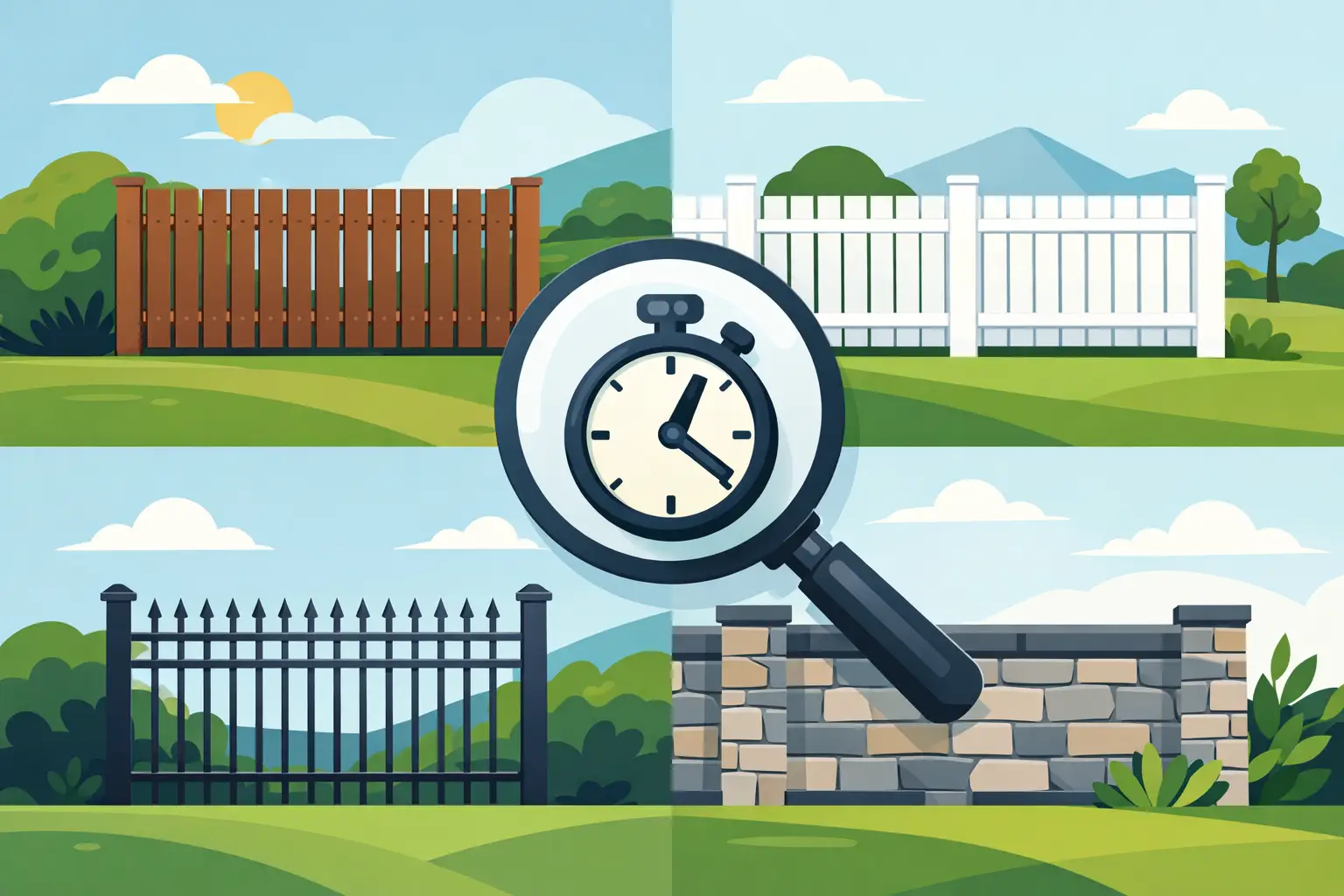
A fence can look great on installation day and still become a costly disappointment a few winters later. For Maryland and Washington, DC homeowners, the answer to what fence lasts longest depends on more than the material itself. Humidity, rain, snow, freeze-thaw cycles, soil conditions, sprinkler exposure, and installation quality all affect how long a fence performs as it should.
If your priority is the longest possible service life with the least maintenance, quality aluminum and properly protected steel are usually the leading choices. But the best fence for your property may be vinyl, composite, or wood depending on whether you need privacy, security, curb appeal, or a natural look. The right decision starts with understanding what each material can realistically deliver.
What Fence Lasts Longest in Maryland?
For most residential applications, a professionally installed aluminum fence can last 30 to 50 years or more. Aluminum does not rust, which gives it a major advantage in our wet, humid Mid-Atlantic climate. It holds its appearance with minimal upkeep and works particularly well around pools, front yards, gardens, property boundaries, and open views.
High-quality steel fencing can also last decades, often 30 to 50 years when it has a durable galvanized and powder-coated finish. Steel offers exceptional strength and is an excellent choice when security is as important as appearance. However, unlike aluminum, steel can eventually rust if its protective coating is deeply scratched, damaged, or neglected.
Neither option is automatically right for every home. Aluminum and steel are typically open-style fences, so they do not provide the full visual privacy that many families want around a backyard. For long-lasting privacy, vinyl and composite fencing deserve close consideration.
Fence Lifespan by Material
A fence’s expected life should be measured by more than the day it needs replacement. Homeowners should also consider how much maintenance it needs, how well it stands up to weather, and whether it continues to look appropriate for the property over time.
Aluminum fencing: long life with minimal upkeep
Aluminum is one of the best long-term values in residential fencing. It will not rot, warp, crack from moisture, or rust. A quality powder-coated finish helps it resist fading and keeps routine care simple. In most cases, an occasional rinse and mild cleaning are all that is needed.
Because aluminum is lightweight, it is not designed to stop a determined impact the way heavy steel can. It may bend if struck by equipment, a vehicle, or a falling tree limb. Still, for homeowners who want a refined, low-maintenance perimeter fence, aluminum is hard to beat.
Steel fencing: the strongest long-term choice
Steel fencing is a serious option for homeowners who want durability, security, and a more substantial feel. Galvanized steel with a quality protective finish is built to handle tough weather and daily use. It is often selected for properties with security concerns, larger dogs, gated driveways, or areas where a stronger barrier is preferred.
The trade-off is corrosion risk. A properly finished steel fence can serve a home for decades, but damaged coatings should be addressed before exposed metal begins to rust. The quality of the material and finish matters greatly here. A bargain steel fence may not offer the same lifespan as a premium system installed by an experienced contractor.
Vinyl fencing: a practical privacy favorite
Vinyl fencing commonly lasts 20 to 30 years, and high-quality products can perform longer with proper installation. It does not need painting, will not rot, and is not vulnerable to insect damage. That makes it a popular choice for homeowners who want a clean, private backyard without the recurring maintenance of wood.
Vinyl is not completely maintenance-free. Dirt, mildew, and lawn stains can require cleaning, especially in shaded areas. Extreme impacts can crack vinyl, and lower-grade panels may become brittle over time. Choosing a high-quality vinyl system with strong rails, dependable posts, and proper reinforcement makes a meaningful difference.
Composite fencing: premium privacy built to endure
Composite fencing blends recycled wood fibers and polymers to create a privacy fence with the substantial appearance of wood and far less upkeep. Depending on the product and conditions, composite fencing may last 25 to 50 years. It resists rot, insects, and moisture better than traditional wood, while offering richer color and texture than many vinyl designs.
Its higher upfront cost is the primary consideration. For homeowners planning to stay in their home for many years, composite can be a smart investment because it reduces the cycle of staining, repairs, and eventual replacement associated with wood. It is especially appealing when the fence needs to complement a finished patio, deck, or upscale outdoor living area.
Wood fencing: beautiful, but maintenance determines its life
A wood fence can last 10 to 20 years, sometimes longer with the right species, drainage, maintenance, and repairs. Cedar is naturally more resistant to decay and insects than many common wood options. Pressure-treated lumber is also a dependable choice when installed correctly and maintained on schedule.
Wood offers warmth and flexibility that manufactured materials cannot fully duplicate. It can be customized in nearly any style, stained to fit the home, and repaired board by board. The trade-off is ongoing care. Moisture, sun exposure, insects, and ground contact gradually take their toll. Staining or sealing, replacing damaged boards, and keeping vegetation away from the fence are part of protecting the investment.
Why Installation Matters as Much as Material
Even the longest-lasting fence material can fail early when the installation is rushed. Leaning posts, loose gates, sagging panels, and heaving from winter ground movement are often installation issues before they are material issues.
A durable fence starts below grade. Posts need to be set at an appropriate depth for the fence height, soil conditions, and local weather. Concrete footings should be used thoughtfully, with attention to drainage so water does not remain trapped around posts. Gates require especially careful planning because they carry repeated weight and movement every day.
Property layout also matters. A fence that follows a steep grade, runs near mature tree roots, or meets a retaining wall may need a more customized approach. An experienced contractor evaluates these details before construction rather than trying to correct them after the fence is already in place.
Choose the Fence That Fits How You Live
The longest-lasting option is not always the best option if it does not solve the reason you need a fence. An aluminum fence may outlast a wood privacy fence, but it will not create a private place for children to play or for a family to enjoy a patio. A steel fence may offer superior security, while a composite fence may better match a high-end deck and create a more comfortable backyard setting.
Think about the view from inside your home as well as the curb appeal from the street. Consider pets, pool safety, children, neighborhood requirements, gate use, maintenance preferences, and how long you expect to own the property. A fence should support the way your family uses the yard, not simply mark a boundary.
Get Long-Term Value From the Start
The material you choose matters, but workmanship, layout, and product quality determine whether your new fence delivers the lifespan you expect. A-1 Fencing helps homeowners compare durable fencing options based on their property, privacy needs, budget, and long-term plans, with a free in-home consult and estimate.
A well-built fence should feel like a permanent improvement to your home, not another item on the repair list. Choose a material that fits your goals, invest in professional installation, and you can enjoy a safer, more attractive outdoor space for decades.