
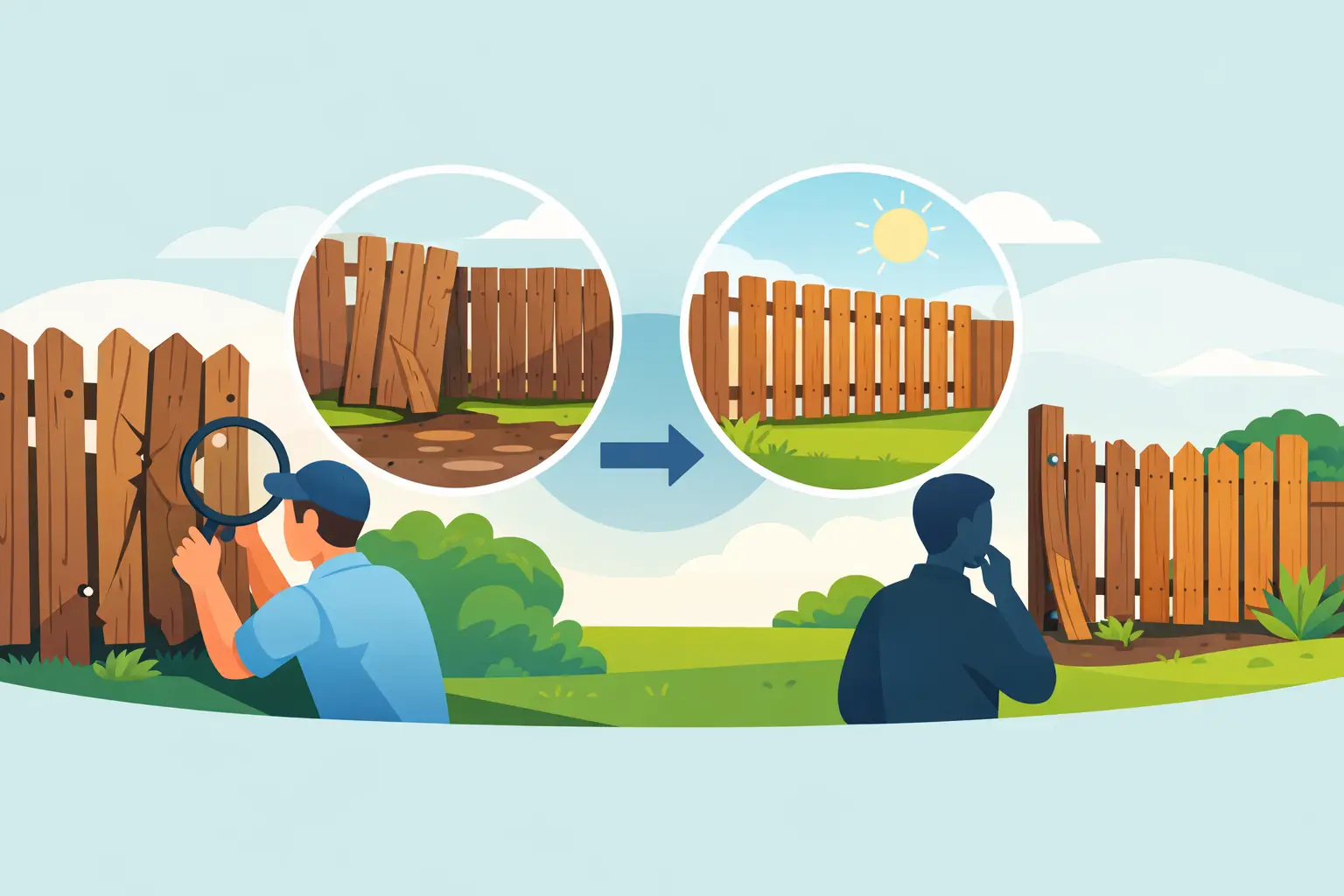
A leaning fence after a Maryland thunderstorm is more than a curb-appeal problem. It can weaken quickly, create an unsafe boundary for children or pets, and leave your property exposed. Homeowners often ask, when should a fence be replaced rather than repaired? The answer comes down to structure, safety, cost, and whether repairs will actually restore the fence’s performance.
A few loose boards or a sagging gate do not automatically call for a full replacement. But when damage affects posts, multiple sections, or the fence’s ability to provide privacy and security, investing in a new fence is often the smarter long-term choice.
The clearest signs your fence needs replacement
The condition of the posts is usually the deciding factor. Posts support every panel, rail, and gate. If they are loose in the ground, severely rotted, rusted through, cracked, or leaning, surface-level repairs will not solve the underlying problem. Replacing individual posts can work when the rest of the fence is in good condition. When post failure appears across several sections, replacement is typically more reliable and more cost-effective.
Widespread rot is another clear warning sign for wood fencing. Wood naturally weathers, especially through the humid summers, heavy rain, snow, and freeze-thaw cycles common in Maryland and the Washington, DC area. A discolored board is not necessarily a concern. Soft wood that flakes apart, crumbles near the ground, or gives way when pressed is different. Rot can spread beyond the boards you can easily see, affecting rails and post ends below grade.
For metal fences, rust should be evaluated by severity. Small areas of surface rust may be cleaned, treated, and repainted. Rust that has eaten through pickets, weakened welds, or compromised posts calls for replacement. The same principle applies to vinyl fencing: isolated cracked pickets can often be replaced, but widespread brittleness, fading, splitting, or distorted panels may mean the system has reached the end of its useful life.
A fence that repeatedly needs attention is also telling you something. One repair after a storm is normal. Calling for new boards, rails, fasteners, or gate adjustments every season is not. At some point, patching an aging fence becomes an ongoing expense without giving you the appearance, security, or peace of mind you expect.
Repair or replace? Start with the extent of damage
The best decision is rarely based on one broken board. Look at the fence as a whole. If damage is limited to a small, clearly defined area and the surrounding structure is stable, a professional repair can extend its life. This is common when a fallen branch damages one panel, a gate settles out of alignment, or a few pickets have warped before the rest of the fence has aged.
Replacement becomes the stronger option when damage is spread across roughly a quarter to a third of the fence, especially if posts and rails are involved. Repairing several sections of an older fence can leave you with mismatched materials and newer pieces attached to a weakened framework. You may spend less upfront, but face another major repair shortly afterward.
Matching is another practical consideration. Older wood profiles, vinyl colors, and metal styles are not always available. A repair that looks noticeably different can reduce curb appeal, particularly along a front yard or a highly visible property line. If a fence is already faded or weathered, a new installation can create a more finished, consistent result.
Safety and privacy are reasons not to wait
A fence does an important job every day, often without much attention. It helps contain pets, defines play areas, provides privacy from neighboring homes, and creates a clear property boundary. When it no longer performs those functions, replacement should move up the priority list.
A gate that will not latch securely can allow a dog or young child to leave the yard. Leaning sections can fall during strong winds. Loose fasteners and splintered boards can create injury hazards. For pool enclosures, code-required barriers, and fences near busy streets, structural concerns should be addressed promptly rather than monitored over time.
Privacy can also be a deciding factor. A fence may be standing but no longer serving the purpose you bought it for. Gaps from shrinking or broken boards, missing pickets, and sagging panels can make a backyard feel exposed. If you are planning to use your yard more often for family gatherings, a new patio, a deck, or outdoor entertaining, replacing an underperforming fence can make the entire space more enjoyable.
Age matters, but condition matters more
Fence lifespan varies widely by material, installation quality, maintenance, soil conditions, and weather exposure. Pressure-treated wood often lasts 15 to 20 years with proper care, though some fences need major work sooner. Cedar can offer excellent appearance and durability, but it still needs regular maintenance. Vinyl and aluminum may last decades when installed correctly, while steel fencing can last a long time if corrosion is controlled.
Those ranges are useful, but they are not deadlines. A well-built 18-year-old fence with sound posts may still be worth repairing. A poorly installed eight-year-old fence with shallow posts, recurring movement, and failing rails may be a replacement candidate. The question is not simply how old the fence is. Ask whether its core structure is still sound and whether its next repair will provide meaningful value.
Consider the real cost of repeated repairs
Homeowners understandably compare the price of a repair with the price of a new fence. That is the right first step, but it should not be the only one. A lower repair bill today can be appealing, yet it may not account for the cost of another visit, additional materials, or emergency damage after the next storm.
Think in terms of the next several years. If repairs can reasonably give you five or more years of dependable service, they may be worthwhile. If the fence is likely to require major work again within a year or two, replacement may offer better value. A new fence also gives you the opportunity to choose a material and design that better fits your current needs, whether that means low-maintenance vinyl privacy fencing, ornamental aluminum, durable steel, or a classic wood design.
Financing can make this decision easier for homeowners who would prefer to avoid a series of smaller repair expenses and move forward with a long-term solution. A clear, upfront estimate should explain the scope of work, material options, gate needs, and any site conditions that affect the project cost.
Do not overlook drainage, trees, and property changes
Sometimes a failing fence is a symptom of a larger site issue. Standing water around posts accelerates wood rot and can shift soil. Large tree roots can push panels out of line. A sloped yard may need careful grading or stepped fence sections to remain stable and look intentional. Replacing a fence without addressing the cause of damage can shorten the life of the new installation.
Property improvements can also change what you need from a fence. A new deck, patio, retaining wall, pool, or expanded garden may alter traffic flow and sightlines in the yard. This can be a good time to rethink fence height, gate placement, privacy level, and material. Coordinating these details before construction helps prevent awkward transitions and unnecessary rework later.
Get a professional assessment before deciding
A qualified contractor can inspect the full fence line, not just the most visibly damaged section. That assessment should include post stability, rail condition, gate operation, hardware, material deterioration, drainage concerns, and the feasibility of matching existing materials. It should also distinguish between a repair that will hold up and a temporary patch.
For homeowners in Maryland and Washington, DC, A-1 Fencing provides free in-home consultations and estimates to help make that decision straightforward. As a family-run, award-winning exterior contractor, the team can evaluate whether a targeted repair makes sense or whether a replacement will better protect your property and improve your outdoor space.
A fence should feel like a dependable part of your home, not another weekend concern waiting for the next storm. If yours is leaning, deteriorating, or no longer giving your family the privacy and security you need, a professional evaluation can turn uncertainty into a clear plan.