
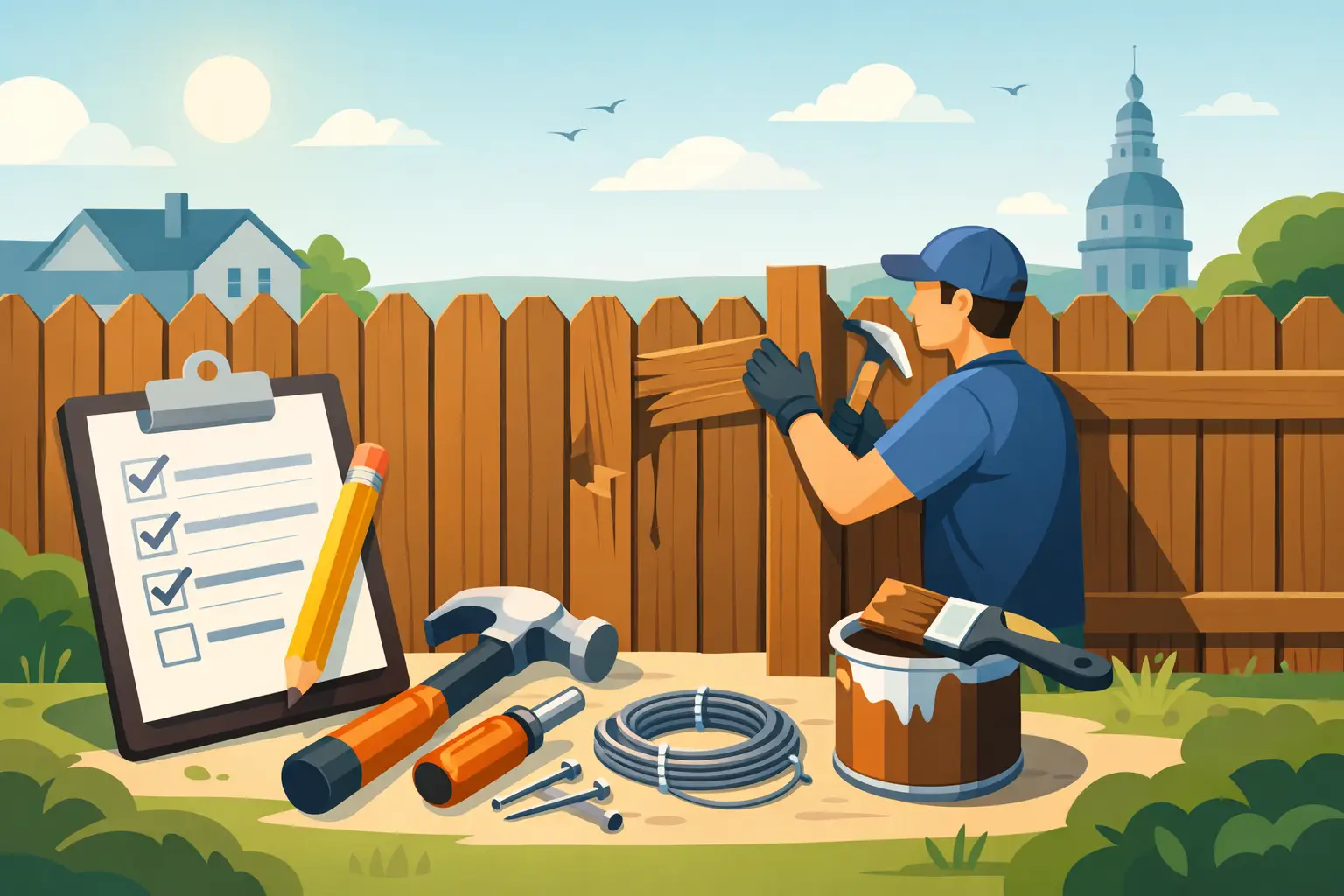
A leaning fence rarely starts as a major problem. It often begins with one loose board, a post that holds water after a storm, or a gate that needs an extra push to close. This wood fence repair checklist helps Maryland and Washington, DC homeowners identify those warning signs before privacy, safety, and curb appeal are affected.
Wood remains a popular fencing material because it offers warmth, versatility, and dependable privacy. But our region’s humid summers, freeze-thaw cycles, heavy rain, and occasional high winds can be hard on untreated cuts, aging fasteners, and posts set in poorly drained soil. A careful inspection can show whether your fence needs a targeted repair or whether replacing a larger section will offer better long-term value.
Start Your Wood Fence Repair Checklist at Ground Level
The most serious fence problems often begin where you cannot easily see them: at the base of the posts. Walk the entire fence line and look closely at every post where it meets the ground. Healthy posts should stand plumb, feel firm when gently pushed, and show no deep cracking, soft wood, or mushroom-like growth.
Press a screwdriver gently into suspicious areas near the soil line. If the tool sinks into soft wood or removes crumbling material, decay may be present. Surface discoloration alone is not always a structural concern, but soft, wet, or hollow-feeling wood requires attention. A rotted post can pull an entire panel out of alignment, even if the rails and pickets still look acceptable from a distance.
Drainage matters here. Downspouts that empty beside a fence, mulch piled against posts, and low areas that remain wet after rain all speed up deterioration. Sometimes improving drainage and replacing one or two posts is enough. If decay is widespread across an older fence, however, repairing individual components can become a short-term solution with repeated costs.
Check Posts, Rails, and Pickets for Movement
Once you have checked the post bases, look at the fence structure from several angles. Stand back along the line of the fence and watch for sagging, leaning, uneven panel tops, or sections that bow outward. Then inspect the rails that run horizontally between the posts. Cracked rails, split rail ends, and loose connections are common reasons boards begin to sag or pull away.
Your inspection should include these key conditions:
- Posts that lean, wobble, split deeply, or show rot near the ground
- Rails that crack, sag, separate from posts, or have loose fasteners
- Pickets that are broken, warped, missing, or pulling away from the rails
- Nails or screws that have rusted, backed out, or stained the surrounding wood
- Fence sections that sit too close to soil, standing water, shrubs, or tree limbs
- Gaps that allow pets, children, or wildlife to pass through
A single damaged picket is usually a straightforward repair. Several loose pickets may point to failing rails or corroded fasteners underneath. That distinction matters because replacing boards without correcting the support structure can leave you with the same problem after the next strong storm.
Look for Insect and Moisture Damage
Termites, carpenter ants, and moisture-related decay can cause damage that is not obvious from the street. Look for small holes, tunnels, blistered wood, or thin areas that break apart when pressed. Pay particular attention to shaded sides of the fence, areas beneath dense landscaping, and sections near irrigation equipment.
Wood that is weathered is not automatically failing. A gray surface can often be cleaned, prepared, and sealed. The concern is structural deterioration: deep splits, decay, insect activity, or boards that no longer hold fasteners securely. An experienced fence contractor can help distinguish cosmetic aging from a condition that compromises the fence’s strength.
Test Every Gate Before It Becomes a Safety Issue
Gates receive more daily use than any other part of most wood fences. Open and close each gate several times. It should swing freely, latch securely, and maintain an even gap along the ground and adjoining fence sections. A gate that drags, sticks, sags, or will not latch can create an immediate security concern, especially for homes with children or pets.
Start by checking hinges, latch hardware, screws, and the gate frame. Loose hardware may be all that is causing the issue. But when the hinge-side post has shifted or the gate frame has twisted, a hardware adjustment alone will not solve it for long.
Wood gates are especially vulnerable when they are too wide for their framing, lack diagonal bracing, or carry heavy decorative hardware. In some cases, rebuilding the gate with stronger framing and proper support is more practical than repeatedly repairing an older gate that continues to sag.
Inspect the Finish and Protective Coating
A wood fence does not need to look brand new to perform well, but it does need protection from water and sunlight. Check for peeling stain, faded areas, exposed end grain, cracks, and spots where water no longer beads on the surface. These are signs that the finish may no longer be doing its job.
Pay close attention to the top edges of pickets, cut ends, and areas behind planters or shrubs. Water enters wood most easily through exposed cuts and cracks. Applying a quality stain or sealant after necessary repairs can extend the useful life of the fence and improve its appearance. The right schedule depends on the wood species, prior finish, sun exposure, and drainage around the property.
Do not seal over active rot, loose boards, or trapped moisture. The surface may look better briefly, but the underlying repair still needs to be addressed. Proper preparation is what makes a protective finish worthwhile.
Consider Storm Damage and Property-Line Changes
After high winds, snow, fallen branches, or major rain, inspect the fence even if it remains standing. Storm damage can loosen posts below grade, crack rails behind pickets, or weaken a gate that appears normal at first glance. Taking photos soon after an event can also be helpful if insurance questions arise.
If you are planning a patio, retaining wall, deck, walkway, or new landscaping, review how the project will affect your fence. Grade changes can direct water toward posts. New hardscape may change gate clearances. Equipment access can also be limited once a fence is installed. Coordinating exterior improvements together can prevent costly rework and create a more finished result across the property.
When Repair Makes Sense and When Replacement Is Smarter
Wood fence repair is often the right choice when the damage is isolated. Replacing a few pickets, resetting a sound post, rebuilding one gate, or securing loose rails can restore a fence that otherwise has years of service left.
Replacement deserves consideration when many posts are decayed, multiple sections lean, repairs have become frequent, or the design no longer meets your needs for privacy and security. Homeowners also choose replacement when they want a different height, a cleaner style, better gate access, or materials that require less maintenance.
There is no single answer based on age alone. A well-built fence with one damaged section may be worth repairing, while a younger fence with poor installation or widespread drainage issues may need a more complete solution. A professional evaluation should account for the condition of the entire fence, not only the most visible damaged board.
Schedule a Professional Evaluation With Confidence
A thorough wood fence repair checklist gives you a useful starting point, but posts, footings, and concealed rail damage can be difficult to assess without experience. A-1 Fencing provides homeowners with a free in-home consult and estimate, with practical recommendations based on the condition of the fence, the property’s needs, and the repair option that makes the most financial sense.
Before requesting an estimate, note the areas you have found, take a few clear photos, and consider what you want the fence to accomplish. You may need a simple repair, stronger gates, more privacy, or a larger outdoor upgrade that ties fencing into a patio, deck, or retaining wall project. The right repair should leave your property safer, more attractive, and ready for the next season – not simply patched until the next problem appears.