
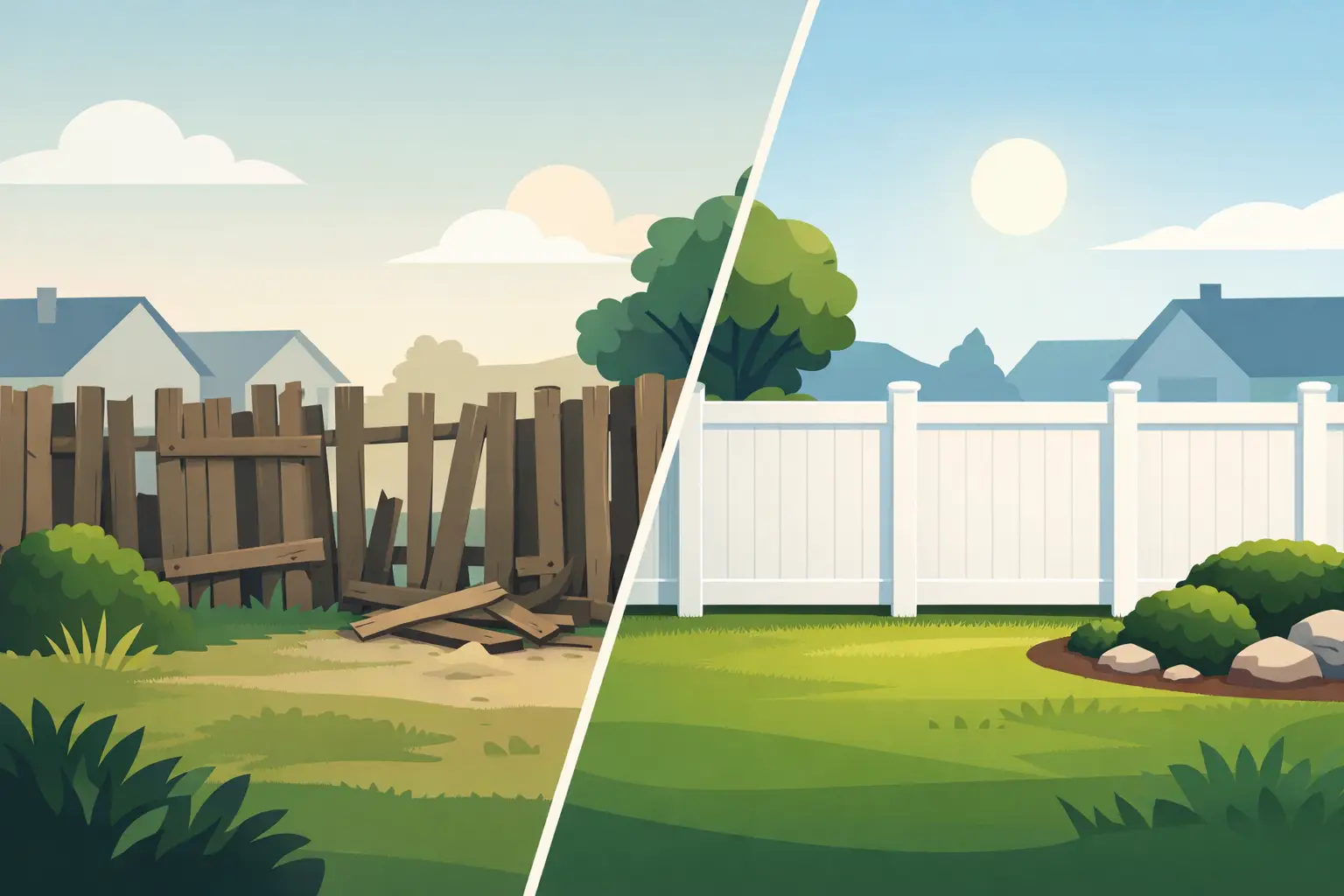
A fence rarely fails all at once. It starts with a leaning post near the gate, a loose picket after a storm, or a section that no longer gives your family the privacy you expected. The most noticeable fence replacement before and after results go far beyond a cleaner property line. A well-planned new fence can make a yard feel safer, more private, more polished, and easier to enjoy every day.
For homeowners across Maryland and the Washington, DC metro area, replacement is often the right choice when recurring repairs begin to add up. The goal is not simply to remove an old fence and install a new one. It is to create a durable boundary that suits your home, your lifestyle, and the way you use your outdoor space.
Why Fence Replacement Before and After Is So Noticeable
An aging fence can quietly affect the entire appearance of a property. Weathered wood, rusted hardware, missing boards, sagging gates, and uneven sections draw attention away from landscaping, patios, and the home itself. Even a structurally sound older fence may look tired if its color has faded or its design no longer fits the property.
After replacement, the change is immediate. Straight lines bring order to the yard. Consistent materials create a finished look. A properly sized gate opens and closes without dragging, and the fence line feels intentional rather than patched together over time. For homes on busy streets or close to neighboring properties, the improvement in privacy can be just as meaningful as the visual transformation.
There is also a practical side to that before-and-after contrast. A damaged fence can create safety concerns for children and pets, especially when gates will not latch or boards have become loose. Replacing compromised sections with a complete, professionally installed system gives homeowners greater confidence in the security of their outdoor space.
Repair or replacement: the decision point
Not every damaged fence needs to be replaced. A newer fence with one broken post, a few storm-damaged panels, or a gate adjustment may be an excellent candidate for repair. Replacement becomes more sensible when deterioration appears in several areas, posts are failing, the fence is nearing the end of its expected service life, or the design no longer meets your needs.
It also depends on the material. Wood fencing can often be repaired, but widespread rot, insect damage, or warped rails may point toward replacement. Vinyl and aluminum systems can last for many years, yet impact damage, outdated styles, or discontinued components can complicate a partial repair. A professional in-home evaluation helps distinguish a repairable issue from a fence that is likely to keep demanding attention.
What to Look for in a Fence Replacement Before and After
The best project photos show more than fresh materials. They reveal better planning. When reviewing fence replacement before and after work, look at the overall layout as closely as the finish of the panels.
A successful replacement follows property lines accurately, maintains consistent height, and accounts for slopes without leaving awkward gaps beneath the fence. Gates should be placed where they support how the family actually moves through the yard, whether that means easy access to a driveway, patio, pool area, garden, or side entrance.
The design should also fit the home. A traditional wood privacy fence may complement an established neighborhood with mature landscaping. Low-maintenance vinyl can deliver a crisp, uniform look with fewer upkeep demands. Aluminum fencing is often an attractive choice where homeowners want clear views of a pool, garden, or wooded lot while still defining the space. The right answer depends on privacy goals, maintenance preferences, budget, and local requirements.
Privacy without making the yard feel closed in
Many homeowners call for fence replacement because they want more privacy from nearby homes, sidewalks, or traffic. A full-height privacy fence is a strong solution, but it is not the only option. Board styles, spacing, decorative top sections, and strategic placement can create screening while keeping the yard from feeling boxed in.
If a property has an attractive view, a combination design may work better. For example, a privacy fence can screen the patio or play area while aluminum fencing preserves sightlines along the rear of the lot. Thoughtful design gives each part of the yard a purpose instead of treating every boundary the same.
A gate is part of the system, not an afterthought
Gates receive more daily use than almost any other part of a fence. A replacement project is the time to correct inconvenient gate locations, narrow openings, poor latch alignment, or a gate that cannot accommodate lawn equipment. Wider access may be useful for a future patio, retaining wall, or landscaping project as well.
Professional installation matters here. Gate posts need proper support, hardware must be matched to the gate weight, and clearance has to account for grade changes. A gate that looks good on installation day but begins to sag months later is not a finished job.
Decisions to Make Before Installation Begins
A great result starts before the first post hole is dug. Property lines should be understood clearly, and homeowners should review any homeowners association rules, community standards, and applicable local regulations. Requirements can affect fence height, style, material, and placement, particularly for corner lots, pools, and homes near public sidewalks.
Underground utilities must also be located before installation. This is essential for safety and helps prevent costly disruptions. If your yard has drainage concerns, a steep grade, established trees, or a retaining wall near the planned fence line, those details should be discussed during the estimate rather than discovered midway through construction.
Material selection deserves an honest conversation as well. Wood offers natural warmth and design flexibility, but it requires periodic maintenance. Vinyl offers easy care and a consistent appearance, though color and style options are more defined. Aluminum is durable and elegant, but it does not provide full visual screening on its own. The lowest initial price is not always the best long-term value if the material does not fit the conditions of the property.
A Professional Replacement Process Protects Your Property
Fence replacement can be disruptive when it is poorly managed. Old materials need to be removed responsibly, landscaping should be respected, and the work area should remain organized from start to finish. Homeowners deserve clear expectations about the schedule, materials, layout, and any conditions that could affect the project.
A dependable contractor begins with a detailed consultation. That conversation should cover why the existing fence is no longer working, what you want the new fence to accomplish, and how it should connect with the rest of your exterior. Accurate measurements and an upfront proposal reduce surprises later.
During installation, quality shows in the details: properly set posts, consistent spacing, secure rails, clean cuts, aligned panels, and gates that operate smoothly. Those details are what help a fence continue to look like the “after” photo years after the crew has left.
For homeowners planning more than a fence, coordinating the work can save time and avoid redoing finished areas. A new patio, walkway, retaining wall, or deck may affect gate access, drainage, fence elevations, and the best place for privacy screening. Working with one experienced exterior contractor can make the finished property feel cohesive rather than assembled in separate phases.
Make the After Last
The strongest fence replacement before and after projects do not rely on a quick visual fix. They solve the real problem behind the old fence, whether that is lack of privacy, failing structure, limited access, or a yard that no longer supports the way your family lives.
A-1 Fencing provides award-winning workmanship, high-quality material options, and free in-home consultations for homeowners who want a fence built with care. If your current fence is becoming a source of repairs or frustration, a professional estimate is a practical first step toward an outdoor space that feels finished, secure, and ready to enjoy.