
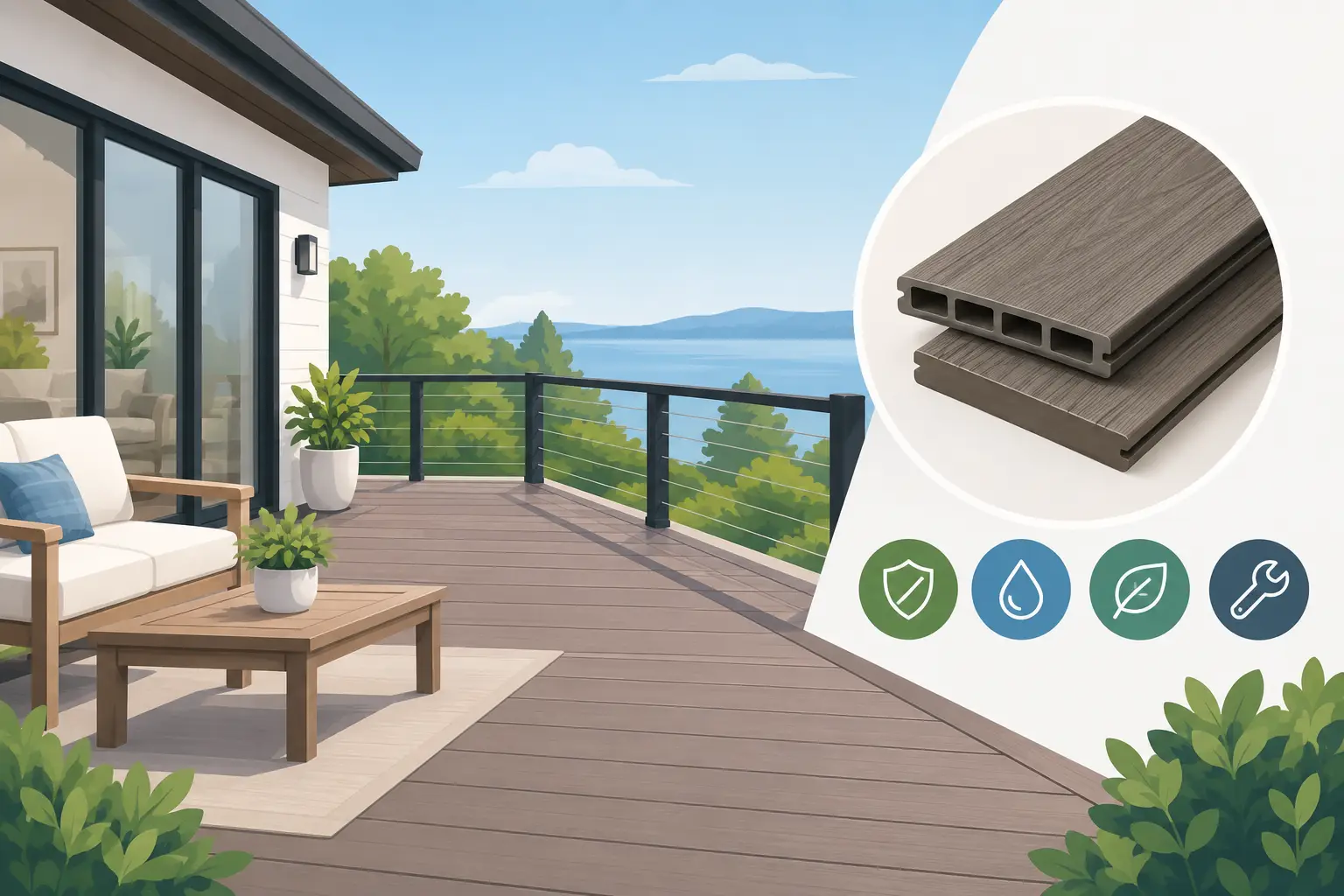
A deck should be a place for weeknight dinners, summer cookouts, and quiet mornings outside – not another weekend chore. So, is composite decking worth it? For many Maryland and Washington, DC-area homeowners, the answer is yes, particularly when they want a finished outdoor space that holds its appearance with far less upkeep than traditional wood.
The right answer still depends on your budget, the look you want, how much sun and moisture your yard receives, and how long you plan to stay in the home. Composite decking costs more at the start, but it can offer real long-term value through durability, lower maintenance, and a polished appearance that lasts.
Is Composite Decking Worth It Compared With Wood?
Pressure-treated wood remains a practical deck material for homeowners with a tight initial budget. It is widely available, familiar, and can look great when it is properly installed and maintained. But wood needs regular attention. Depending on exposure and wear, it may need cleaning, staining, sealing, board replacement, and fastener repairs over the years.
Composite decking is made from a blend of recycled wood fibers and plastic materials, often protected by a durable outer cap. Quality products from brands such as Trex and TimberTech are designed to resist many of the issues that make wood decks demanding: moisture absorption, splintering, fading, staining, insect damage, and warping.
That does not mean composite is maintenance-free. Pollen, dirt, food spills, and mildew can still collect on the surface, especially under trees or near damp landscaping. The difference is that routine cleaning with soap, water, and a soft brush is generally enough. You do not have to plan on sanding and restaining the deck every few years just to protect it.
For busy families, that time savings is often the deciding factor. Homeowners would rather use their deck than spend prime spring weekends maintaining it.
The Upfront Cost Is Higher – But Look Beyond Day One
Composite decking typically has a higher material and installation cost than pressure-treated lumber. The exact difference depends on the board line, color, railing style, deck height, stair layout, framing needs, and site conditions. Premium capped composite boards, picture-frame borders, hidden fasteners, lighting, and custom railings all add to the finished investment.
A wood deck may look like the lower-cost option on the first estimate, but the long-term comparison is more complicated. Wood maintenance products, labor, repairs, and eventual board replacement can add up over the life of the deck. A composite deck’s higher initial price can make more sense when you plan to enjoy it for many years.
Composite is often worth the investment when:
- You expect to remain in your home for the long term.
- You want an outdoor living area with minimal seasonal maintenance.
- Your deck receives strong sun, frequent rain, or heavy family use.
- You value consistent color and a clean, finished appearance.
- You are pairing the deck with higher-end features such as railings, patios, fire pits, or landscaping.
If you are preparing to sell soon or need the most economical way to replace an unsafe deck, a well-built pressure-treated wood deck may be the better financial fit. A trusted contractor should explain both paths clearly instead of pushing one material for every property.
Why Composite Performs Well in Maryland and DC Weather
Our local climate is hard on exterior materials. Maryland and DC homeowners deal with humid summers, heavy rain, freeze-thaw cycles, leaf debris, and periods of intense sun. A deck can also stay damp longer when it sits beneath mature trees or faces north.
Wood naturally expands and contracts as its moisture level changes. Over time, this can contribute to cracks, cupping, loose fasteners, and splinters. Composite boards are not immune to temperature changes, which is why proper spacing and manufacturer-approved installation methods matter. Still, quality composite decking generally handles moisture exposure more reliably than untreated or poorly maintained wood.
Capped composite products are especially useful for homeowners who want strong stain and fade resistance. That can matter after a dropped burger, a spilled drink, or a season of direct afternoon sun. The surface will not look brand-new forever, but it is designed to retain a more uniform appearance without the recurring stain-and-seal cycle.
Consider Heat, Color, and Feel Underfoot
No honest composite decking discussion is complete without talking about heat. Dark composite boards can get hot in direct sunlight, sometimes hotter than wood. This is a real consideration for south- and west-facing decks, households with young children, and anyone who likes to walk outside barefoot.
Lighter colors can help, and some premium product lines are engineered to reduce heat buildup. Shade structures, pergolas, umbrellas, and thoughtful deck orientation can also make a major difference. During a design consultation, it is worth looking at full-size board samples outdoors rather than choosing a color from a small indoor swatch.
Composite also has a different texture and sound than wood. Most homeowners appreciate its smooth, splinter-free feel, especially around pools and patios. Others prefer the natural grain variation of real wood. Modern composite boards have come a long way in replicating the warmth of wood, with multi-tonal colors and realistic grain patterns, but they are still manufactured products. Personal preference matters.
The Deck Structure Matters as Much as the Boards
A premium deck surface cannot make up for weak framing, poor drainage, or improper installation. Whether you choose composite or wood, the structure underneath needs to be built correctly for the load, span, stair design, railing system, and local code requirements.
Composite boards are often installed with hidden fastening systems that create a clean surface without rows of visible screws. That polished finish is one reason homeowners choose the material, but it requires careful spacing and experienced installation. Fascia, picture framing, stair treads, and railing connections also need detailed attention to look right and perform well over time.
Before replacing deck boards over an existing frame, have the framing evaluated. Older structures may have water damage, undersized joists, outdated hardware, or spacing that does not meet the requirements for composite decking. In some cases, resurfacing is appropriate. In others, rebuilding the structure is the safer, smarter investment.
Does Composite Decking Add Home Value?
A new deck can improve a home’s appeal, especially when it creates a usable connection between the house, yard, patio, or pool area. Composite decking can be particularly attractive to buyers who see an inviting outdoor space without a visible maintenance burden.
Still, no contractor should promise that a deck will return every dollar spent at resale. Market conditions, neighborhood expectations, overall home condition, and design quality all affect value. The more reliable benefit is personal use: a durable space where your family can gather, entertain, and spend time outdoors with less work hanging over your head.
A deck designed to fit the property also tends to feel more valuable than a basic platform added without a plan. Coordinating the deck with fencing, walkways, retaining walls, lighting, or a patio can create a more complete outdoor living area and improve how the entire yard functions.
Choosing the Right Composite Deck for Your Project
Not all composite decking is the same. Product lines vary in board thickness, cap coverage, color choices, scratch resistance, warranty coverage, and price. The best choice is not always the most expensive board. It is the one that fits your home’s style, sun exposure, expected use, and budget.
Bring practical questions to your estimate: Which boards perform best in direct sun? What railing options complement the home? Can the deck be designed around existing landscaping? Does the existing framing qualify for resurfacing? What maintenance does the manufacturer recommend? Clear answers upfront help prevent surprises after construction begins.
For homeowners who want dependable materials, professional installation, and a deck built for years of real use, composite is often a worthwhile investment. A-1 Fencing can help you compare options during a free in-home consult and estimate, then design an outdoor space that fits the way your family lives. The best deck is not simply the one with the lowest first cost – it is the one you will be happy to step onto season after season.