
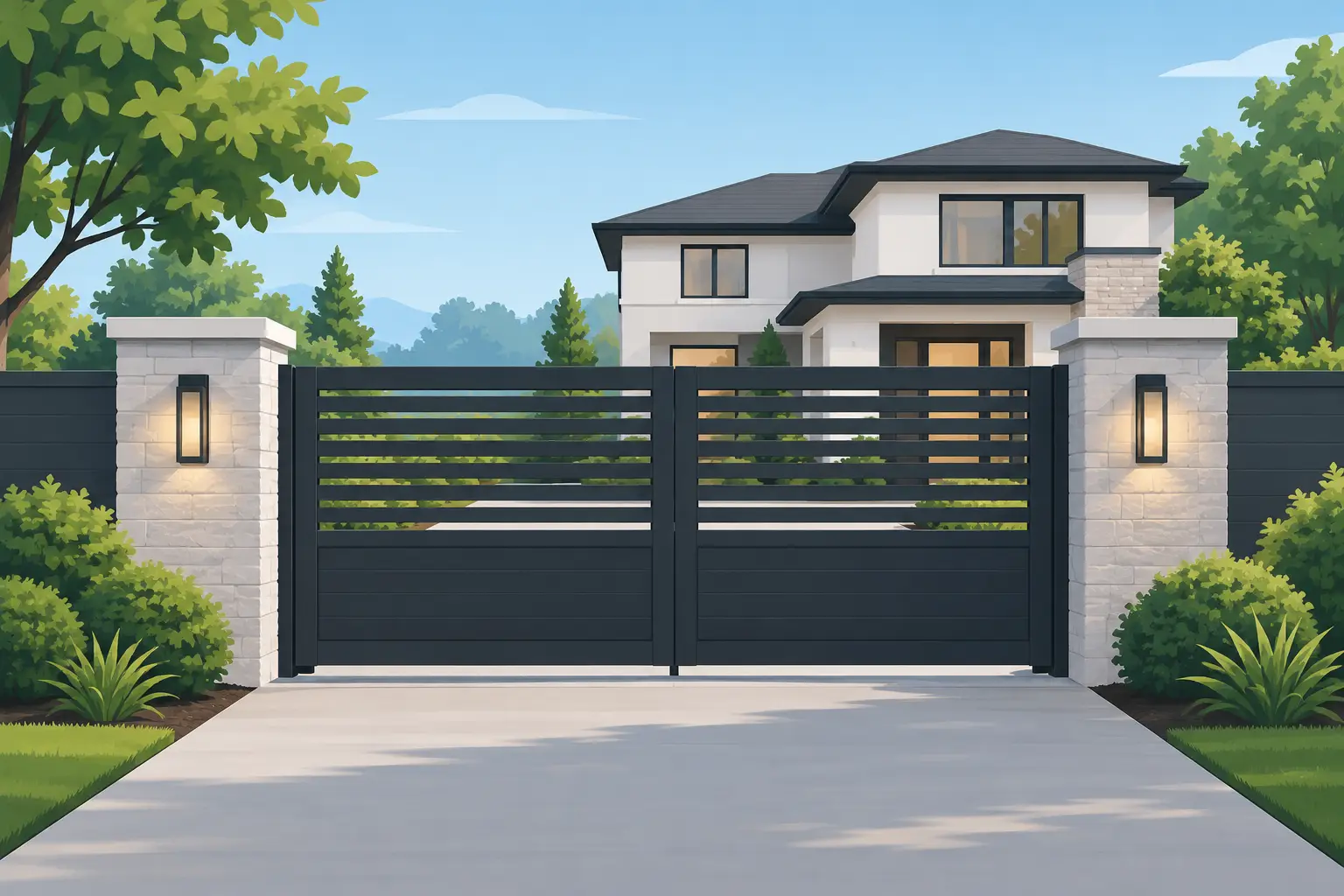
A driveway is often the most open point on a property. It is where vehicles enter, deliveries arrive, children may play, and visitors get their first impression of your home. The right driveway gates create a clear, attractive boundary without making your property feel unwelcoming. For homeowners across Maryland and the Washington, DC metro area, they can be a practical investment in security, privacy, curb appeal, and everyday peace of mind.
A gate should not be selected from a photo alone. Its size, material, operation, placement, and access controls all need to work with your driveway, landscape, fencing, and daily routine. A professionally planned installation helps ensure the gate looks right on day one and continues operating reliably through changing seasons.
What Driveway Gates Can Do for Your Property
A driveway gate gives your home a more intentional entrance. For some homeowners, the priority is controlling who can pull onto the property. For others, it is keeping young children and pets within a defined outdoor area, adding privacy from a busy street, or completing a new fence, retaining wall, or front walk project.
Security is a major reason to install a gate, but it is best viewed as one layer of a broader plan. A closed gate creates a physical and visual deterrent, especially when paired with well-designed fencing, lighting, and dependable access controls. It can also reduce casual cut-through traffic and provide a greater sense of separation from the street.
Curb appeal matters, too. A well-proportioned gate framed by quality posts or masonry columns can give a property a finished, established look. Ornamental aluminum gates offer clean lines and visibility, while wood and vinyl options can provide more privacy. The best choice depends on what you want your entry to say about the home and how much upkeep you want to take on.
Choosing the Right Driveway Gate Style
The first design decision is usually whether the gate should swing or slide. A swing gate is a classic choice for many residential driveways. It can be a single panel or a pair of panels that meet in the middle, and it works especially well when the driveway is relatively level and there is enough room for the gate to open inward.
Sliding gates are often better for driveways with limited depth, a slope near the entrance, or a layout where a swinging panel would interfere with parked vehicles. They require room along the fence line for the gate to travel. A qualified installer should evaluate available clearance, grade, drainage, and the location of utilities before recommending an option.
A dual swing gate can create a grand entrance, but it is not automatically the right answer for every property. Wider gates need properly engineered posts, hinges, operators, and foundations. A gate that is too heavy for its hardware or poorly supported can sag, drag, or strain an automatic opener over time. Good design is not only about appearance. It is about building an entrance that operates safely and consistently.
Matching the Gate to Your Home
Your driveway gate does not need to match every detail of your home, but it should feel connected to the property. Traditional homes often pair well with ornamental aluminum designs, decorative finials, arched tops, or masonry columns. More contemporary homes may benefit from horizontal lines, simple geometric patterns, and dark aluminum or steel finishes.
Privacy-focused properties may call for vinyl, composite, or wood infill panels. These materials block more of the view from the street, though they may catch more wind than an open ornamental design. In exposed locations, that wind load affects the gate frame, posts, hinges, and automation equipment. This is one reason a site visit is more valuable than choosing a style based only on a catalog image.
Material Choices and Long-Term Maintenance
The material you select affects cost, appearance, maintenance, and lifespan. There is no single best material for every Maryland or DC-area home.
Ornamental aluminum is popular because it offers a refined appearance without the routine rust concerns of untreated steel. It works well with pool fencing, perimeter fencing, and formal front entries. Aluminum is also a strong choice when homeowners want visibility across the property line rather than a solid privacy barrier.
Steel can offer exceptional strength and a substantial look, particularly for larger custom gates. It must be properly finished and maintained to protect it from moisture and corrosion. For the right project, its durability and design flexibility can be worth the additional investment.
Vinyl is low maintenance and fits naturally with vinyl privacy fencing. It is available in several colors and styles, but it requires a well-supported frame for a driveway application. Wood offers warmth and character that other materials cannot fully duplicate, though it needs periodic sealing, staining, or painting to preserve its appearance in Mid-Atlantic weather.
When comparing materials, think beyond the initial price. Consider the level of maintenance you are comfortable with, whether the gate will be automated, how much privacy you need, and how the material coordinates with existing fencing and landscaping. A lower upfront price is not always the better value if the gate requires frequent repair or does not complement the rest of the property.
Manual or Automatic Gate Access?
A manual gate can be an excellent solution for a smaller driveway, a secondary entrance, or a homeowner who does not need frequent vehicle access. It is straightforward, dependable, and generally costs less than an automated system.
For daily use, an automatic gate adds convenience and better access control. Homeowners can open it with a remote, keypad, telephone entry system, vehicle sensor, or smart device, depending on the equipment selected. The right system should fit how your household actually arrives home, receives guests, and handles service providers.
Automation does require careful planning. The operator must be sized for the gate’s weight and length, and electrical access needs to be considered early in the process. Safety devices are also essential. Photo eyes, edge sensors, proper controls, and professional setup help prevent the gate from closing when a person, pet, or vehicle is in its path.
A dependable automatic gate is not simply a gate with a motor attached. It is a complete system where the structure, hardware, controls, and safety features are designed to work together. That is why experienced installation matters, particularly for wider or heavier driveway gates.
Details That Make an Installation Last
The posts and foundation are the unseen parts of a gate project that deserve the most attention. Heavy gates place ongoing stress on their supports. Proper post depth, concrete footings, drainage, and reinforcement help keep the gate aligned as temperatures shift and the ground changes over time.
Driveway grade is another important consideration. A gate needs enough clearance to operate without scraping the pavement, gravel, or surrounding soil. If the property has a slope, drainage issue, retaining wall, or uneven approach, those conditions should be addressed in the design rather than treated as an afterthought.
Local requirements can also affect placement, height, and access. Gates should not create a hazard for vehicles waiting to enter from a public road, and automated designs may need to meet specific safety standards. A professional contractor can help homeowners plan an entrance that respects the property layout and avoids preventable complications.
Plan Your Entrance as Part of the Whole Property
A driveway gate has the greatest impact when it is considered alongside the full exterior project. New fencing, columns, walkways, landscape borders, lighting, patios, and retaining walls can all influence how the entrance looks and functions. Coordinating these features early can avoid mismatched materials, awkward transitions, and repeated disruption to the property.
At A-1 Fencing, our team helps homeowners think through the details that make an entrance feel complete: the gate style, fencing materials, opening direction, post design, automation needs, and the practical demands of everyday use. A free in-home consult and estimate provides an opportunity to evaluate the site and discuss a solution built around your home rather than a one-size-fits-all package.
A driveway gate should make coming home feel more secure, more private, and more welcoming. With the right design and quality installation, it becomes more than an entry point. It becomes a lasting part of the way your property looks, works, and protects what matters most.