
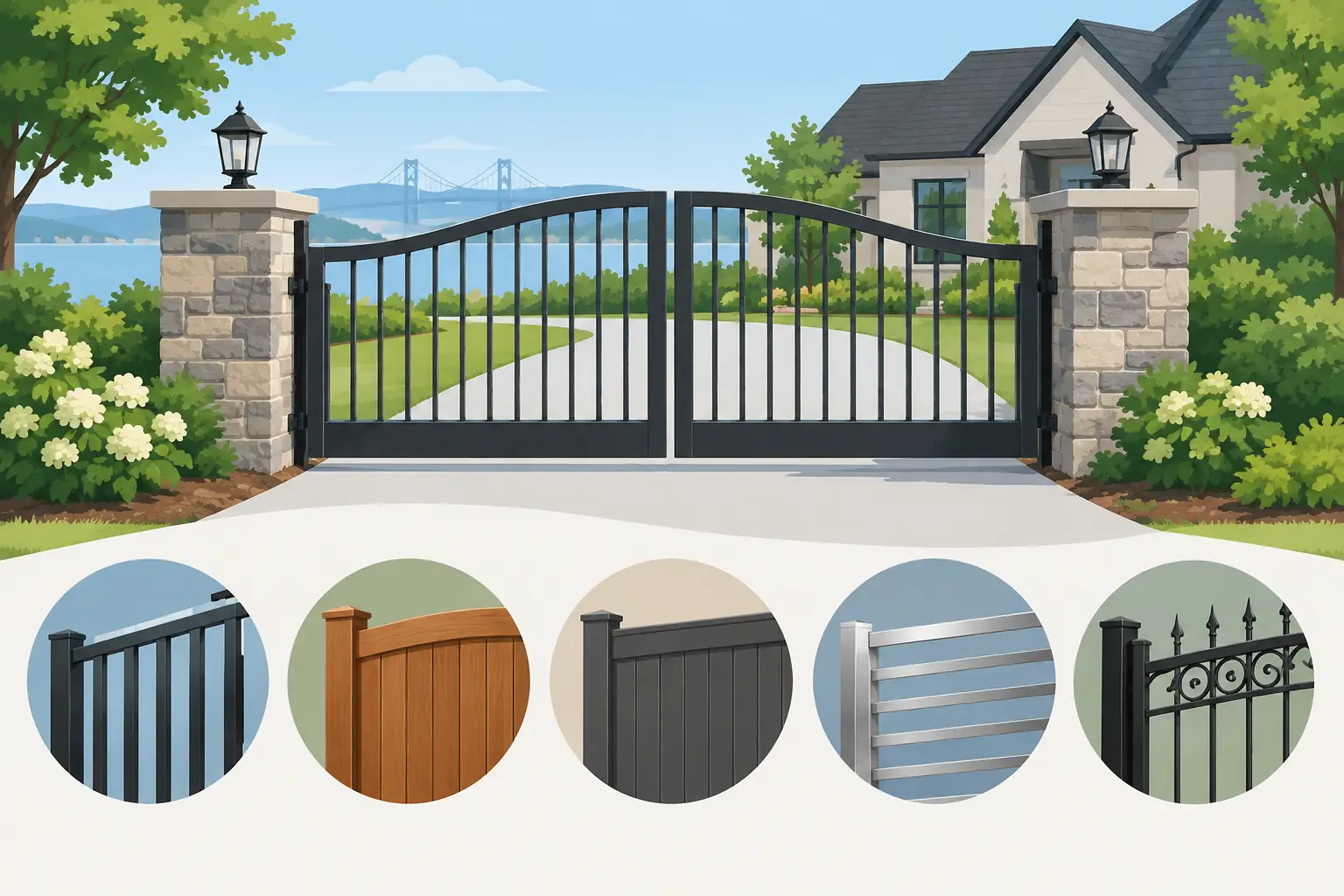
A driveway gate is often the first feature visitors notice and the last line of control between your home and the street. Choosing among the top driveway gate materials is about more than appearance. For Maryland and Washington, DC homeowners, the right gate must handle humid summers, freezing temperatures, rain, snow, daily use, and the style of the property it protects.
A well-designed gate can improve security, define the entrance to your home, help contain children or pets, and add meaningful curb appeal. The best material depends on your priorities: low maintenance, privacy, a traditional look, strength, budget, or compatibility with an automatic gate operator. Here is how the leading options compare.
Top Driveway Gate Materials at a Glance
Aluminum, steel, wood, vinyl, and composite gates each serve a different purpose. There is no one material that is right for every driveway. A wrought-iron-style aluminum gate may suit a formal Colonial home in Montgomery County, while a solid vinyl or composite gate can make more sense for a family seeking privacy in Howard County.
The installation matters just as much as the material. Gate posts, hinges, latches, ground clearance, slope, drainage, and operator selection all affect how a gate performs over time. A beautiful gate that is poorly supported can sag, drag, or fail to close properly. That is why professional planning is especially valuable for wide driveways and automated systems.
Aluminum Driveway Gates
Aluminum is one of the most popular choices for homeowners who want the elegant appearance of ornamental metal without the upkeep associated with traditional iron. It does not rust, making it particularly well suited to the Mid-Atlantic climate. Rain, wet leaves, road salt, and summer humidity can be hard on exterior metal, but aluminum holds up well when it is properly finished and installed.
Many aluminum gates are designed with spear tops, arched rails, scrollwork, or clean horizontal lines. They can complement historic homes, contemporary properties, and nearly any fencing style. Because aluminum is lighter than steel, it is also a practical choice for many automatic gate systems. A lighter gate places less strain on hinges and operators during frequent opening and closing.
The trade-off is strength. Quality aluminum is durable for residential use, but it can bend more easily than steel when struck by a vehicle or subjected to severe force. It is often the best fit when appearance, corrosion resistance, and low maintenance are the main goals rather than maximum impact resistance.
Best for: Elegant curb appeal and low maintenance
Aluminum works well for open-style security gates, estate entrances, and homeowners who want a refined ornamental look without repainting or rust treatment.
Steel Driveway Gates
Steel is the choice when security and structural strength are at the top of the list. A properly fabricated steel gate provides a substantial feel and can accommodate detailed custom designs, from simple estate gates to more decorative traditional patterns. Its weight and rigidity make it a strong option for properties where the gate is expected to provide a more serious physical barrier.
Steel requires more attention than aluminum in Maryland and DC. Even galvanized and powder-coated steel should be inspected periodically for chips, scratches, and areas where moisture can reach exposed metal. Addressing small finish issues early helps prevent rust from spreading and protects the investment.
Weight is another consideration. Steel driveway gates need correctly sized posts, heavy-duty hinges, and an operator designed for the gate’s actual weight and length. This is not a place to cut corners. The hardware and foundation work must be matched to the gate, particularly on a sloped driveway or a wide double-gate entrance.
Best for: High security and custom gate designs
Steel is a smart choice for homeowners who want a substantial entrance gate, are comfortable with periodic maintenance, and value long-term structural strength.
Wood Driveway Gates
Wood brings warmth that metal and vinyl cannot fully duplicate. A wood driveway gate can make a large entrance feel welcoming, private, and connected to the architecture of the home. It is especially attractive for wooded lots, farmhouse-style properties, traditional homes, and outdoor spaces that feature natural materials such as stone retaining walls or timber decks.
Wood also offers excellent design flexibility. It can be built with horizontal boards, vertical pickets, framed panels, lattice details, or solid privacy sections. Homeowners can choose stain tones that bring out the grain or a painted finish that coordinates with siding, shutters, and fencing.
The maintenance commitment is real. Wood expands and contracts with seasonal moisture changes, and Maryland’s humid summers can encourage warping, checking, and mildew if the gate is not protected. Regular sealing or staining is needed to preserve the appearance and reduce water damage. Hardware must also be carefully installed because a large wood gate can become heavy over time.
Cedar is often selected for its natural resistance to moisture and insects, while pressure-treated lumber can offer a more budget-conscious route. The best choice depends on the desired finish, the level of maintenance you are willing to take on, and whether the gate will be exposed to strong sun or persistent shade.
Best for: Natural character and privacy
Wood is ideal for homeowners who want a custom, substantial look and are prepared to maintain the finish as part of regular property care.
Vinyl Driveway Gates
Vinyl gates are known for their clean appearance and low-maintenance appeal. They will not rot, rust, or require painting, making them appealing for busy homeowners who want a privacy gate without the upkeep of wood. White vinyl remains a classic option, though some systems offer tan, gray, and wood-inspired colors.
For driveway applications, gate construction is critical. Vinyl itself is not intended to carry heavy loads without internal reinforcement. A high-quality vinyl driveway gate should include reinforced rails, an appropriate frame, and posts designed to support the opening. This is especially important for a wide double gate, where wind pressure and repeated operation can put stress on the structure.
Vinyl can be an excellent match for an existing vinyl fence, creating a coordinated property line and entryway. It is generally better for privacy and visual definition than for high-security applications. A solid vinyl gate can block the view into a yard, but it does not offer the same impact resistance as steel.
Best for: Coordinated privacy fencing with easy care
Vinyl is a practical choice when low maintenance and a clean, consistent look matter most, especially when it matches fencing already on the property.
Composite Driveway Gates
Composite materials are increasingly attractive to homeowners who like the appearance of wood but want fewer maintenance demands. Depending on the product, composite gate components may offer realistic grain textures and rich colors while resisting rot, insects, and moisture better than natural lumber.
This material can be a strong fit for modern homes and upscale outdoor living projects where the gate should complement a deck, patio, or privacy screen. It is also useful where a wood-look finish is desired but ongoing staining is not.
Not every composite fencing product is engineered for driveway gates, so material selection must be specific to the application. Gate frames, reinforcement, hinges, and operator compatibility still need professional review. Composite can also cost more upfront than basic wood or vinyl, but its reduced maintenance may make sense over the life of the project.
Best for: Wood-look style with less upkeep
Composite suits homeowners looking for a polished, contemporary entrance that coordinates with other premium exterior materials.
What Else Should Guide Your Decision?
Before selecting a material, consider how the gate will be used every day. A manual gate at the end of a short, level driveway has different needs than an automated gate serving a busy household. If you plan to add an operator, keypad, remote controls, or vehicle sensors, the gate’s weight, width, and wind load should be addressed from the beginning.
Privacy is another important decision. Open aluminum and steel designs provide visibility and an inviting appearance, while solid wood, vinyl, and composite panels offer more screening. Some homeowners prefer a hybrid design, such as an ornamental metal frame with solid lower panels or a wood gate with decorative metal accents.
Local conditions should also shape the plan. Drainage near the driveway entrance, snow removal patterns, mature tree roots, and driveway slope can all influence post placement and gate clearance. A gate should swing or slide without scraping pavement, catching debris, or interfering with vehicles.
For a gate that looks right and works reliably, start with an on-site evaluation rather than choosing from a photo alone. A-1 Fencing provides free in-home consults and estimates for homeowners who want experienced guidance on materials, design, installation, and a gate system built around their property. The right entrance should feel dependable every time you pull into the driveway – not become another exterior project that needs constant attention.