
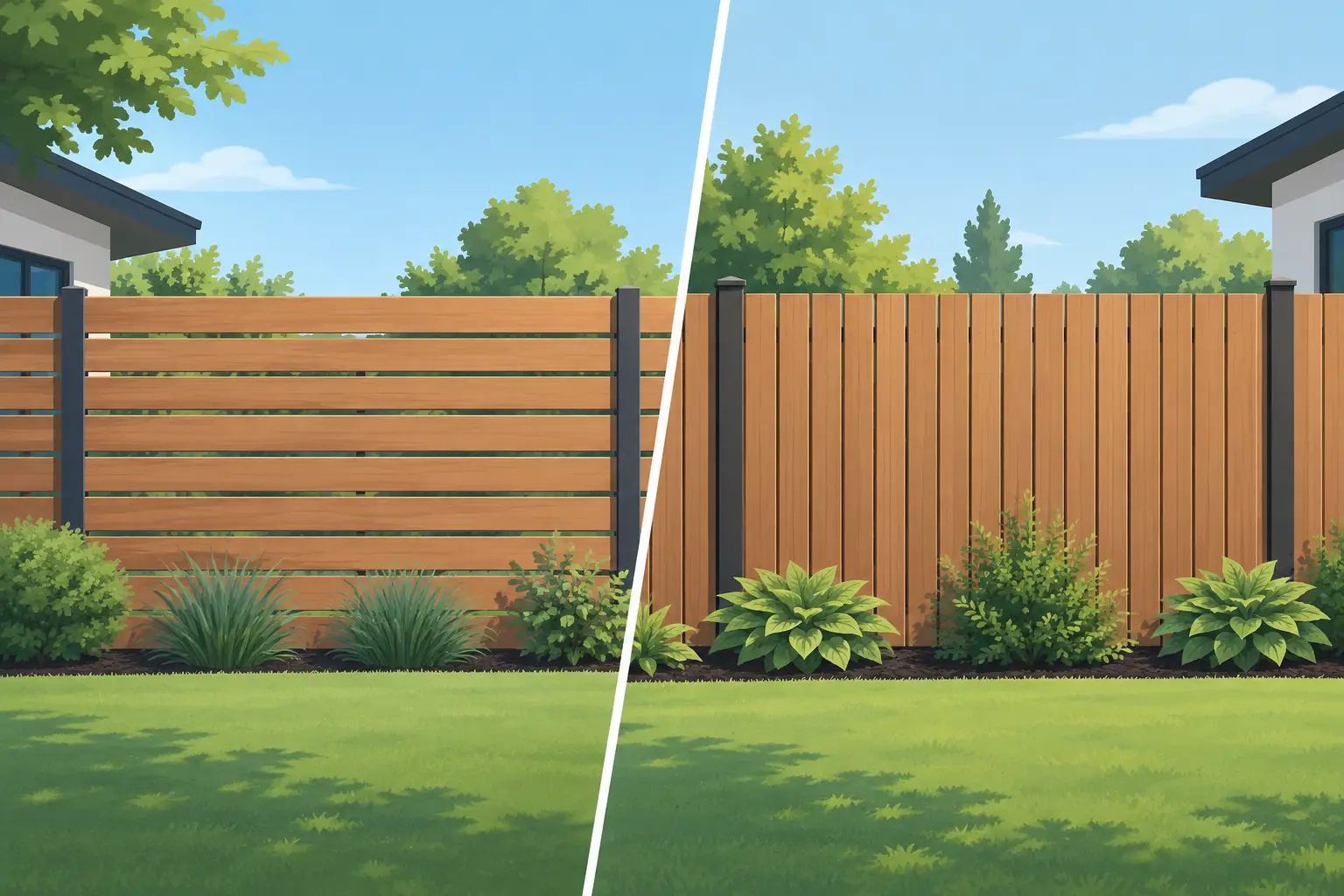
A fence has to do more than mark a property line. For many Maryland and Washington, DC homeowners, it needs to create backyard privacy, contain pets, protect children, complement a patio or deck, and still look right from the street. When comparing a horizontal fence versus vertical fence, the better choice comes down to your home’s style, the material you select, your yard conditions, and how much maintenance you want over time.
Horizontal Fence Versus Vertical Fence: What Changes?
The biggest difference is simple: vertical fences use boards that run up and down, while horizontal fences use boards that run side to side. That change in direction has a noticeable effect on appearance, construction, and long-term performance.
A vertical fence is the familiar choice. It works beautifully with traditional Colonial, Cape Cod, Craftsman, and many suburban home styles throughout Montgomery County, Howard County, and Northwest DC. Vertical pickets naturally direct the eye upward, which can make a smaller yard feel taller and more enclosed. This style also accommodates common privacy, picket, shadowbox, and semi-private fence designs.
A horizontal fence has a more contemporary, architectural feel. Its long, clean lines can make a yard look wider, especially when it frames a patio, pool area, or modern deck. Homeowners often choose horizontal privacy fencing when they want their backyard to feel more like an intentional outdoor room than a separate utility space.
Neither layout is automatically better. The right fence is the one that suits the property and is built with materials and installation methods that stand up to local weather.
Appearance and Curb Appeal
Horizontal fencing makes a strong design statement. The continuous lines feel polished and current, and they pair particularly well with modern siding, stone veneers, black aluminum accents, and low-profile outdoor living features. A horizontal fence can also create a clean backdrop for landscaping, lighting, or a fire pit area.
That look comes with a consideration: because horizontal boards are visually prominent, inconsistencies are easier to notice. Uneven spacing, bowed rails, poor fastener placement, or mismatched boards can take away from the finished result. This is a style where experienced craftsmanship matters.
Vertical fencing is more versatile and timeless. A board-on-board wood privacy fence can feel substantial and traditional, while a scalloped picket fence can soften the front of a home without closing it off. Vertical designs are also easy to coordinate with existing gates, neighboring fencing, and established landscaping.
For homes in neighborhoods with a more classic appearance or an HOA with specific requirements, a vertical fence may be the safer choice. Before selecting either style, review community rules for height, materials, colors, and approved fence profiles.
Privacy, Security, and Wind Performance
Both horizontal and vertical styles can provide excellent privacy when built as solid fences with properly spaced boards. A six-foot privacy fence is often the practical choice for a backyard where homeowners want separation from nearby homes, streets, or active common areas.
Horizontal fences can provide a very tailored privacy look, but board spacing deserves careful attention. Even narrow gaps become visible when you are standing close to the fence or looking from an elevated deck. If privacy is the priority, the design should account for board movement as wood naturally expands and contracts through humid summers and cold winters.
Vertical privacy fences are proven performers because the pickets overlap or sit closely together and are supported by horizontal rails. Traditional board-on-board construction is especially useful where wind is a concern. The overlapping boards allow the fence to maintain privacy even as individual boards shift seasonally.
Wind is a major part of the decision, particularly in open yards. A solid fence catches more wind than a spaced or semi-private design, regardless of whether boards run horizontally or vertically. Proper post depth, post spacing, rail sizing, and fastener selection are what keep a fence secure. A quality installation should be designed for the conditions of the specific property, not treated as a one-size-fits-all project.
Cost and Material Considerations
A horizontal fence can cost more than a standard vertical fence of comparable height and material. It often requires longer, straighter boards, additional framing, closer post spacing, and more careful layout to prevent sagging. The finished look is worth it for homeowners who want a custom modern design, but it should be budgeted as a more detailed installation.
Vertical fencing is often more economical because its construction is familiar, efficient, and compatible with widely available fence components. That does not mean every vertical fence is inexpensive. Premium wood, decorative top caps, board-on-board construction, custom gates, and challenging slopes can all affect project cost.
Material selection matters as much as orientation. Pressure-treated wood offers a natural look and broad design flexibility. Cedar can provide a more refined appearance and natural resistance to decay, though it requires an investment. Vinyl fencing is low maintenance and available in privacy styles, while aluminum is a strong option for defining property lines without blocking views.
Composite fence materials may also fit homeowners looking for a polished appearance and reduced upkeep. The best material depends on the desired look, maintenance expectations, privacy needs, and budget. A professional consultation can clarify where it makes sense to invest and where a simpler solution will perform just as well.
Maintenance and Long-Term Durability
Wood fences need routine care whether they are horizontal or vertical. Homeowners should plan to inspect for loose boards, fastener issues, soil contact, and signs of moisture damage. Staining or sealing on the recommended schedule helps preserve color and adds protection against the elements.
Horizontal wood boards can be more prone to visible sagging if they are unsupported over long spans. Quality framing and appropriately spaced posts help prevent that problem. Water can also rest along horizontal board edges, so material quality and proper installation details are especially important.
Vertical boards shed water more naturally, which is one reason they remain a dependable choice in the Mid-Atlantic climate. Still, vertical pickets can warp, shrink, or loosen if they are made from low-grade material or installed without adequate spacing and support.
Vinyl and aluminum typically require less upkeep than wood. A seasonal rinse and occasional cleaning are usually enough to maintain their appearance. These materials are excellent for homeowners who want a clean, durable perimeter without adding fence maintenance to their regular weekend list.
How Your Yard Can Decide the Issue
A level, open backyard gives you more freedom to choose. In that setting, the decision may come down largely to style: horizontal for a modern outdoor living area, vertical for a classic and familiar look.
Sloped yards require more planning. Vertical fences can be stepped or racked to follow the terrain, depending on the fence type and grade. Horizontal boards can also work on a slope, but they may create noticeable angles and gaps if the layout is not carefully designed. Sometimes a horizontal fence looks best on a flatter portion of the yard, while a vertical design handles the changing grade along side or rear property lines.
Existing features matter, too. A fence should work with retaining walls, patios, walkways, gates, and drainage patterns rather than compete with them. If a backyard renovation includes multiple improvements, coordinating the full plan before installation helps avoid awkward transitions and unnecessary rework.
Choosing the Right Fence for Your Home
Choose a horizontal fence when a clean, modern appearance is the top priority and you are comfortable investing in detailed construction. It is an excellent fit for contemporary homes, newer patios, and backyards where the fence will be a visible part of the design.
Choose a vertical fence when you want a timeless look, broad material options, proven durability, and a design that adapts well to traditional homes or uneven terrain. It is also a practical choice when privacy, budget, and long-term value need to stay in balance.
The best answer is rarely found in a showroom photo alone. A-1 Fencing helps homeowners evaluate their property, style goals, fence materials, and project budget during a free in-home consult and estimate. A well-designed fence should feel like it has always belonged there – protecting your space while making the entire property look more complete.