
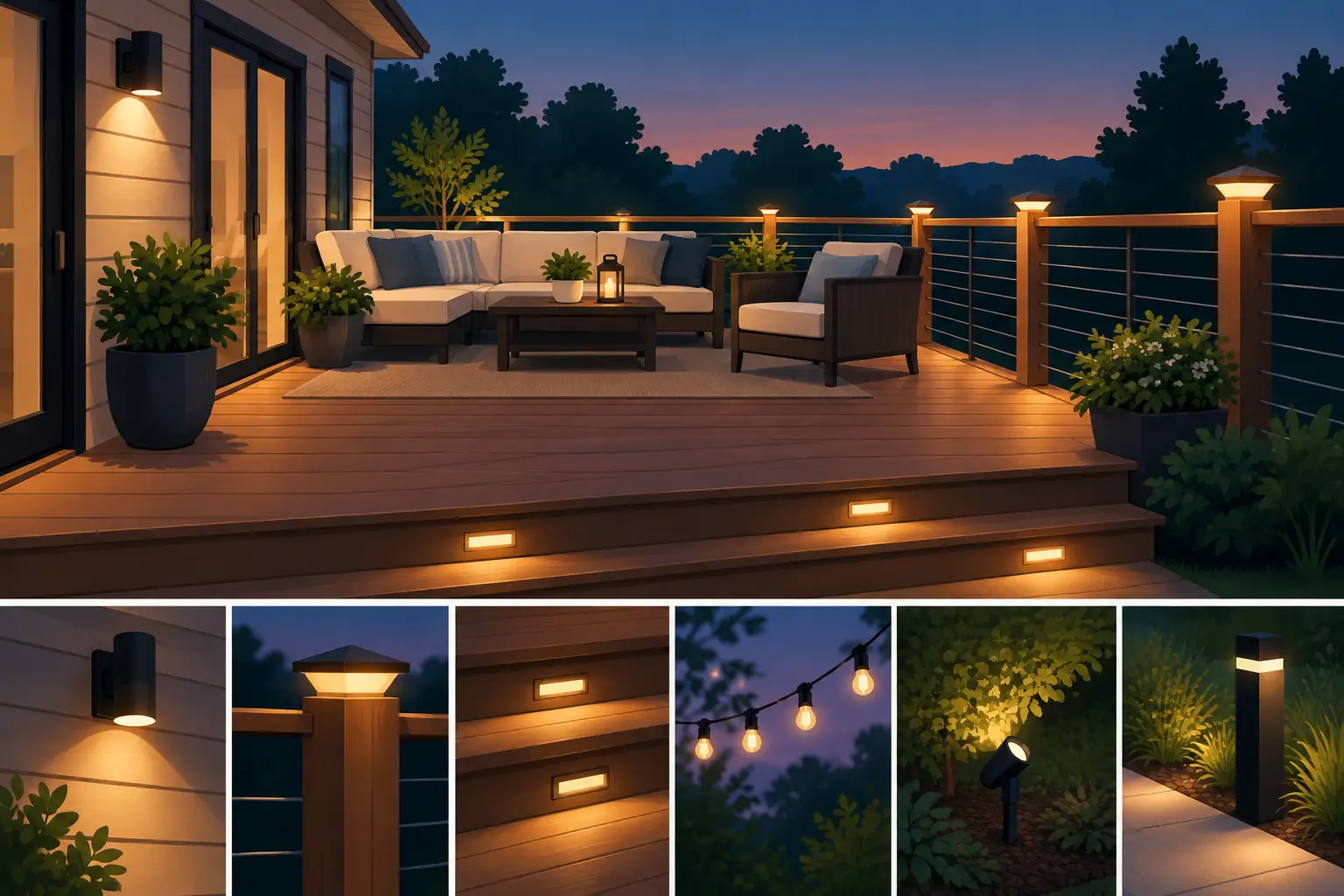
A deck can look beautifully built at 4 p.m. and become a space your family avoids by 9 p.m. The best deck lighting ideas solve that problem without turning your backyard into a stadium. Well-planned lighting makes steps easier to see, defines the deck’s edges, creates a welcoming setting for guests, and lets you enjoy the outdoor space long after sunset.
For homeowners in Maryland and the Washington, DC area, deck lighting also needs to stand up to humid summers, freezing nights, rain, and regular use. The right plan is not simply about adding more fixtures. It is about placing durable, low-voltage lighting where it improves safety and atmosphere most.
Best Deck Lighting Ideas for Safety and Style
1. Light every stair tread
Stair lighting is one of the smartest places to begin. Low-profile lights installed in the risers or along the stair stringers make each step visible without shining directly into someone’s eyes. This is especially valuable when children, older relatives, or guests are moving between the house and yard after dark.
Warm white LEDs usually give stairs a more inviting appearance than bright, cool white bulbs. Placement matters more than intensity. A soft, even glow on every step is safer and more attractive than one powerful fixture at the top of the stairs.
2. Add post cap lights around the perimeter
Post cap lights are a classic choice for deck railings because they bring a finished look to a practical feature. Installed on top of railing posts, they outline the deck’s footprint and add gentle light around seating, dining, and grilling areas.
They work particularly well on larger decks with several corners or level changes. Choose caps designed for your specific post size and material so they look integrated rather than added as an afterthought. Solar options can be convenient, but wired low-voltage fixtures are generally more reliable through cloudy stretches, winter weather, and shaded backyards.
3. Use recessed lights in the deck surface
Recessed deck lights sit nearly flush with the boards, making them a clean option for defining pathways, edges, and transitions between deck levels. They are useful around a dining area, near a gate, or along a walking route toward a patio or yard.
This approach is subtle, which is its strength. Recessed lights should guide movement, not compete with the view of your landscaping or the evening sky. Because these fixtures are built into the deck, careful planning before or during installation is essential. Retrofitting is possible in some cases, but coordinating the lighting with a deck replacement or new build typically produces the cleanest result.
4. Illuminate the underside of handrails
Handrail lighting offers excellent visibility while keeping fixtures largely out of sight. Small LED strips or purpose-made lights mounted under the rail cast light downward across the deck boards and stair treads. The source remains concealed, so the effect feels polished rather than harsh.
This is an especially strong choice for contemporary composite decks and cable or metal railing systems. It also helps preserve sightlines from inside the home. A properly installed system should use outdoor-rated components and protected wiring that can handle changing weather conditions.
5. Frame a built-in bench
If your deck includes built-in seating, lighting beneath the bench can make it feel intentional after sunset. The glow creates visual depth, defines the seating zone, and keeps the deck surface visible around the bench without requiring a bright overhead fixture.
Bench lighting is best used as accent lighting, not the only source of illumination. Pair it with stair lights or post caps so guests can safely move through the space. Warm, dimmable LEDs are a practical choice when the deck is used for both family dinners and quieter evenings outside.
6. Install lights on privacy screens or pergola posts
A privacy screen, pergola, or covered deck structure creates natural locations for lighting. Downward-facing fixtures on structural posts can make a dining or lounge area comfortable without the glare of a floodlight. Small sconces can also add a residential, finished appearance near a doorway or outdoor fireplace.
The trade-off is that mounted fixtures are more visible during the day. Select a finish that complements your railing, hardware, and exterior trim. Black, bronze, and dark gray are popular choices because they tend to blend well with composite decking and modern outdoor materials.
7. Make the grill area easier to use
The grill is often the most-used part of the deck after dark, yet it is frequently the least well lit. A dedicated task light near the cooking area helps you see food clearly and operate the grill safely. It should illuminate the work surface without putting a fixture directly above heat, smoke, or grease.
Avoid relying on a bright porch light from the house. It can cast shadows across the grill and leave the rest of the deck in darkness. A professional design can separate task lighting at the grill from the softer lighting used for dining and conversation.
8. Highlight the deck’s connection to the yard
Deck lighting should not stop at the railing. If stairs lead to a patio, walkway, fire pit, or garden, carry the lighting plan into those areas. Path lights and low landscape fixtures make the route easier to follow and help the entire backyard feel connected.
This is particularly effective for homeowners planning a larger outdoor living project. A deck, paver patio, retaining wall, and fire feature look more cohesive when their lighting is designed together. It also avoids the patchwork appearance that can happen when each area receives a different style of fixture years apart.
9. Use downlighting for a natural look
Downlighting from a pergola beam, mature tree, or overhead structure can create a soft moonlight effect across the deck. It provides broad coverage with fewer visible fixtures and is often more comfortable than upward-facing lights.
This option depends on the site. Trees require careful installation that protects the tree and allows for growth, while pergola lighting needs wiring that is neatly concealed and weather-rated. When done well, downlighting adds a relaxed feel that works beautifully around lounge furniture and outdoor dining tables.
10. Add color only where it earns its place
Color-changing LEDs can be fun for holidays, game days, and celebrations. They are not always the best choice for daily deck lighting. A deck with every fixture set to blue or purple can quickly feel less welcoming than a warm white design.
A balanced approach gives you warm white as the everyday setting, with optional color control for a few accent fixtures. That keeps the deck versatile while still giving your family room to personalize the space for special occasions.
11. Choose low-voltage LEDs over temporary fixes
Low-voltage LED systems are typically the best long-term choice for permanent deck lighting. They use less energy, produce less heat, and offer a long service life compared with older bulb types. With a properly sized transformer, protected connections, and quality fixtures, the system can provide dependable lighting without a tangle of extension cords or frequent replacements.
Solar lights have their place for simple, low-commitment accents. However, their performance varies based on shade, season, battery quality, and how much direct sunlight the deck receives. For a primary safety feature such as stair lighting, a hardwired or low-voltage system is usually the more dependable investment.
12. Put lighting controls where you will use them
The most attractive deck lighting will not add much value if it is inconvenient to operate. Consider a timer, photocell, dimmer, or smart control that lets you adjust lighting from indoors. Separating zones is also helpful. You may want stair and pathway lights on every evening, while pergola lights and bench accents come on only when you are entertaining.
Controls should match how your household uses the space. Families who regularly come home after dark may prioritize automatic safety lighting. Homeowners who host often may prefer dimming and scene controls that shift from dinner to late-night conversation.
Plan the Lighting Before Building or Rebuilding a Deck
The best time to plan deck lighting is before construction begins. Wiring can be hidden inside framing, posts, railings, and steps, leaving the finished project clean and easy to maintain. It also gives you the opportunity to decide where outlets, switches, transformers, and future accessory connections should go.
If you already have a deck, do not assume you missed the opportunity. Many lighting upgrades can be added to an existing structure, although the options may be shaped by access below the deck, railing design, and the condition of the framing. An experienced contractor can help you weigh the cost of a retrofit against incorporating lighting into a larger deck renovation.
A-1 Fencing helps homeowners plan outdoor projects around the way they actually live, from durable deck materials and railings to lighting-ready features that make the space more enjoyable at night. A free in-home consult and estimate can clarify which lighting choices fit your deck, budget, and long-term plans.
The right deck lighting should make the evening feel easier: a clear step down to the yard, a comfortable place to share dinner, and a backyard your family is still happy to use when the sun goes down.