
A yard that stays wet for days after a storm is more than an inconvenience. Standing water can soften soil around a foundation, kill turf, attract mosquitoes, wash mulch into beds, and turn a patio or walkway into a slippery route. Knowing how to improve yard drainage starts with finding where the water begins, where it naturally wants to go, and what features on your property may be trapping it.
For Maryland and Washington, DC homeowners, drainage is often complicated by clay-heavy soil, mature landscaping, sloped lots, and older homes with decades of additions. A lasting solution is rarely just a load of topsoil or a drain placed in the lowest spot. It is a coordinated plan that moves water away from the house while protecting the outdoor spaces you use every day.
Start With the Source of the Water
Before selecting a drainage solution, look at the pattern after a steady rain. Is water spilling over gutters? Does a downspout empty beside the foundation? Is the lawn holding water in one low section, or does runoff rush down a slope toward a patio, gate, or basement entrance?
The source matters because different problems require different fixes. A wet area directly below a roofline may be a downspout issue. Water pooling in the center of a backyard can indicate poor grading or compacted soil. Water collecting against a retaining wall may mean the wall needs proper drainage behind it, not simply another surface drain in front of it.
Pay attention to timing as well. If puddles disappear within a few hours, the issue may be minor surface grading. If they remain for a day or longer, the soil may be too compacted to absorb water efficiently, or the area may have no workable outlet. Photos and short videos taken during rainfall can help a contractor identify the real problem during an in-home consultation.
Improve Grading to Move Water Away From the Home
Proper grading is the foundation of effective yard drainage. The ground around your home should slope away from the foundation so rainwater does not settle along the walls. Even a subtle reverse slope can send water toward the house every time it rains.
Regrading may involve adding and shaping soil, removing soil in problem areas, or adjusting the transition between the lawn, garden beds, driveway, and hardscape. The goal is not to create a dramatic slope that makes the yard difficult to enjoy. It is to create a controlled path for water that looks natural and protects the property.
This is also where a professional eye matters. Adding soil against siding, covering weep holes, or changing the grade around a deck can create new issues. A thoughtful plan accounts for the home’s existing elevations, doors, utilities, fence lines, and nearby properties.
Do Not Send Water to the Neighbor’s Yard
A drainage improvement should manage water responsibly on your property or direct it to an appropriate approved outlet. Redirecting runoff across a property line can damage a neighbor’s landscape and create avoidable disputes. Local conditions and regulations may also affect where water can be discharged.
A contractor can help determine whether a swale, buried pipe, dry well, catch basin, or another system makes sense for the available space. The best answer depends on the lot, soil, and volume of runoff, not on a one-size-fits-all product.
Control Roof Runoff First
A surprising amount of drainage trouble starts at the roof. During a heavy storm, one downspout can release a large volume of water in a small area. If that water lands near a foundation, fence post, patio edge, or walkway, it can saturate the soil and cause erosion.
Clean, properly sized gutters and correctly positioned downspouts are the first line of defense. From there, extensions or underground drain lines can carry water farther from the house. Underground systems should have enough slope to function properly and should end where the water can safely disperse.
Avoid the temptation to bury a downspout line without a clear outlet. A pipe that has nowhere effective to discharge may hold water, clog with debris, or simply move the pooling problem farther into the yard. In some cases, a pop-up emitter, dry well, or carefully designed drainage area is a better fit than a direct outlet.
Use Swales and Drains Where They Belong
A swale is a shallow, gently sloped channel designed to guide surface water through a yard. It can be grassed, planted, or integrated into landscaping so it does not look like a trench. Swales work especially well when a property has a natural downhill direction and enough open space to guide water away from the house.
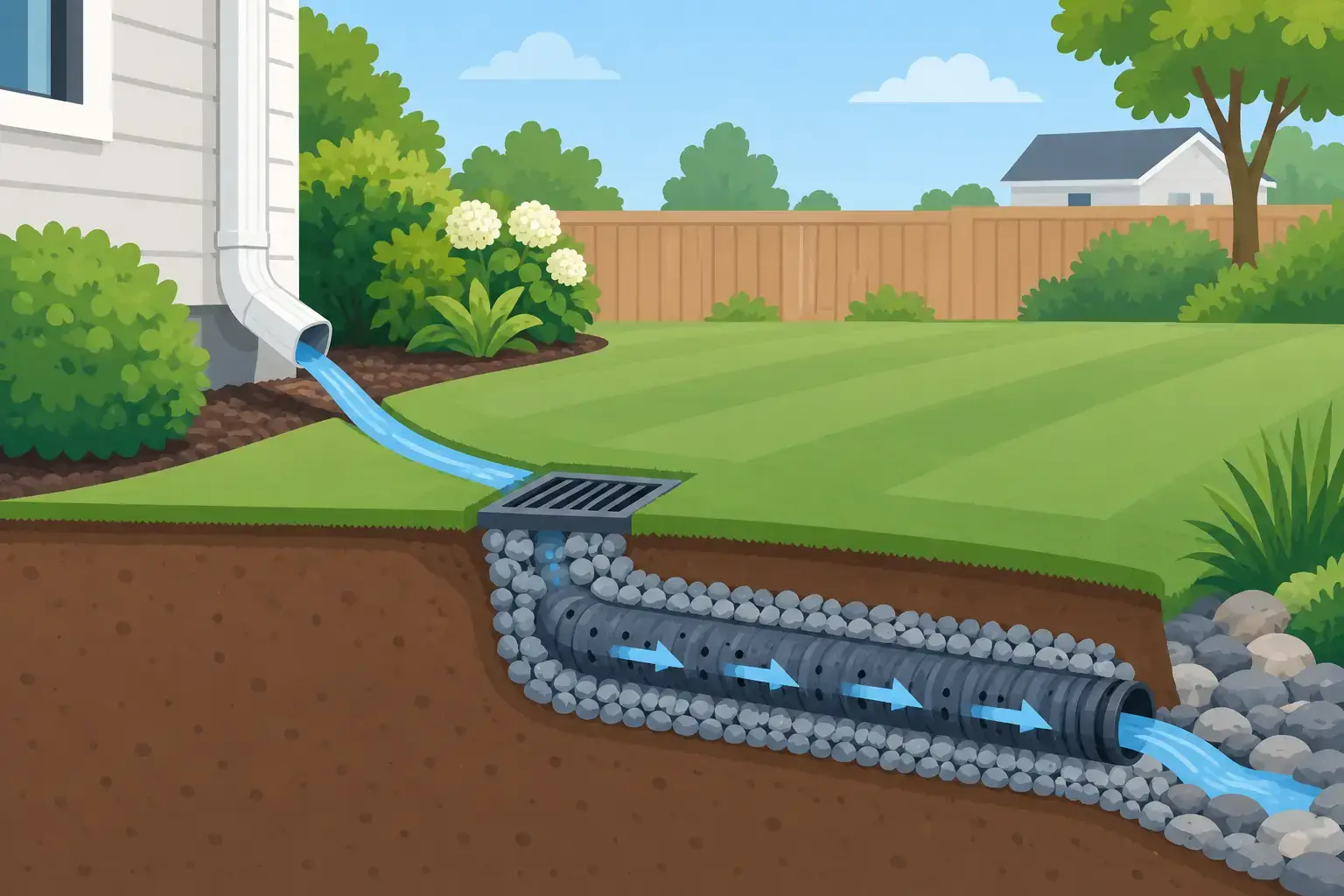
French drains and other subsurface drainage systems are useful when water is collecting below the surface or when a low area needs help drying out. Typically, these systems use perforated pipe surrounded by clean stone and wrapped in filter fabric. Water enters the system through the stone and pipe, then travels toward a discharge point.
Surface drains, such as catch basins or channel drains, are often the right choice for concentrated runoff on patios, at the bottom of steps, beside driveways, or near basement walkouts. They can collect water quickly, but they need regular cleaning and must be installed at the correct elevation. A drain installed too high will leave standing water behind. A drain without a reliable outlet will not solve the underlying issue.
Plan Patios, Walkways, and Retaining Walls With Drainage in Mind
Hardscape projects can improve drainage or make it worse, depending on how they are designed. A new patio should slope away from the home and direct water to a suitable collection or drainage area. Walkways should not create a dam that traps water against a lawn or foundation. The right base preparation and edge details help prevent shifting, puddling, and washout over time.
Retaining walls require special attention. Soil behind a wall holds water, and saturated soil creates pressure that can push, crack, or lean a poorly built wall. Quality retaining wall construction includes a compacted base, drainage stone, a proper outlet, and, when needed, drain pipe behind the wall.
This is one advantage of working with a contractor who understands both drainage and exterior construction. The grading, patio elevation, wall drainage, and surrounding landscape should work together. Treating each feature as a separate project can lead to costly rework later.
Consider the Limits of Soil and Landscaping
Compacted clay soil is common in this region and drains slowly. Aeration, soil improvement, and carefully selected plantings can help in mildly wet areas, but they will not overcome a major grading problem or an undersized drainage system. Likewise, decorative river rock may look attractive, but it does not remove water unless the area beneath it is properly shaped and connected to a drainage plan.
Rain gardens can be a beautiful option for appropriate locations. They use water-tolerant plants and amended soil to temporarily hold and absorb runoff. However, they need to be placed far enough from the house and designed for the site’s actual drainage conditions. They are not a substitute for correcting water that is pooling against a foundation.
Know When a Professional Drainage Plan Is Worth It
Homeowners should bring in an experienced contractor when water reaches the foundation, enters a basement or crawlspace, undermines hardscape, repeatedly kills grass, or causes erosion around a fence or retaining wall. These are signs that the issue may affect more than appearance.
A professional assessment should consider the entire property, including roof runoff, existing slopes, soil conditions, drainage paths, utilities, fences, walls, patios, and access for installation. It should also explain the trade-offs. A simple regrading project may be enough for one yard, while another may require grading plus a buried drain system to deliver dependable results.
At A-1 Fencing, we approach exterior projects with the same care we bring to award-winning fences, patios, walkways, and retaining walls: protect the property first, then build an outdoor space that looks great and lasts. A free in-home consult and estimate can help you understand the practical options before water damage becomes a larger repair.
The right drainage solution should disappear into the way your yard works. After the next hard rain, you should see water moving where it belongs, your outdoor spaces drying faster, and your home resting on firmer ground.