
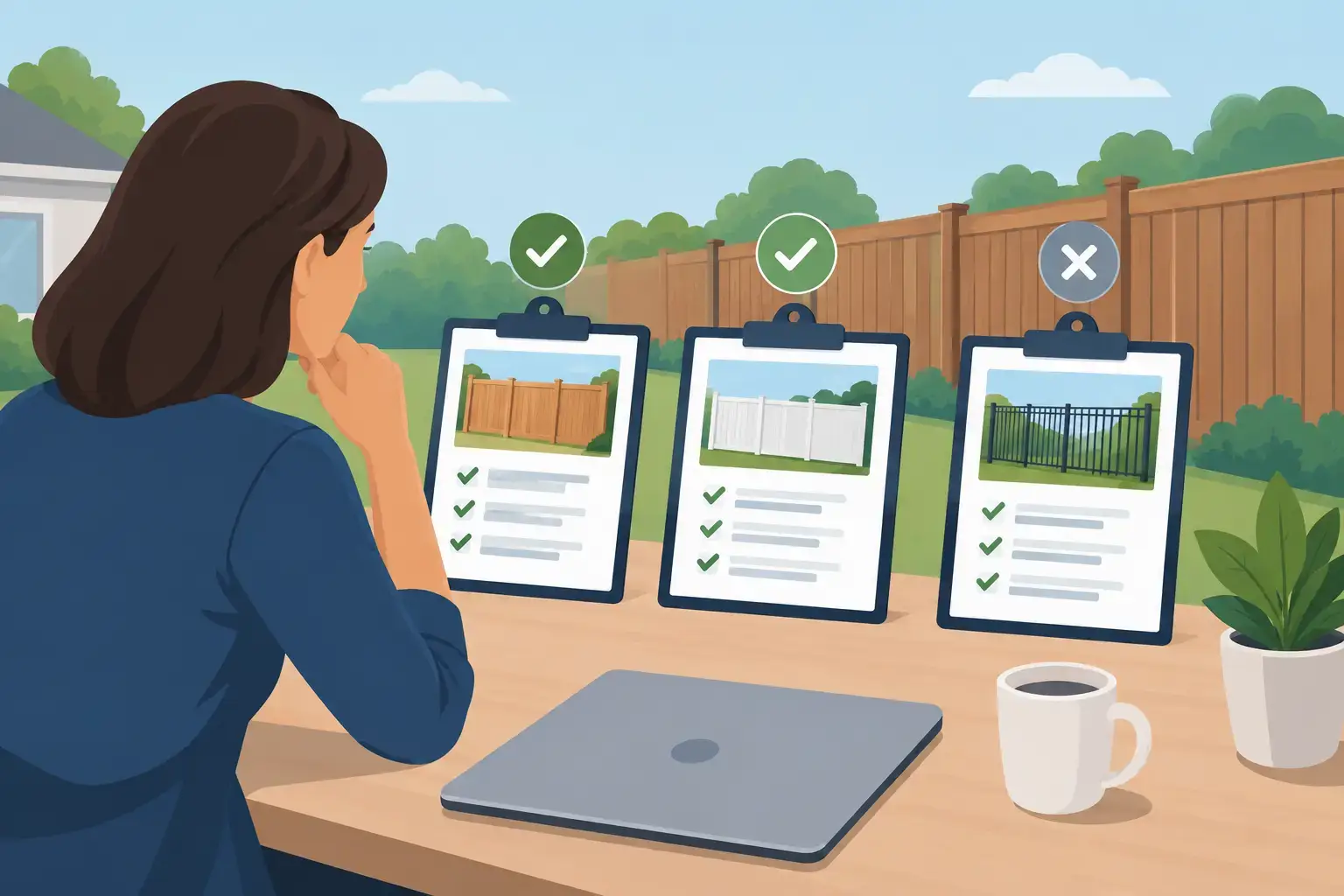
A fence quote can look straightforward until you place two estimates side by side. One contractor may be thousands less, yet the proposals appear to describe the same privacy fence. The difference is often hidden in the details: thinner materials, fewer gates, lower-grade posts, missing removal costs, or a scope of work that leaves room for expensive surprises later.
Knowing how to evaluate fence quotes helps you make a confident investment in your Maryland or Washington, DC property. The right proposal should give you more than a price. It should show exactly what will be built, what materials will be used, who is responsible for each part of the job, and how the finished fence is expected to perform over time.
Start by Comparing the Scope of Work
Before comparing totals, compare what each contractor is actually proposing. A quote should clearly identify the fence style, total linear footage, height, number of gates, and the areas where the fence will be installed. If one estimate says “install 6-foot vinyl fence” and another identifies the style, color, manufacturer, gate sizes, post locations, and removal of existing fencing, they are not equivalent quotes.
Pay particular attention to gates. Gates require additional posts, hardware, framing, and labor, so they can meaningfully affect the price. The same is true for corners, changes in elevation, retaining wall transitions, and difficult access to the backyard. A contractor who visits the property and accounts for these conditions upfront is less likely to need to revise the price once work begins.
Ask whether the quote includes removal and disposal of an existing fence, demolition of concrete footings, hauling, cleanup, and final grading around posts. These items may be included in one proposal and excluded from another. A lower quote is not a better value if it leaves you arranging disposal or paying a change order after the project starts.
Look Closely at Materials, Not Just the Fence Type
“Wood fence,” “vinyl fence,” and “aluminum fence” are broad descriptions. Quality can vary significantly within every category. A clear quote should state the material brand or product line, style, color when applicable, post size, rail configuration, and hardware.
For wood fencing, ask about the species, board thickness, rail size, pressure treatment, and whether posts are set in concrete. Cedar, pressure-treated pine, and other wood options have different appearances, maintenance needs, and price points. A well-built wood fence can provide excellent privacy and character, but it needs properly sized posts and thoughtful installation to stand up to seasonal moisture and temperature changes.
For vinyl fencing, check the wall thickness, reinforcement requirements, gate construction, and manufacturer warranty. Vinyl can be a low-maintenance choice for families who want lasting privacy without staining or painting, but a lower-quality product may be more prone to movement, sagging gates, or fading over time.
For aluminum fencing, confirm the grade, rail design, spacing, rackability for slopes, and gate hardware. Aluminum is often a smart fit around pools, pets, and landscaped yards because it offers visibility with security. It also needs to be selected and installed for the contours of your property rather than forced into uneven terrain.
Recognized manufacturers and high-quality materials typically cost more at the beginning. That does not automatically make them the right choice for every project, but it gives you a clearer basis for comparing long-term value. A contractor should be able to explain why a recommended material fits your goals, budget, and maintenance preferences.
Understand What the Installation Method Includes
A fence is only as dependable as the installation behind it. Quotes should explain enough about the construction method that you can understand what you are paying for.
For example, post depth matters. In the DC metro area, fence posts must be installed with local ground conditions, frost movement, drainage, and fence height in mind. A proposal does not need to read like an engineering report, but the contractor should be prepared to explain how posts will be set and how they will support gates, corners, and long runs of fencing.
Ask how the crew handles slopes. Some fences can be racked to follow the grade; others are stepped in sections. Neither approach is always better. The best choice depends on the material, the amount of elevation change, privacy needs, and the look you want from the street and backyard.
Also ask how the contractor protects landscaping, irrigation lines, patios, and other improvements near the fence line. Professional installation includes planning for the property you already enjoy, not treating the yard as an empty construction site.
Compare Allowances and Possible Extra Costs
A detailed quote should distinguish between firm pricing and allowances. An allowance is an estimated amount for an item that may change once conditions are confirmed. This can be reasonable for unknowns such as buried concrete, inaccessible areas, or unusual site conditions, but it should be clearly explained.
Do not be afraid to ask, “What could cause this price to change?” A trustworthy contractor will answer directly. Common variables include utility conflicts, rock or old footings below grade, permit requirements, property-line changes, unexpected removal work, and requests made after the project is underway.
You should also confirm who is responsible for permits, utility marking, HOA documentation, and property-line verification. Contractors can often assist with these steps, but homeowners may still need to provide a survey or obtain association approval. Establishing responsibility before scheduling prevents delays and misunderstandings.
Evaluate the Contractor Behind the Quote
The proposal matters, but the company issuing it matters just as much. Fence installation affects your home’s appearance, security, and resale appeal. It is not a job to award solely to the lowest bidder.
Look for a contractor with an established local presence, appropriate licensing and insurance, a portfolio of completed work, and a reputation for communication. Ask whether the company uses its own trained crews or relies entirely on subcontractors. There is no single answer that fits every business model, but you should know who will be on your property and who will be accountable if a concern arises.
Review the warranty carefully. Material warranties usually come from the manufacturer, while workmanship warranties come from the installer. A strong material warranty does little good if the fence was poorly installed, and a workmanship promise is more meaningful when it comes from a local contractor that plans to be available for years to come.
Homeowners should also consider the estimate experience itself. Was the contractor punctual? Did they measure carefully, listen to your priorities, and explain options without pressure? Those early interactions often reflect how the project will be managed after you sign.
How to Evaluate Fence Quotes for True Value
The best quote is rarely the cheapest and is not always the highest. It is the proposal that gives you the clearest path to a well-built fence with few surprises. When comparing quotes, look for an apples-to-apples scope, specified materials, complete installation details, realistic scheduling, transparent exclusions, and a contractor you trust to stand behind the work.
Price still matters. A responsible contractor should provide competitive upfront pricing and explain the factors behind the investment. If one proposal is substantially lower, ask why. It may be a legitimate difference in material choice or a simpler installation method. It may also signal missing work, lower-grade components, inadequate insurance, or a quote designed to get in the door before added costs appear.
Financing can also be part of a sensible decision for a larger project. It may allow you to choose the material or design that better serves your family without compromising the installation quality needed for long-term performance. The goal is not to spend more for the sake of it. The goal is to choose a fence that fits your property and remains dependable season after season.
Ask These Questions Before You Sign
A final conversation can reveal whether a quote is complete. Ask the contractor to confirm the exact fence product, linear footage, gate count, post installation method, removal plan, projected start date, payment schedule, warranty, and any items excluded from the price. If the answers are vague, request the details in writing before moving forward.
At A-1 Fencing, a free in-home consult and estimate is designed to give homeowners that clarity before construction begins. A careful review of your yard, goals, and material options makes it easier to plan a fence that adds privacy, safety, curb appeal, or a better boundary for the way your family uses the outdoors.
A good fence quote should leave you feeling informed, not rushed. Choose the contractor who is willing to explain the work, respect your property, and build a solution you will be glad to see from your window for years to come.