
A deck should feel like an extension of your home, not an area where you hesitate to let children play or guests gather. The right deck railing systems provide the safety your family needs while giving the entire outdoor space a finished, intentional look. For homeowners across Maryland and Washington, DC, the best choice comes down to more than color or price. It needs to fit the deck’s structure, the property’s style, local requirements, and how you plan to use the space for years ahead.
What a Deck Railing System Needs to Do
A railing is a safety barrier first. It helps prevent falls from elevated decks, secures stairs, and creates a clear boundary around gathering areas. Yet it also has a major effect on the character of your outdoor living space. A traditional wood railing can complement a classic Colonial home, while slim black aluminum rails can give a composite deck a cleaner, more contemporary appearance.
A complete system includes posts, rails, balusters or infill, mounting hardware, and often post caps or lighting. Those components need to work together. A beautiful infill option will not make up for undersized posts, weak connections, or an aging deck frame that cannot support the new installation properly.
That is why a professional review should start with the existing deck itself. If the framing, ledger attachment, stairs, or footings need attention, addressing those conditions before a railing upgrade protects your investment and helps avoid costly rework later.
Choosing Deck Railing Systems by Material
Material selection is where homeowners balance maintenance, appearance, cost, and long-term durability. There is no single best material for every property. The right fit depends on your home, your deck surface, exposure to weather, and the amount of upkeep you want to take on.
Pressure-Treated and Cedar Wood
Wood railings offer a familiar appearance and can be painted or stained to coordinate with the home. They are often a practical option for traditional decks and projects where budget is a primary consideration. Wood also allows for custom details that may be difficult to achieve with prefabricated systems.
The trade-off is maintenance. Maryland’s humid summers, rain, snow, and seasonal temperature changes can lead to fading, splitting, moisture damage, and loose fasteners if wood is not maintained. Regular sealing or staining is part of owning a wood railing, especially on an exposed deck.
Composite Railing
Composite railing is a strong choice for homeowners who want a polished look with less routine maintenance. It pairs naturally with composite decking from recognized brands such as Trex and TimberTech, creating a coordinated outdoor living area. Many composite systems offer multiple colors, post sleeves, top rail profiles, and lighting options.
Composite railing generally costs more upfront than basic wood, but it can reduce the time and expense of refinishing over the life of the deck. It is especially appealing for busy families who would rather spend weekends enjoying their deck than sanding and staining it.
Vinyl Railing
Vinyl railing provides a clean, bright finish and is easy to maintain. It does not require painting or staining, and it works particularly well with homes that already have vinyl fencing, trim, or siding. White remains a popular choice, though some systems offer additional color options.
Before choosing vinyl, consider its style carefully. It can be an excellent fit for a traditional or coastal-inspired property, but it may not deliver the visual weight or design flexibility that some higher-end deck projects call for. Quality also matters. Thin, lower-grade vinyl can become brittle over time, especially through repeated seasonal changes.
Aluminum Railing
Aluminum railing combines a slim profile with excellent durability. Powder-coated finishes resist corrosion, and the open design preserves more of the view into a yard, garden, or wooded property. Black aluminum is especially popular because it creates definition without visually closing in the deck.
This material works well on modern homes, low-maintenance composite decks, and properties where sightlines matter. Aluminum typically has a higher initial cost than a basic wood railing, but its long service life and low upkeep can make it a smart value. It also pairs well with gates, lighting, and other exterior metal accents.
Cable and Glass Infill
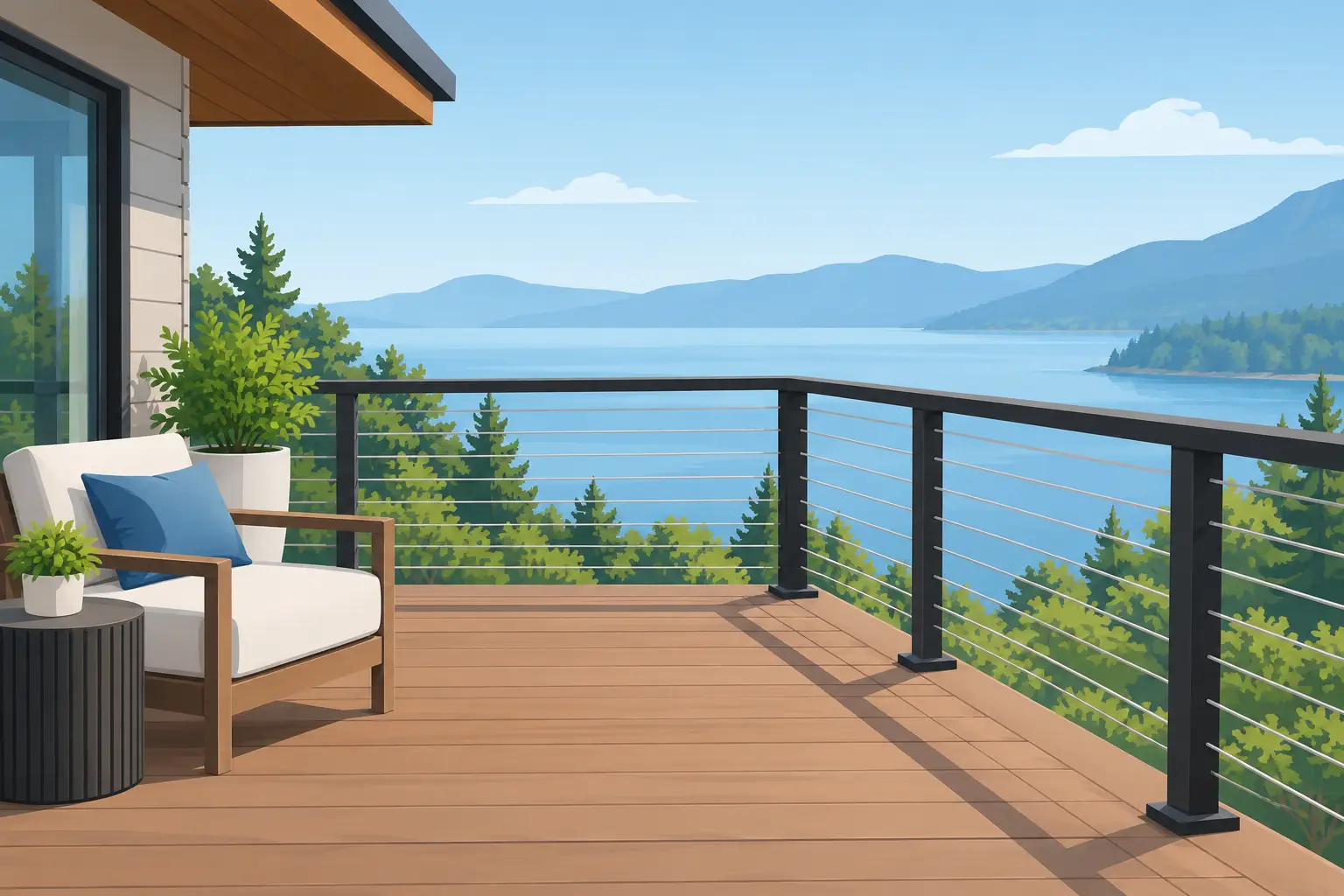
For decks with a view, cable or glass infill may be worth considering. Horizontal cable creates a minimal, contemporary look, while glass panels offer the clearest possible view and a strong wind barrier. Both can make a smaller deck feel more open.
These options require careful planning and precise installation. Cable tension must be maintained, and some layouts may not be suitable for young children because horizontal lines can invite climbing. Glass needs regular cleaning to keep it looking its best, and the posts supporting it must be engineered for the added load. These systems are design-forward choices, but they are not always the most practical or economical option.
Safety and Code Requirements Come First
Railing requirements are not details to leave until the end of the project. Residential decks commonly require guardrails once the deck surface reaches a certain height above grade, and rail height, baluster spacing, stair handrails, and post attachment methods are regulated. Requirements can vary by municipality and may change based on the property and deck design.
For example, the space between balusters must be small enough to protect children, and stair handrails need to be positioned for a secure grip. The railing must also withstand force applied against it. A system that feels loose when someone leans on it is not merely inconvenient. It is a safety concern.
A knowledgeable contractor will help determine what is needed for your location, pull permits when required, and build the railing to the applicable standards. This is particularly valuable for homeowners in Montgomery County, Howard County, and Northwest DC, where property conditions and local review processes can differ from one neighborhood to the next.
Design Details That Make the Railing Feel Custom
The railing should support the home’s architecture rather than compete with it. On a brick home with a traditional facade, a white composite railing or a well-crafted wood profile may feel right at home. On a newer property with dark trim and a modern deck, black aluminum posts and rails may create the stronger match.
Color contrast is another important decision. A railing that closely matches the deck boards creates a unified, softer appearance. A contrasting railing draws the eye to the deck perimeter and can make the space feel more defined. Neither approach is wrong. The best option depends on whether you want the deck surface, the railing, or the surrounding view to take center stage.
Post caps and lighting can add function without overcomplicating the design. Low-voltage post-cap lights improve visibility for evening gatherings and make stairs easier to navigate. A matching gate can also be valuable where a deck opens toward a pool area, a set of exterior stairs, or a yard used by children and pets.
Why Professional Installation Protects the Project
A railing project can look straightforward from the yard, but the structural details matter. Posts need to be correctly anchored to framing, fasteners need to be compatible with the selected materials, and every stair section must be laid out accurately. Poor installation often shows up later as wobbling posts, uneven baluster spacing, water intrusion, or a railing that fails inspection.
Professional installation also helps you avoid a mismatched result. A deck may have older boards, unusual stair angles, or structural limitations that affect which system is appropriate. An experienced design-and-build contractor can recommend a solution that works with the deck you have, or explain when repairs or a broader deck upgrade should come first.
A-1 Fencing approaches exterior projects with that full-property perspective. Whether the goal is a safer set of deck stairs, a low-maintenance composite railing, or a complete outdoor living renovation, homeowners benefit from clear recommendations, quality materials, and workmanship that respects their property.
Plan for the Years You Will Use the Deck
The least expensive railing is not always the best value. A wood system may suit a short-term budget, while aluminum or composite may make more sense for homeowners planning to stay in the home and minimize maintenance. Consider sun exposure, nearby trees, the amount of foot traffic, and whether the deck will host frequent gatherings. Those everyday realities should guide the decision as much as appearance.
A free in-home consult and estimate gives you the opportunity to compare options against your actual deck, not a showroom sample. With the right railing in place, your deck becomes a safer, more comfortable place to share meals, watch children play, and enjoy the outdoors season after season.