
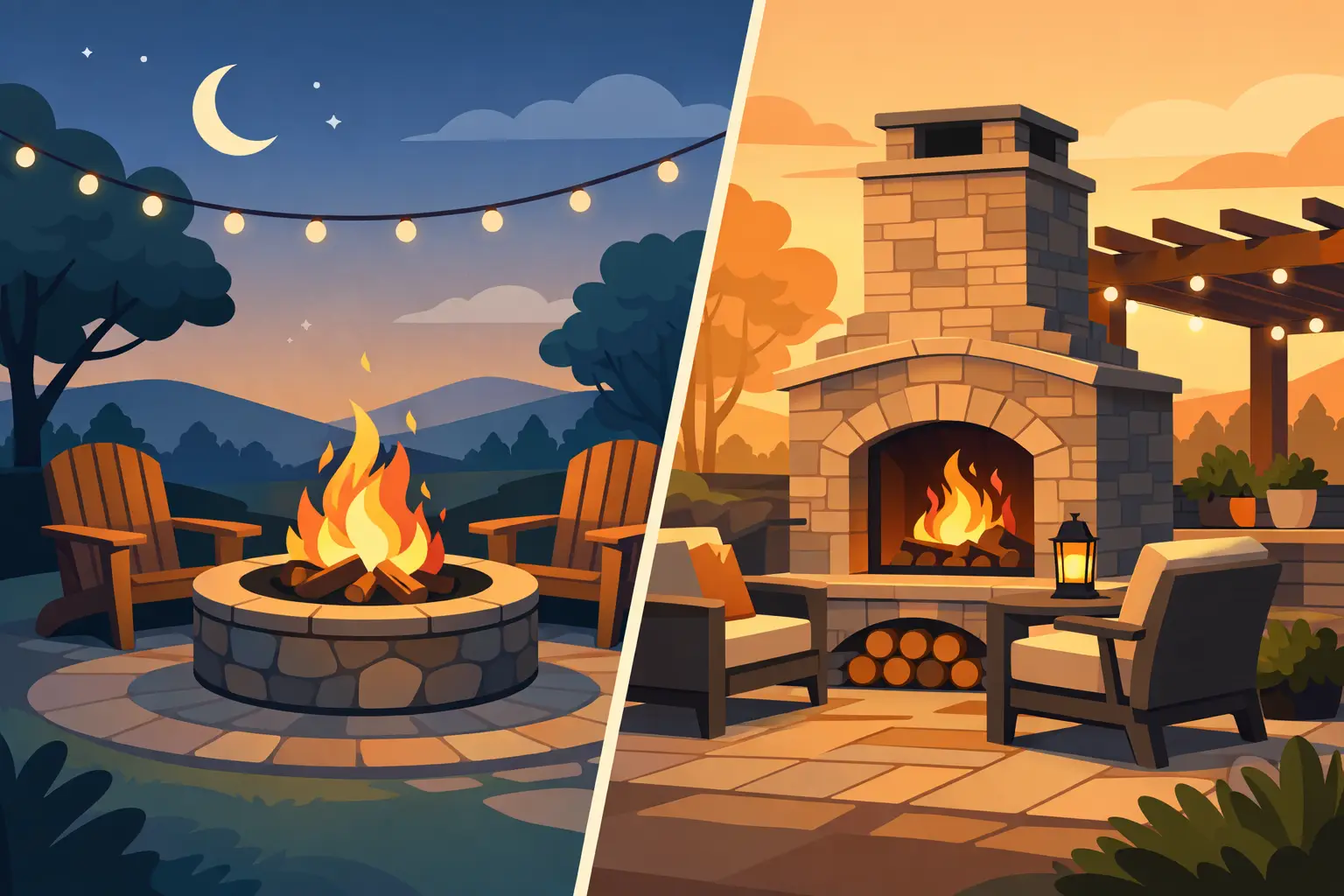
A fire feature changes how a Maryland backyard gets used. It turns a patio into the place where family lingers after dinner, friends gather on cool fall nights, and a quiet evening outdoors feels like part of home. When comparing a fire pit vs outdoor fireplace, the right choice comes down to more than appearance. Your available space, seating needs, budget, maintenance expectations, and overall outdoor living plan all matter.
A fire pit creates an open, social gathering point. An outdoor fireplace brings structure, warmth, and a more defined destination to the yard. Both can add lasting value and enjoyment when they are designed around your property rather than added as an afterthought.
Fire Pit vs Outdoor Fireplace: The Biggest Differences
The most visible difference is how people gather around each feature. A fire pit is low and open, allowing guests to sit in a circle and enjoy the fire from every side. It naturally suits conversation, roasting marshmallows with the kids, and flexible seating on a patio, paver area, or dedicated gravel base.
An outdoor fireplace is taller, more architectural, and directional. It has a firebox, chimney, and a front-facing design, so seating is typically arranged in front of it. That layout can make a larger patio feel more purposeful and more like an outdoor room, especially when paired with a seating wall, dining area, pergola, or outdoor kitchen.
Heat behaves differently, too. A fire pit shares heat around its full perimeter, although wind and open exposure can affect comfort. A fireplace directs more heat outward from its front opening and offers a stronger visual and physical wind break. For homeowners who want a defined seating zone beside the house or at the end of a patio, that can be a major advantage.
When a Fire Pit Is the Better Choice
A fire pit is often the better fit for homeowners who want a relaxed gathering area without making the fire feature the dominant structure in the yard. It works particularly well in open patios where there is room for chairs on all sides and a clear, safe path around the feature.
Because it is lower in profile, a fire pit can preserve views across the yard and keep a smaller space from feeling crowded. A well-built masonry fire pit can also blend naturally with a new paver patio, retaining wall, walkway, or landscape border. The materials can be coordinated so the feature looks built into the property, not placed on top of it.
For a family that regularly hosts neighbors, a circular or square fire pit with a permanent seat wall often provides the most usable seating. Guests can spread out, children can sit close to parents, and the fire stays at the center of the group. Gas fire pits offer quick, clean operation, while wood-burning designs provide the familiar crackle and aroma many homeowners prefer.
A fire pit may be the more cost-conscious choice, but price should not be the only deciding factor. Proper base preparation, drainage, quality pavers or stone, safe clearances, and a professionally installed gas line all affect the final investment. A low price is not a value if the feature settles, cracks, or creates drainage problems after a few seasons.
When an Outdoor Fireplace Makes More Sense
An outdoor fireplace is ideal when you want a stronger architectural statement and a dedicated outdoor living area. It can anchor a large patio, create privacy from a neighboring property, or provide a natural focal point at the edge of a deck or pool area.
Many homeowners choose a fireplace when their yard has an expansive layout or when they are completing several upgrades at once. If you are adding a patio, retaining walls, fencing, lighting, and planting areas, a fireplace can tie the entire design together. Its height makes it feel permanent and substantial, similar to an indoor hearth extended into the backyard.
A fireplace also suits homeowners who value a more contained fire experience. The fire is enclosed on three sides, smoke is directed upward through the chimney, and the structure can offer added wind protection. This does not eliminate the need for safe placement and proper design, but it can make the area more comfortable when the temperature drops.
The trade-off is that an outdoor fireplace generally requires more space, more materials, and a larger budget than a fire pit. It needs a substantial foundation, thoughtful chimney design, and careful positioning away from structures, trees, utilities, and property boundaries. In Montgomery County, Howard County, and the Washington, DC area, local rules and site conditions can also influence what is practical for a specific property.
Consider Your Patio Layout Before Choosing
The best fire feature is one that fits the way you actually use your yard. A fire pit needs room around it. Chairs should not be squeezed against the edge of the patio, and guests should be able to move safely without crossing through the seating area. If a patio is already tight, forcing a fire pit into the center can make the space less functional.
A fireplace needs visual breathing room. Its scale should match the patio and home, rather than overpowering a narrow yard or blocking a valuable view. On a larger property, it can define a destination area away from the house. On a smaller lot, a compact fireplace may work best along one edge of the patio, provided there is enough space for safe seating in front.
Think about the rest of the outdoor plan as well. If your priority is a large dining table, grilling station, or room for children to play, a fire pit may offer more flexibility. If you want the feeling of an outdoor lounge with built-in seating and a permanent focal point, a fireplace may deserve more of the footprint.
Fuel, Maintenance, and Everyday Use
Both fire pits and fireplaces can be wood-burning or gas-fired, and each fuel choice affects how the feature feels day to day. Wood offers a traditional campfire experience, but it requires wood storage, ash cleanup, and attention to smoke. Gas provides reliable ignition and easier cleanup, making it especially appealing for homeowners who want to enjoy a fire on a weeknight without setup.
For gas features, professional installation is essential. The gas line, burner system, controls, ventilation requirements, and finish materials should be selected and installed correctly for dependable operation. A quality installation protects your investment and helps avoid the frustration of an attractive feature that is difficult to use or maintain.
Masonry materials also matter. Freeze-thaw cycles, moisture, and regular heat exposure can be tough on outdoor construction in Maryland. High-quality stone, block, caps, pavers, and proper drainage details help a fire feature hold its appearance through changing seasons. This is one reason homeowners benefit from working with a contractor who understands both hardscape construction and the surrounding outdoor environment.
Safety and Placement Are Part of Good Design
A beautiful fire feature should never come at the expense of safety. A professional plan accounts for clearance from the home, fencing, trees, overhead branches, and combustible materials. It also considers wind patterns, access paths, drainage, and where guests will sit.
For wood-burning features, local restrictions and neighborhood conditions should be reviewed before construction. For gas features, the installation should meet applicable requirements and be coordinated with the overall patio design. If you are adding a fence, gate, or retaining wall as part of the same project, each element should work together without creating unsafe pinch points or difficult access for maintenance.
The goal is not simply to install a fire pit or fireplace. It is to create an outdoor space that feels comfortable, durable, and well planned from every angle.
Build the Fire Feature Around Your Home
There is no universal winner in the fire pit vs outdoor fireplace decision. A fire pit is often best for open, casual entertaining and flexible seating. An outdoor fireplace is often best for homeowners who want a dramatic focal point, added shelter, and a more defined outdoor room.
The strongest results come from looking at the full property – patio size, grade, drainage, fence lines, seating, materials, and how your family spends time outside. A-1 Fencing provides free in-home consults and estimates to help Maryland and DC-area homeowners plan fire features and hardscapes with the craftsmanship, materials, and careful installation their property deserves. A thoughtfully designed fire feature can make the next cool evening outside feel like exactly where you want to be.