
A fire pit can turn an underused patio into the place where family gathers after dinner, friends stay a little longer, and cool Maryland evenings feel worth savoring. But the gas versus wood firepit decision affects far more than the look of the flame. It changes how you use the space, what maintenance it requires, how the project is installed, and whether the finished area fits your everyday routine.
For many homeowners in Maryland and the Washington, DC area, the right choice comes down to a practical question: Do you want the traditional experience of a real wood fire, or the convenience of a fire feature that is ready with the turn of a key? Both can be beautiful, durable additions to a professionally designed patio. The better option is the one that suits your property, lifestyle, and plans for the rest of your outdoor living space.
Gas Versus Wood Firepit: The Everyday Difference
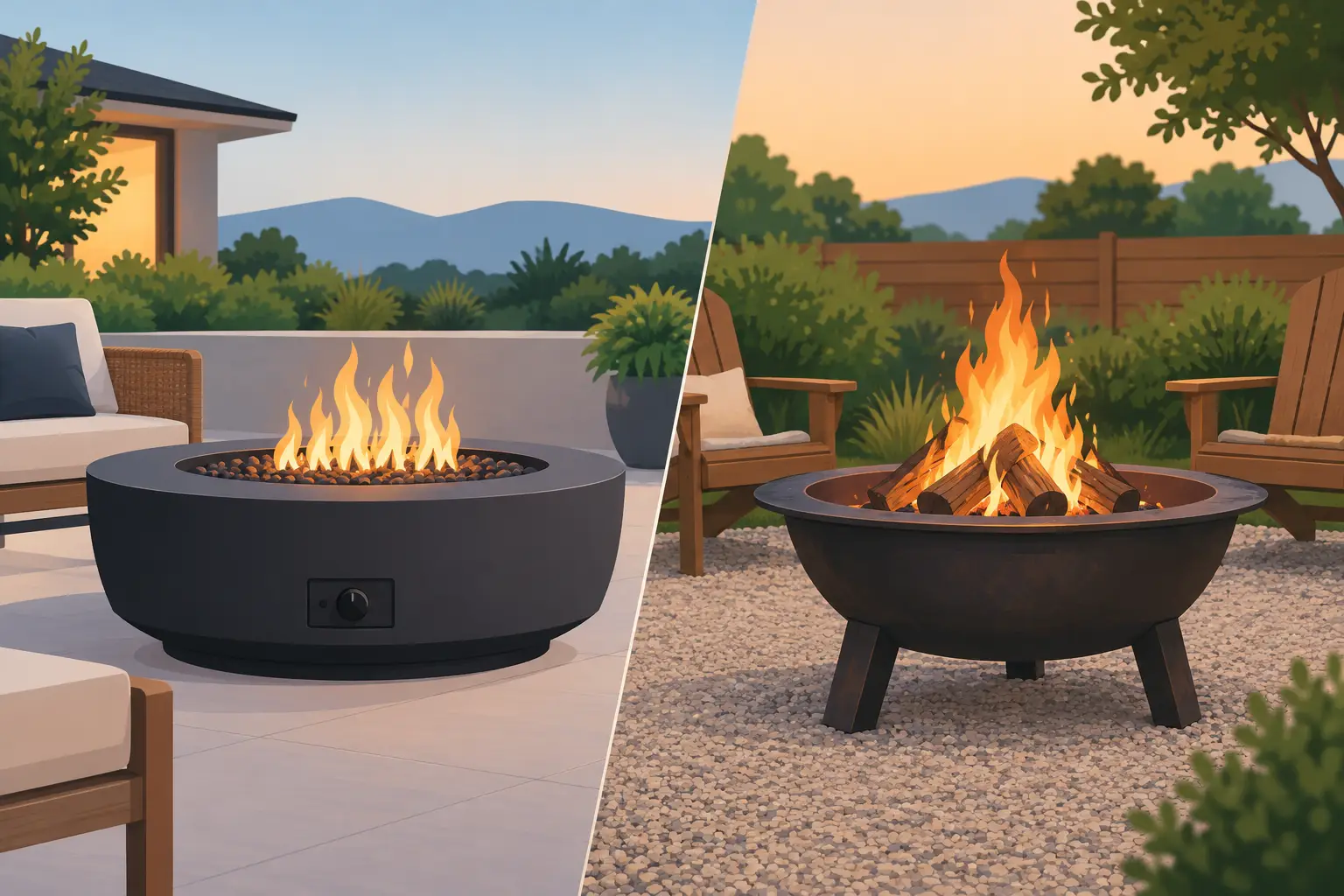
A gas fire pit is built for ease. With natural gas or propane, you can start the fire quickly, adjust the flame, and shut it off without waiting for logs to burn down. There is no woodpile to maintain, no smoke drifting toward guests, and no ash to sweep from the patio the next morning. For homeowners who expect to use a fire feature often – even for a quiet 30-minute evening outside – that convenience is a meaningful advantage.
A wood-burning fire pit delivers the familiar crackle, aroma, and larger natural flame many homeowners picture when they imagine a backyard fire. It creates a more traditional campfire setting and can be especially appealing for families who enjoy roasting marshmallows, hosting fall gatherings, and making an event of the fire itself. The trade-off is that wood fires take more preparation, produce smoke and ash, and require a responsible place to store seasoned firewood.
Neither choice is automatically better. A busy household may get far more use from a clean-burning gas feature. A family that treats fire-pit nights as a weekend tradition may feel that gas does not fully replace the character of a wood fire.
Cost Depends on More Than the Fire Pit
The upfront cost of a gas fire pit is often higher because the project may require a gas line, burner system, ignition components, and professional installation. If natural gas is available and the fire pit is part of a larger patio or outdoor fireplace project, incorporating the line during construction can make planning simpler and help create a cleaner finished design.
Propane can be an alternative where extending a natural gas line is not practical. It still provides quick ignition and flame control, although the tank must be refilled or exchanged. A built-in enclosure can conceal the tank, but it needs appropriate ventilation and access for service.
A wood-burning fire pit may have a lower initial price, particularly for a straightforward masonry or prefabricated design. However, homeowners should account for the ongoing cost of firewood, storage, and cleanup supplies. Quality construction still matters. A fire pit that is poorly placed, built without the right materials, or installed on an inadequate base can create drainage, cracking, and safety concerns that are much more expensive to address later.
The best way to compare costs is to look at the full outdoor project. A fire pit can be the centerpiece of a new paver patio, retaining wall seating area, walkway, or deck transition. Planning these elements together helps ensure the scale, traffic flow, and finished materials feel intentional rather than added on over time.
Smoke, Cleanup, and Neighborhood Comfort
Wood smoke is often the deciding factor for properties with close neighbors. Even dry firewood produces smoke, and wind direction can change quickly. If your patio sits near a fence line, neighboring deck, open windows, or a covered porch, a wood fire may be less comfortable than it sounds on paper.
Gas produces a controlled flame without the smoke, sparks, and ash associated with burning logs. That makes it an appealing choice for homeowners who want guests to enjoy the patio without smelling like a campfire afterward. It also keeps surrounding cushions, outdoor rugs, and finished hardscape surfaces cleaner.
Wood-burning pits demand regular attention after every use. Ash needs to cool completely before removal, and the fire pit should be kept clear of debris. Gas systems require less routine cleanup, but they are not maintenance-free. Burners, ignition systems, valves, and fuel connections should be inspected periodically by qualified professionals, especially before the main entertaining season.
Safety and Local Requirements Should Shape the Design
A fire feature should never be selected based on appearance alone. Clearance from the home, fences, trees, roof overhangs, and outdoor structures matters. So does the surface beneath it. A professionally planned fire pit area uses noncombustible materials, considers seating distance, and gives people a safe path around the flame.
Gas fire pits provide reliable shutoff control, which can make them easier for many homeowners to manage. Yet gas installation is not a shortcut project. Proper fuel connections, burner sizing, ventilation, and access for future service are essential. Local codes and permit requirements may apply depending on the project and fuel source.
Wood fires require greater day-of-use awareness. Never burn construction scraps, treated lumber, or other materials that can release harmful chemicals. Keep a water source or extinguisher nearby, supervise children closely, and follow any local burn restrictions. Rules can vary by jurisdiction and may change during dry conditions, so homeowners should verify current requirements before using a wood-burning feature.
Which Fire Pit Matches Your Outdoor Lifestyle?
A gas fire pit is usually the stronger fit if you want a polished, low-maintenance patio feature that can be used on short notice. It works particularly well for homeowners who entertain regularly, prefer smoke-free comfort, or want a refined focal point that complements pavers, seating walls, and landscape lighting. Its flame is consistent, controlled, and easy to enjoy without turning fire management into part of the evening.
A wood-burning fire pit is often right for homeowners who value a classic fire experience and have enough open space to use it responsibly. It can feel more relaxed and rustic, especially in a larger backyard where smoke is less likely to affect nearby homes. If building the fire, tending it, and gathering around glowing logs are part of the appeal, wood offers an atmosphere gas cannot precisely duplicate.
There is also a middle ground: a gas fire pit designed with natural stone, brick, or high-quality pavers can still feel warm and authentic. The material palette, seating layout, and lighting often have as much influence on the finished atmosphere as the fuel source itself.
Make the Fire Pit Part of a Complete Backyard Plan
The most successful fire-pit projects begin with how the space will be used, not with a catalog photo. Consider where guests will sit, where food and drinks will be placed, how people will move between the house and patio, and whether the fire feature needs to share space with a dining area, grill, pool, or play area. A fire pit that looks appropriately sized by itself may overwhelm a small patio or feel lost in a larger landscape.
Durable materials and experienced installation protect the investment. A properly prepared base, quality wall block or stone, thoughtful drainage, and careful attention to grade are especially important in the Mid-Atlantic climate, where freeze-thaw cycles and heavy rain can challenge exterior construction. The same craftsmanship that supports a long-lasting patio also supports a fire feature your family can enjoy season after season.
A-1 Fencing can help homeowners plan fire pits and broader outdoor living improvements with a free in-home consult and estimate. Whether you prefer the convenience of gas or the tradition of wood, the goal is a finished space that looks right for your home and feels easy to use from the first cool evening onward.
Before choosing, stand in the area where the fire pit may go at the time you are most likely to use it. Notice the wind, the view from inside the house, the distance to neighbors, and how people naturally move through the yard. Those details will lead you to a fire feature that does more than look good – it becomes a dependable reason to spend more time outside.