
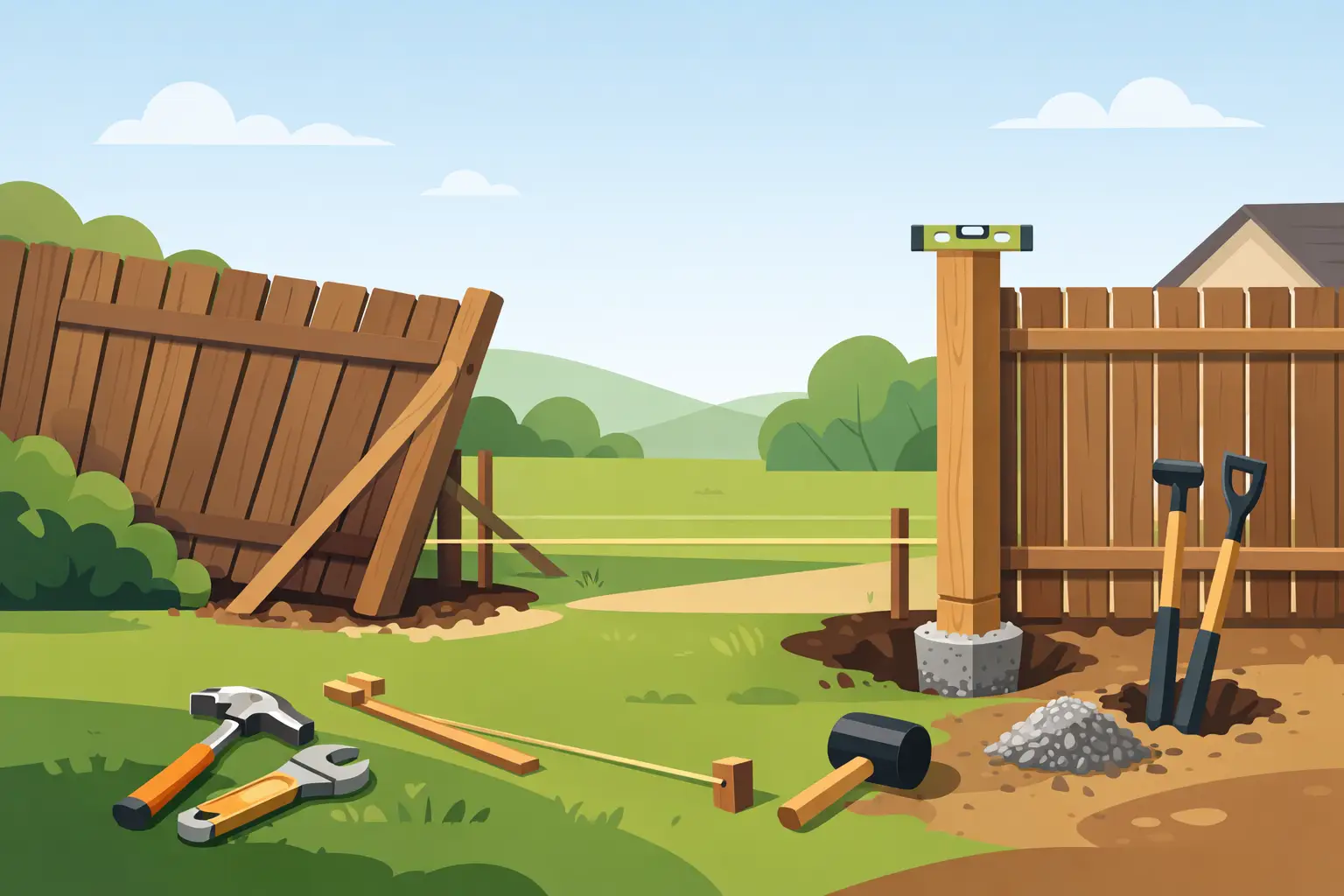
A fence rarely starts leaning overnight. It may begin with a gate that no longer latches cleanly, a section that looks slightly lower after heavy rain, or posts that move when you press on them. Left alone, that small shift can become a safety concern, weaken privacy, and take away from the appearance of an otherwise well-kept Maryland or DC-area property.
Knowing how to repair a leaning fence starts with identifying why it moved in the first place. A lasting repair is not simply pulling the fence back into place. It means correcting the failed post, footing, connection, or drainage issue that allowed the section to lean.
Why Fences Lean in the First Place
Most leaning fences trace back to a problem below ground level. Wood posts can decay where they meet the soil, especially when moisture remains trapped around the base. Concrete footings can crack, loosen, or prove too shallow for the load they support. Freeze-thaw cycles common in our region can also move soil over time and push shallow posts out of alignment.
Wind is another common factor. A solid privacy fence catches far more wind than an open picket or aluminum fence. When a storm pushes against an older fence with weakened posts or loose rails, the force may shift an entire run rather than damage only one board.
A heavy or sagging gate can create its own problem. Gate posts carry repeated weight and movement, so they often lean before the rest of the fence. On sloped yards, poor drainage, retaining wall movement, and changes in grade can also affect the stability of posts.
The material matters, too. A pressure-treated wood fence can often be repaired in sections if the structure is otherwise sound. Vinyl panels may be intact while their posts have shifted. Aluminum and steel fencing usually resist rot, but their posts can still lean if the footing fails or the ground settles.
How to Repair a Leaning Fence: Start With an Honest Assessment
Before deciding on a repair, inspect the entire fence line rather than focusing only on the section that looks uneven. A single leaning post may be a straightforward repair. Several leaning posts, widespread rot, cracked rails, or failing gates may point to a larger replacement need.
Look for soft, dark, split, or crumbling wood at the soil line. Check whether posts can be moved by hand and whether concrete around them is cracked or separated from the post. Inspect rails, fasteners, and panels for stress damage. If the fence is leaning toward a neighbor’s property, a public sidewalk, driveway, or pool area, timely professional attention is especially important.
It also helps to determine whether the fence belongs entirely to your property. Property-line fences can involve shared responsibilities, and a clear understanding before repairs begin can prevent an avoidable disagreement.
When a Post Repair Is Usually Enough
Repair is often the right choice when one or two posts have failed but the rails, panels, pickets, and neighboring posts remain in good condition. The contractor can support the fence section, remove the failed post, install a properly sized replacement, and reset the structure at the correct height and alignment.
In some cases, a post can be reinforced rather than replaced. This may work when the post itself is still solid, the lean is minor, and the issue is limited to a compromised footing or connection. Reinforcement can be a practical option, but it should not be used to disguise rot or a seriously undersized foundation.
When Replacement Makes More Sense
A repair becomes less cost-effective when deterioration affects a significant portion of the fence. If multiple posts are rotted, several panels are warped, or the fence is near the end of its expected service life, replacing a full run may provide better long-term value than repeated spot repairs.
Replacement also creates an opportunity to improve the layout. Homeowners may choose a taller privacy design, a more durable material, a better gate location, or a style that complements a new patio, retaining wall, or outdoor living area. The best decision depends on the condition of the existing fence, the scope of the issue, and your plans for the property over the next several years.
What a Lasting Professional Fence Repair Involves
A quality repair begins with stabilizing the affected section so panels and rails do not crack or pull apart during the work. The failed post is then evaluated and, when necessary, carefully removed without damaging the surrounding fence.
The new post must be set at the proper depth and plumbed precisely before it is secured. The correct footing depth depends on fence height, material, soil conditions, wind exposure, and local requirements. This is where experience matters. A post that is simply placed back in a shallow hole may look straight for a while, but it remains vulnerable to the same settlement and weather forces that caused the original problem.
Once the post is secure, the rails, panels, and gates are reattached and aligned. A professional should check the full run for consistent height and spacing, not just the repaired point. For gates, that includes confirming proper clearance, smooth operation, and reliable latch alignment.
If drainage contributed to the problem, addressing water flow should be part of the conversation. Downspouts that discharge beside fence posts, low areas that hold water, and soil that slopes toward the fence can shorten the life of even high-quality materials. Sometimes a small grading adjustment is enough. In other situations, drainage work or coordination with a retaining wall project may protect the fence and the surrounding landscape.
Avoid Temporary Fixes That Create Bigger Problems
Homeowners often try to brace a leaning fence with spare lumber, stakes, wire, or a new layer of concrete around the exposed post. These measures can provide short-term support, but they rarely resolve the cause of the lean. They may also make a future repair more complicated and leave the fence looking unfinished.
Adding concrete around a rotted wood post, for example, does not restore its strength. In fact, concrete can hold moisture against the wood and accelerate decay. Pulling a fence upright without resetting the post can place extra strain on rails, pickets, and neighboring posts.
There is also a safety consideration. A leaning fence may fail during a storm, particularly when it supports a heavy gate or encloses children, pets, or a pool area. It is worth having an experienced contractor evaluate the structure before a minor alignment issue becomes a collapsed section.
Choosing Materials for a More Durable Repair
When replacing posts or sections, material selection should reflect how the fence is used. Pressure-treated wood remains a popular choice for natural appearance and privacy, but it needs sound installation and routine maintenance to perform well over time. Cedar offers a premium look and natural resistance to decay, though it still benefits from appropriate sealing and care.
Vinyl is appealing for homeowners who want a clean, low-maintenance privacy fence, while aluminum provides an elegant, open look for yards, gardens, and pool enclosures. For each material, quality posts, reliable hardware, and proper installation are just as important as the panels you see above ground.
A well-planned repair should also account for the rest of your exterior. A fence may sit beside a patio, walkway, deck, or retaining wall, and these elements need to work together in both function and appearance. Coordinating improvements can reduce disruption to the yard and produce a more finished result.
Get Clear Answers Before Work Begins
A reputable fence contractor should explain what caused the lean, whether a repair will truly hold, and what replacement options make sense if the damage is widespread. You should receive a clear scope of work and upfront pricing rather than a vague promise to “straighten it out.”
For homeowners across Maryland and Washington, DC, A-1 Fencing provides free in-home consults and estimates for fence repair and replacement. Our family-run team approaches each property with care, recommending work that fits the condition of the fence, the needs of the household, and the long-term value of the investment.
A fence should do more than stand upright for a season. With the right repair, proper support below ground, and materials suited to your property, it can restore the privacy, security, and curb appeal your home deserves.