
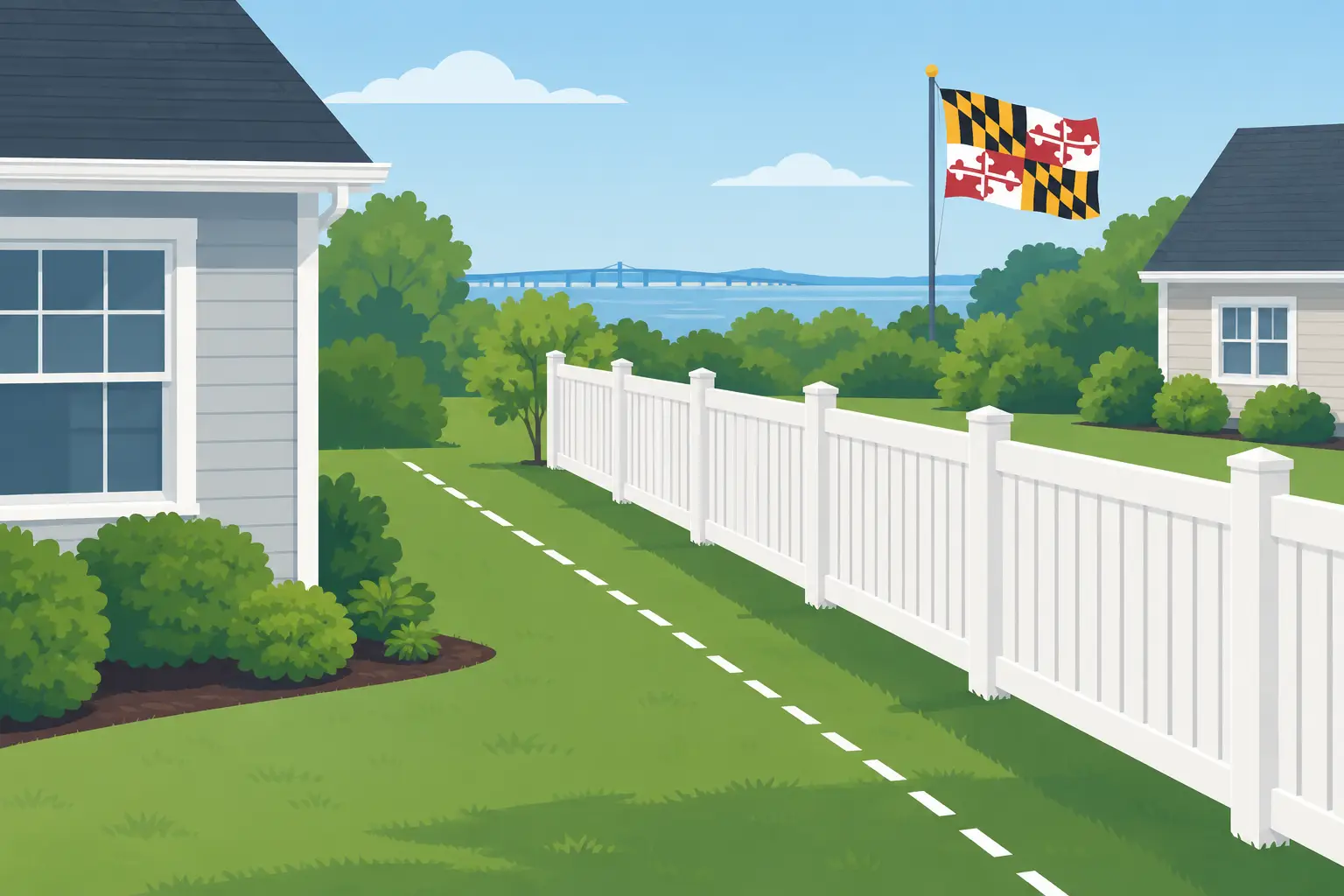
A fence can add privacy, security, curb appeal, and a safer place for children and pets to enjoy the yard. But before the first post is set, Maryland fence setback rules deserve close attention. A fence installed a few feet too far into a utility easement, public right-of-way, or neighboring property can become an expensive problem – even when the work itself is beautiful.
For Maryland homeowners, the key is understanding that there is no single setback rule that applies everywhere. Requirements can change by county, municipality, neighborhood, lot type, and fence location. A trusted contractor can help you plan the right fence, but the final responsibility for confirming property lines, permits, and local restrictions typically rests with the property owner.
Maryland Fence Setback Rules Are Local
Maryland does not use one statewide fence setback measurement for every residential property. Instead, counties and cities establish zoning and construction requirements, and some neighborhoods add another layer through homeowners associations.
In many communities, a typical backyard fence may be allowed close to the side or rear property line. That does not automatically mean it can sit directly on the line, however. Local regulations may require a small offset, limit fence height, or restrict where a fence can be placed near streets, sidewalks, drainage areas, and intersections.
Front-yard fencing is usually subject to tighter rules. A six-foot privacy fence that works well behind a home may be prohibited in the front setback area or limited to a shorter decorative style. Corner lots often have special visibility requirements, since a tall fence near an intersection can block a driver’s view of pedestrians, cyclists, and approaching vehicles.
The practical takeaway is simple: do not rely on what you see in the neighbor’s yard. Their fence may have been installed under older rules, with a variance, or without approval.
Start With the Property Line, Not the Old Fence
An existing fence is not proof of a boundary. Over the years, fences can be replaced in the same incorrect location, shifted to avoid trees, or installed before a property was subdivided. A neighbor may also have been permitted to use a portion of land without owning it.
Before planning a new installation, locate your plat or survey and look for visible property markers. If the boundary is unclear, damaged, or disputed, hiring a licensed surveyor is often the smartest investment you can make. A survey can identify the legal property line, easements, encroachments, and other conditions that are not obvious from a backyard view.
This matters most when a fence is intended to run tight to a boundary. Setting the fence slightly inside your property can provide a margin of safety and make future maintenance easier. The trade-off is that you may leave a narrow strip of land on the outside of the fence. For many homeowners, that small concession is preferable to a disagreement over a fence that must later be moved.
Talk With Your Neighbor Early
Maryland law and local ordinances are only part of the conversation. A fence can change sightlines, access, drainage patterns, and the way two households share a boundary. A quick, respectful discussion before construction prevents surprises and can help settle practical details, such as which side of the fence faces outward.
If both owners want a shared fence on the boundary, put the agreement in writing. Clarify the design, placement, cost, ownership, and future repair expectations. A verbal understanding can be difficult to rely on years later, especially after either property changes hands.
Watch for Easements and Public Rights-of-Way
A legal property line does not always give an owner unrestricted building rights. Utility easements are a common issue in Maryland neighborhoods. These designated areas allow utility companies or public agencies access to equipment, drainage systems, or underground lines.
A fence may sometimes be installed within an easement, but that is not the same as receiving permanent permission to block access. If a utility provider needs to reach its infrastructure, it may remove or require removal of the fence. Restoration costs may fall to the homeowner depending on the circumstances.
Public rights-of-way also deserve careful review. Areas near sidewalks, roads, curbs, and alleys may extend farther onto a lot than homeowners expect. In older neighborhoods and communities with irregular lots, the usable yard edge is not always where the pavement ends.
Call for utility marking before any digging begins. This is an essential safety step, but keep in mind that utility marking does not establish your property boundaries or replace a survey.
Permits, Height Limits, and HOA Approval
Permit requirements vary widely across Maryland. Some jurisdictions do not require a permit for a standard residential fence, while others require approval based on height, location, material, or whether the property is in a special zoning district. Historic areas, waterfront properties, and homes near protected resources can have added restrictions.
Fence height is one of the most common limits. Rear-yard privacy fences are often permitted at a greater height than fences in the front or side yard. Gates, retaining walls, and fence panels installed on top of a wall can also affect how height is measured. That distinction matters for sloped yards, where a fence may appear much taller from the neighboring property.
Homeowners association approval is separate from county or municipal approval. An HOA may regulate color, material, style, post caps, gate placement, and which side of a fence faces a street. Even when a county allows a fence, the HOA can still require architectural review before installation.
For a smooth project, gather these details before selecting materials or scheduling work:
- Your current plat, survey, or other boundary documentation
- County, city, or town permit requirements for your address
- HOA architectural guidelines and written approval requirements
- Easement information and visible utility locations
- Any concerns involving shared boundaries, drainage, or access
Common Setback Problems Homeowners Can Avoid
The most frustrating fence problems are usually preventable. One common mistake is measuring from a neighbor’s fence rather than from a verified boundary. Another is assuming a backyard fence can continue around a side yard without changing the applicable setback or height rules.
Corner lots create another frequent surprise. What feels like a side yard may be treated as a street-facing yard, with different limitations. A homeowner may also overlook a drainage swale, an electrical box, or an underground utility easement until installation is already underway.
Retaining walls add another layer of planning. If your new fence will sit near, on, or above a retaining wall, the project may require a different design to handle grade changes, drainage, and structural loads. This is where working with an experienced outdoor contractor can make a meaningful difference. The fence, wall, and yard should function as one complete system rather than as separate afterthoughts.
How a Professional Fence Consultation Helps
A professional consultation is not a substitute for a survey, permit office, or legal advice. It is, however, a valuable opportunity to identify questions before materials are ordered and crews arrive. An experienced installer can review the proposed layout, discuss common local challenges, recommend materials suited to your goals, and flag conditions that may require further confirmation.
For example, a homeowner may start out wanting a tall wood privacy fence along every edge of the yard. After reviewing the lot, a better solution could be a privacy fence in the rear, a lower ornamental aluminum fence near the street, and a properly placed gate for service access. The finished result can still deliver privacy and security while respecting the property’s limitations.
A-1 Fencing brings award-winning craftsmanship and a family-run approach to fence projects throughout Maryland and the Washington, DC metro area. Our team helps homeowners think through the details that affect long-term satisfaction, from material selection and gate placement to challenging grades and outdoor living improvements.
Before committing to a fence design, take the time to confirm where it can legally and practically go. A well-planned fence should feel like a natural part of your home for years to come – not a project that creates a boundary dispute after the last post is installed.