
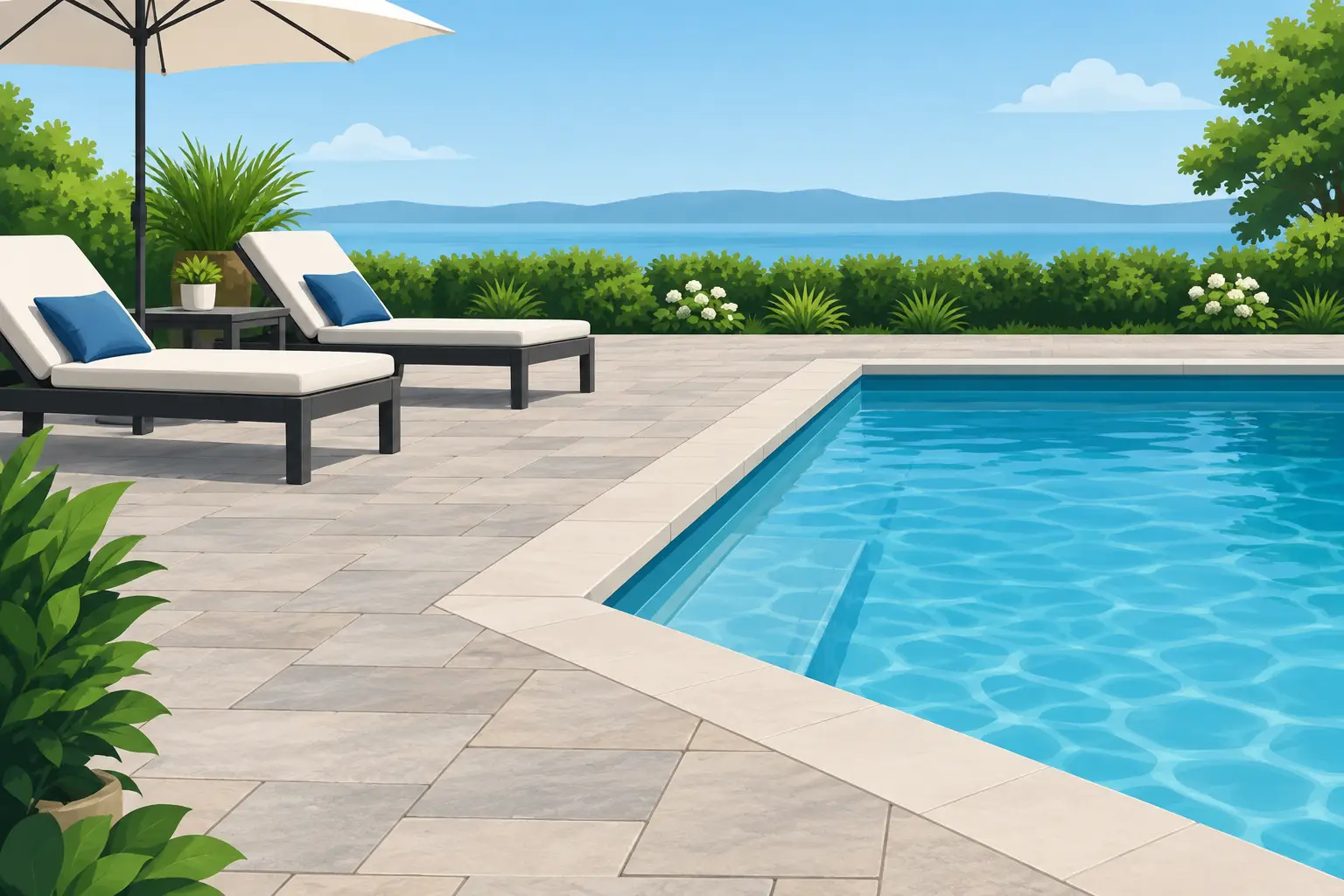
A pool should feel like the best part of your backyard, not a maintenance concern or a slip hazard waiting to happen. The right pool deck pavers create a clean, comfortable surface around the water while giving your entire outdoor space a more finished, high-value appearance. For Maryland and Washington, DC homeowners, material selection matters even more because the deck must stand up to humid summers, freeze-thaw cycles, rain, and plenty of foot traffic.
A well-built paver deck does more than frame a pool. It defines gathering areas, connects the pool to a patio or walkway, improves drainage, and gives family and guests a secure place to walk. The key is choosing pavers and an installation approach that fit the way you use your backyard.
Why Pool Deck Pavers Are a Smart Investment
Concrete slabs can be practical, but they often crack over time as soil shifts and temperatures change. Repairs can be noticeable, and resurfacing a large concrete pool deck is rarely a small project. Pavers offer a different advantage: they are installed as individual units over a properly prepared base. If one area settles or a paver is damaged, targeted repairs are usually possible without tearing out the entire deck.
Pavers also offer more design flexibility than a poured surface. Homeowners can choose a clean, contemporary layout, a traditional stone-inspired pattern, or a custom combination that matches an existing patio, retaining wall, or outdoor fireplace. This makes a pool project feel integrated with the property rather than added on as a separate feature.
Just as important, quality pavers provide a textured walking surface. No outdoor material is completely slip-proof when wet, but properly selected pavers can provide better traction than many smooth concrete finishes. That is especially valuable around steps, tanning ledges, diving areas, and entry points where people are likely to walk with wet feet.
What to Look for in Pool Deck Pavers
The best choice is not always the most expensive paver or the trendiest color. A successful pool deck comes down to performance, comfort, and how well the design serves your property.
Traction Comes First
Around a pool, safety should guide every design decision. Look for pavers with a lightly textured, non-glossy finish that gives bare feet more grip when the surface is wet. Very smooth materials can look appealing in a showroom but may not be the right fit for a busy family pool area.
Pattern selection matters, too. Smaller pavers and varied joint lines can add visual interest while helping create a surface that feels more secure underfoot. A professional installer can recommend practical options without sacrificing the refined look homeowners want.
Heat and Barefoot Comfort
Dark materials absorb more sun and can become uncomfortable on hot July and August afternoons. Lighter shades such as sand, soft gray, cream, and muted earth tones generally stay more comfortable, though every surface will warm up in direct sunlight.
This does not mean your deck has to be one color. A light field paver with darker borders or accent bands can give the area definition while keeping the primary walking surface more comfortable. The amount of shade around the pool, the pool’s orientation, and whether children will use the space frequently all affect this decision.
Drainage Is Part of the Design
Water needs a planned path away from the pool, home, and surrounding structures. Pavers are not a substitute for proper grading. The base, slope, edge restraints, and transitions to patios or walkways must all be installed with drainage in mind.
Poor drainage can lead to puddles, shifting pavers, erosion, and water moving toward the foundation. It can also make an otherwise beautiful deck harder to use after a storm. A contractor should evaluate the full backyard layout before recommending a final design, especially on sloped lots or properties with existing drainage challenges.
Durability Through Maryland Winters
Freeze-thaw weather is hard on outdoor surfaces. Water enters small cracks or joints, freezes, expands, and can gradually cause damage. High-quality concrete pavers installed over a stable, compacted base are well suited to this climate because the system has some flexibility.
The preparation below the pavers is every bit as important as the pavers themselves. Shortcuts in excavation, base material, compaction, or edge restraint work may not be obvious on installation day, but they can lead to movement and uneven areas later. The lowest bid is not always the best value when the long-term performance of a pool deck is on the line.
Choosing a Style That Fits Your Backyard
Your pool deck should support the architecture of your home and the way you entertain. A large, formal home may call for a classic pattern with defined borders, while a more relaxed backyard can look great with natural colors and a less structured layout. The goal is not to copy a photo online exactly. It is to create a space that looks right on your property and works for your daily life.
Consider how people will move through the space. There should be clear room for lounge chairs, dining furniture, grill access, and traffic around the pool without creating narrow pinch points. If you plan to add a fire pit, retaining wall, fence, or patio in the future, it is wise to account for those features now so the materials and elevations coordinate later.
Paver borders can be particularly useful. They frame the pool, separate functional zones, and add contrast without overwhelming the design. Coping around the pool edge also deserves close attention because it creates the visual transition between water and deck. The right coping should complement the pavers while providing a comfortable, stable edge.
Installation Details That Protect Your Investment
A durable pool deck starts before the first paver is placed. The contractor should evaluate site access, existing concrete, grading, utilities, drainage routes, and the condition of surrounding structures. Depending on the project, existing materials may need removal and the area may require excavation to establish the correct base depth and finished elevation.
From there, the crew builds and compacts a stable aggregate base, sets edge restraints, places bedding material, installs the pavers in the selected pattern, and finishes joints appropriately. Proper cuts at curves, steps, skimmers, and corners are a visible sign of careful craftsmanship. These details separate a deck that merely fills the space from one that looks intentional and holds up over time.
It is also worth discussing transitions at doors, gates, and existing patios early in the process. A pool deck should not create an awkward step, interfere with drainage, or make it harder to operate a gate. As a full-service outdoor contractor, A-1 Fencing can help homeowners consider the entire backyard rather than treating the pool deck as an isolated project.
Planning for Maintenance Without Overthinking It
Paver decks are relatively straightforward to maintain, but they are not maintenance-free. Regular sweeping keeps debris from collecting in joints, and occasional washing helps remove pollen, sunscreen residue, and seasonal grime. If joints lose material over time, they may need to be refreshed to keep the pavers stable and discourage weed growth.
Sealing is an option, not always a requirement. A quality sealer can enhance color and help resist stains, but some products can make a surface look too glossy or affect traction if applied incorrectly. For a pool area, the specific product and finish should be chosen carefully. A professional can explain whether sealing makes sense for your selected paver and how you use the space.
Avoid harsh de-icing chemicals during winter, as certain products can damage concrete surfaces. When ice management is needed, use materials appropriate for pavers and follow the manufacturer’s recommendations.
Make the Deck Work for the Way You Live
The most successful pool projects do not stop at the water’s edge. They create room for weekend cookouts, quiet mornings outside, birthday parties, and the everyday moments that make a backyard feel like part of the home. Whether you want a simple, durable deck refresh or a larger outdoor living upgrade, start with a design that puts safety, drainage, and lasting craftsmanship ahead of shortcuts.
A free in-home consult and estimate can help turn your ideas into a clear plan, with materials, layout, and installation details chosen for your property rather than a one-size-fits-all solution.