
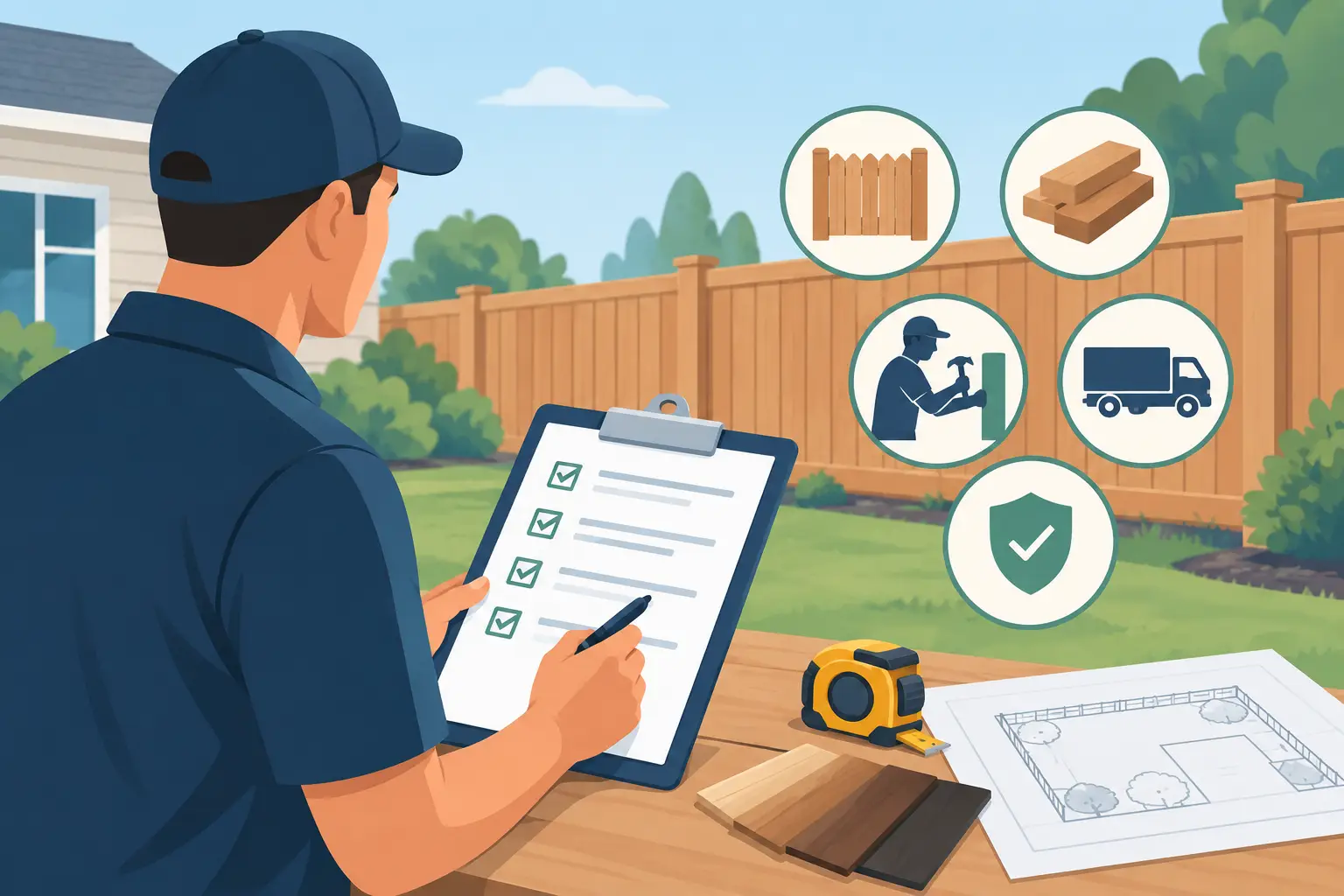
A low number at the bottom of a proposal can look appealing until the project is underway and the add-ons begin. Knowing what a fence estimate includes helps you compare contractors fairly, protect your budget, and choose a fence that serves your property for years instead of just getting installed quickly.
For homeowners in Maryland and Washington, DC, a professional estimate should do more than provide a price per foot. It should establish the scope of work: the materials being used, the layout, the gates, the installation approach, and the site conditions that can affect cost. When those details are clear from the beginning, there are fewer surprises later.
What a Fence Estimate Includes
A quality fence estimate starts with an in-home consultation. The contractor should walk the property, discuss why you want a fence, and review the areas that need privacy, containment, security, or a finished border around your outdoor living space. A family with a dog may prioritize a secure gate and a tight ground clearance. A homeowner adding a patio or deck may care more about style, sightlines, and how the fence complements the new hardscape.
The written estimate should then identify the proposed fence type and the amount of fencing being installed. That includes the approximate linear footage, fence height, panel or picket style, post size, rail configuration, and material selection. Whether you choose wood, vinyl, aluminum, chain link, or a specialty product, the proposal should make it easy to understand what is being supplied.
Brand and product details matter. Two vinyl fences may look similar from the street, but their wall thickness, internal reinforcement, color retention, and warranty can be very different. The same is true for aluminum fencing, where rail construction, picket spacing, and gate hardware influence long-term performance. A clear proposal helps ensure you are comparing like for like, rather than comparing a higher-quality system against a basic alternative with fewer details.
Materials, Labor, and the Details That Affect Price
Most professional fence proposals include the core materials and labor required for the agreed-upon installation. The scope should account for posts, panels or individual pickets, rails, fasteners, concrete or other post-setting materials, caps, and standard finishing components. It should also state how many gates are included and identify each gate’s width, height, style, and hardware.
Gates deserve special attention because they are one of the most used parts of a fence. A properly built gate requires the right posts, hinges, latch, alignment, and clearance to open reliably through changing weather. A wide double gate for lawn equipment is not priced or constructed the same way as a standard walk gate. If a gate is important to how you use the yard, make sure it is clearly described rather than left as a vague allowance.
Labor should cover the installation process itself, including laying out the fence line, digging post holes, setting posts, assembling the fence, hanging gates, and cleaning up typical installation debris. For a sloped yard, the estimate should also explain whether the fence will be stepped or racked to follow the grade. That decision affects both appearance and function, especially when keeping pets contained or maintaining privacy along a changing elevation.
A dependable contractor will also account for normal jobsite protection and cleanup. Your landscaping and property deserve care. Still, no installation is completely free of impact, particularly where equipment must move through a narrow side yard or where post holes are close to existing plantings. A good consultation gives you the chance to discuss access, landscaping concerns, irrigation lines, and other details before work begins.
Site Conditions Can Change a Fence Proposal
Every property is different, which is why an in-person estimate is more reliable than a price quoted from a photo or a rough measurement. Terrain, access, existing structures, and underground conditions can all affect the final scope.
A detailed fence estimate should address the conditions visible during the site visit and identify items that may require additional work. Common examples include removing an old fence, hauling away debris, clearing brush along the fence line, working around mature trees, and installing through uneven terrain. Rock, buried concrete, unknown utility lines, retaining walls, or difficult equipment access can also require extra labor.
This does not mean every possible obstacle should be built into the price as a worst-case scenario. It means the contractor should explain what is known, what is included, and what would be handled as an unforeseen condition. That is a more honest approach than offering an unusually low proposal with broad exclusions hidden in the fine print.
Property lines are another important consideration. Contractors can install based on the layout you approve, but they generally do not establish legal boundaries. If there is any uncertainty about the line, a recent survey or a conversation with a licensed surveyor can prevent a costly dispute with a neighbor. Homeowners should also confirm whether the fence needs to sit inside the property line to meet neighborhood or local requirements.
Permits, HOA Rules, and Utility Marking
Depending on where you live, a fence project may require a permit, HOA approval, or both. Montgomery County, Howard County, Northwest DC, and surrounding communities can have different requirements based on fence height, location, zoning, and lot conditions. A proposal should explain whether permit preparation, permit fees, or HOA documentation are included, or whether they remain the homeowner’s responsibility.
Utility marking is another essential step. Before posts are installed, public utilities should be marked so the fence line can be planned safely. Private lines, such as irrigation, invisible pet fencing, landscape lighting, propane lines, or drainage systems, may not be covered by public utility marking. Let your contractor know about these features during the consultation so they can be considered before digging begins.
What May Not Be Included in a Fence Estimate
The clearest estimates identify exclusions as carefully as inclusions. This is especially helpful when comparing bids that appear to cover the same work but do not.
Some projects may require separate pricing for demolition of a heavily built existing fence, extensive vegetation removal, grading, masonry work, custom gate automation, or repairs to disturbed landscaping. A fence tied into a retaining wall, patio, or deck may also need additional structural planning. These are not necessarily red flags. They are signs that the project has details requiring the right materials, labor, and coordination.
Ask whether the price includes sales tax, disposal fees, permits, and any upgrades discussed during the visit. If you are considering a wood fence, ask whether staining or sealing is included. If you are considering vinyl or aluminum, ask about reinforced posts, upgraded hardware, or decorative accents. The right choice depends on your goals and budget, but the choices should be visible before you sign.
How to Compare Fence Estimates With Confidence
Do not compare proposals on total price alone. Review the fence height, material grade, post and rail construction, gate count, hardware, removal work, permit responsibilities, and warranty information. If one estimate is significantly lower, look for missing details before assuming it is the better value.
It also helps to consider the contractor behind the proposal. A fence is a permanent feature of your property, and workmanship matters as much as the materials. Look for a contractor with local experience, a clear process, strong customer feedback, and the ability to explain the work in plain language. If your project includes a patio, retaining wall, walkway, or other exterior improvement, working with one experienced design-and-build team can simplify the schedule and create a more cohesive result.
At A-1 Fencing, a free in-home consult and estimate is designed to give homeowners a clear path forward, with upfront pricing and recommendations based on the property, the project goals, and the materials that fit best. Before accepting any proposal, take the time to ask questions until you understand exactly what your new fence will include. That clarity is one of the best investments you can make before the first post goes into the ground.