
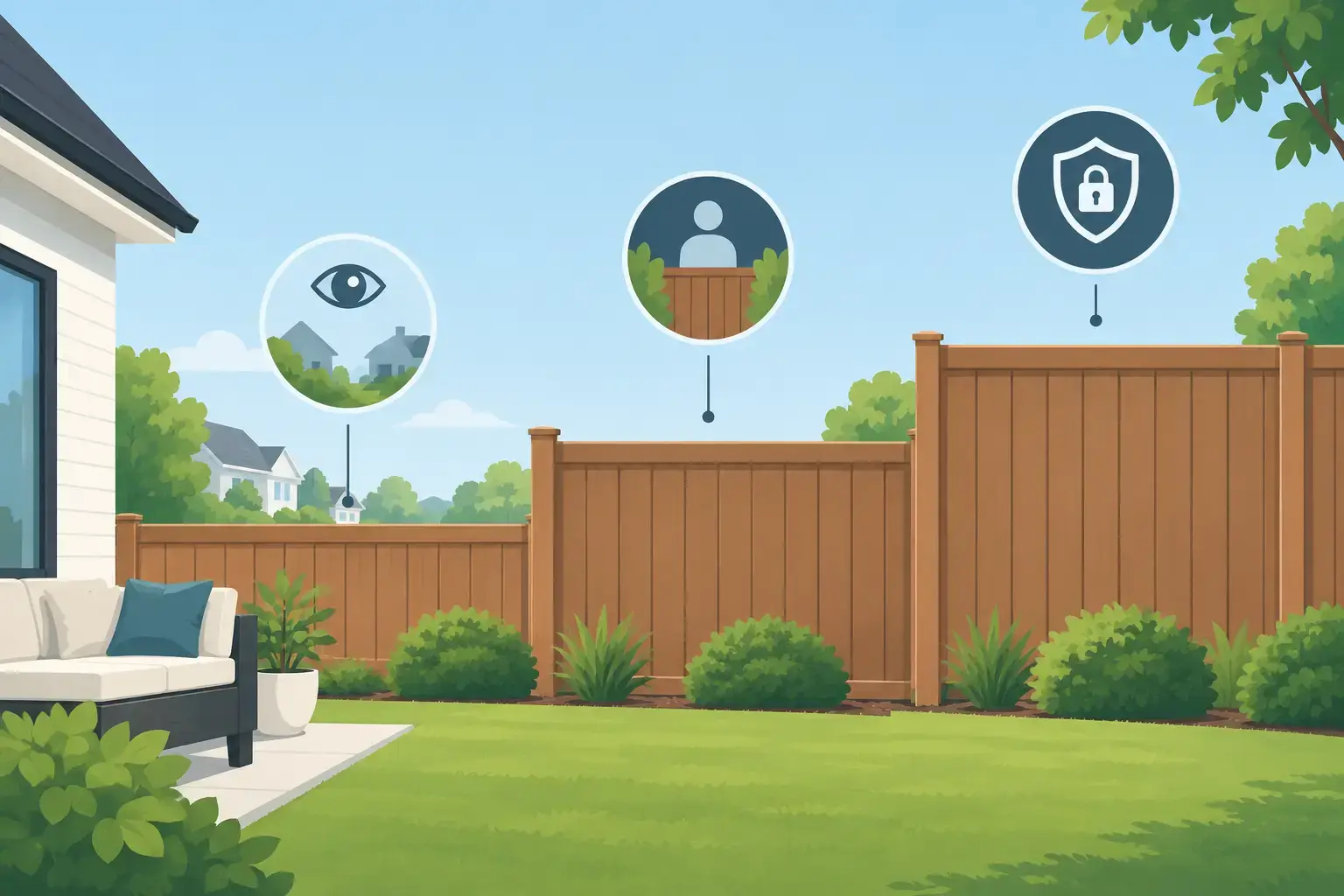
A fence that is two feet too short can leave a patio exposed. One that is unnecessarily tall can feel imposing, cost more, and create approval issues with an HOA or local jurisdiction. Fence height selection is not simply a matter of choosing the tallest option available. It is a practical design decision that should reflect how you use your yard, what you want to screen, and the rules that apply to your property.
For homeowners in Maryland and Washington, DC, the best answer often comes from balancing privacy, safety, curb appeal, and long-term value. A well-planned fence should feel like it belongs with the home and landscape while doing its job every day.
Start With the Purpose of Your Fence
The right height becomes clearer when the fence has a clear purpose. If the goal is to mark a property line or keep a small dog within the yard, a lower fence may be all you need. If you want to create a private retreat around a deck, pool, or patio, a taller style is usually more appropriate.
A three- or four-foot fence often works well for front-yard boundaries, garden areas, and decorative enclosure. It establishes a clean edge without blocking views of the home. Aluminum and ornamental steel fencing are especially popular at these heights because they provide security and definition while maintaining an open, polished appearance.
A five- or six-foot fence is the common choice for backyard privacy. This height can block direct views from neighboring properties, provide a more comfortable setting for outdoor dining, and create a secure play area for children and pets. Solid vinyl, wood, and composite privacy fencing are frequently selected for these projects.
Higher fences may be appropriate in certain situations, such as properties near busy roads or homes with significant grade changes. However, taller is not always better. If a neighbor’s second-story windows overlook the yard, adding more height at the property line may not deliver the privacy you expect. Strategic landscaping, a pergola, privacy screen, or a thoughtfully designed patio feature can sometimes solve the problem more effectively.
Fence Height Selection and Local Requirements
Before settling on a height, homeowners should account for local rules. Fence regulations can vary by municipality, neighborhood, and even by where the fence sits on the lot. A height that is acceptable in a backyard may not be allowed in a front yard or along a side street.
Many communities distinguish between front, side, and rear yards. Corner lots can have additional visibility requirements near intersections, where a tall fence could interfere with drivers’ sight lines. Properties in historic districts, planned communities, or neighborhoods with homeowners associations may also have specific standards for height, material, color, and style.
Pool fencing deserves special attention. A pool barrier must meet applicable safety requirements, including minimum height, gate operation, latch placement, and spacing between components. This is not a place for assumptions or shortcuts. An experienced fencing contractor can help homeowners understand what must be addressed before installation begins.
The grade of the yard also matters. A six-foot fence measured from one side may appear much taller from a lower neighboring property. On sloped yards, the installation method – such as stepping panels or following the grade – affects both the finished look and how the height is perceived.
Consider Privacy at Sitting Height, Not Just Standing Height
Homeowners often picture privacy while standing at the property line. The more useful question is what can be seen when people are using the space. Are you trying to screen a grill area, dining table, hot tub, children’s play space, or seating area around a fire pit?
A six-foot privacy fence is a strong starting point for many backyards, but site conditions can change the answer. If a patio sits higher than the yard next door, a standard-height fence may offer less screening than expected. If your patio is tucked below grade or behind planting beds, you may achieve the same level of comfort with a shorter fence.
Material selection affects privacy as much as height. A solid vinyl or wood privacy fence blocks views directly. A spaced picket design, aluminum fence, or rail fence offers boundary definition but little visual screening. Semi-private styles can be a good middle ground, allowing airflow and light while reducing views into the yard.
For a more finished outdoor living area, fence height can work alongside other features. Retaining walls, raised planting beds, evergreens, trellises, pergolas, and outdoor fireplaces can all shape views and add a sense of enclosure. This is where a design-and-build approach can make a meaningful difference: the fence should support the entire outdoor plan rather than compete with it.
Match Height to Safety and Pet Containment
A fence installed for safety needs to account for who or what it is meant to contain. A low decorative fence may define a garden beautifully, but it will not reliably contain an active dog. Likewise, a fence that keeps a small child within the backyard should be designed with gate security in mind, not just panel height.
For dogs, height depends on size, breed, energy level, and behavior. A calm small dog may be comfortable behind a four-foot fence, while a large, athletic dog may need a six-foot fence and a layout that avoids nearby objects they could use to climb. Gaps under the fence and between pickets matter just as much as the height above ground.
Gates are part of the safety system. They should be properly sized, reinforced, aligned, and equipped with dependable latches. A gate that drags, sags, or fails to close securely can undermine an otherwise excellent installation. Quality posts, hardware, and installation are not extras when the fence is protecting children, pets, or a pool area.
Think About the View From Both Sides
A fence is one of the most visible improvements you can make to a property. Height has a direct effect on curb appeal, especially near the front of the home. A tall solid fence may provide security, but it can make a welcoming entry feel closed off if it is not balanced with the home’s architecture and landscaping.
The best fence designs consider the street view, the backyard experience, and the neighbor’s perspective. A lower ornamental fence in the front paired with a taller privacy fence behind the home often creates the right balance. On larger lots, a gradual transition from a decorative boundary fence to a private backyard enclosure can look more natural than using one style everywhere.
Color and material also influence how a fence feels. Dark aluminum fencing tends to recede into the landscape, preserving views and highlighting gardens. White vinyl creates a crisp, traditional edge. Natural wood can feel warm and established, while composite materials offer a refined appearance with lower maintenance needs. The right height should support that visual goal.
Budget for the Fence You Will Still Like Years From Now
A taller fence generally requires more material, larger posts, deeper footings, and more labor. It can also involve additional site preparation when there are slopes, mature landscaping, rock, retaining walls, or challenging access. Choosing a lower fence solely to reduce the initial price can be disappointing if it fails to provide the privacy or containment your family needs.
At the same time, paying for extra height that does not solve the real problem is not a smart investment. A thoughtful estimate should address the full picture: fence layout, grade, gates, materials, local requirements, and how the new fence will work with future improvements such as a deck, patio, or hardscape.
A-1 Fencing helps homeowners evaluate these decisions during a free in-home consult and estimate, with recommendations based on the property rather than a one-size-fits-all answer. The goal is a fence that performs well, looks right, and is built to last.
Make the Final Decision on Site
Fence height selection is best handled while looking at the actual yard. Walk the property line, stand where you plan to sit, notice the slope, and consider where gates will be used most often. Look beyond the immediate need and think about how your family may use the outdoor space in the next several years.
A carefully chosen fence height can make a yard feel safer, quieter, and more private without overwhelming the property. When the design, material, and installation are all matched to the home, the result is more than a boundary – it is an outdoor space you will be glad to come home to.